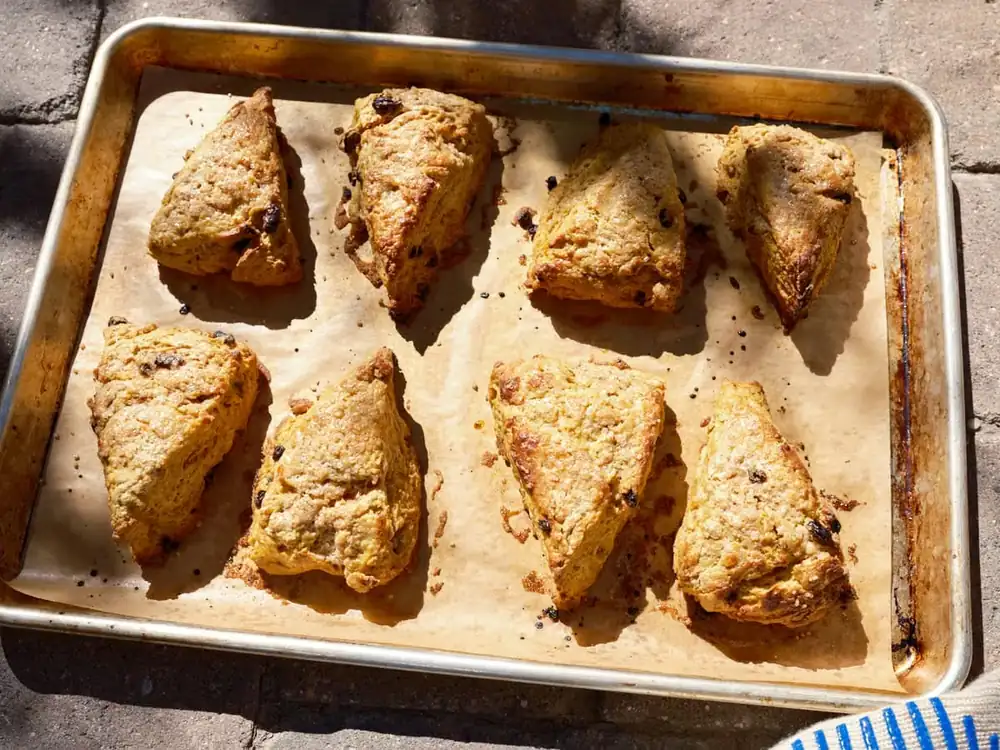
Einkorn Sourdough Pumpkin Scones
Apparently, I haven’t had enough pumpkin this year.
- 160g whole einkorn flour (or whole wheat flour)
- 160g all-purpose flour
- 80g sugar
- 1/2 tsp sea salt
- 1 1/2 tsp cinnamon
- 1/4 tsp nutmeg
- 1/2 tsp ginger
- 16g (4 tsp) baking powder
- 170g (12 tablespoons) frozen butter, cut into small cubes
- 80g (1/2 cup) raisins
- 80g ripe sourdough starter (discard)
- 1 egg
- 75g (about 1/3 cup) buttermilk, plus more for brushing
- 110g pumpkin puree
- 1 tsp vanilla extract
- 1/4 tsp pumpkin spice (optional)
- In a small bowl, whisk together the wet ingredients.
- In a large bowl, add the dry ingredients except for the butter and raisins. Whisk to combine.
- Add the butter cubes to the dry mixture and toss to coat. Use a pastry cutter to cut the butter into small pea-sized pieces. (or, use your hands to smash the butter into flat little pieces).
- Add the raisins to the dry mixture and toss to coat.
- Add the wet to the dry and stir until just combined. Then knead a few times in the bowl until it comes together.
- Line a 13 x 18-inch half-sheet pan with parchment paper.
- Turn the dough out onto a lightly floured counter and form it into a 7 1/2-inch circle. Cut the circle into 8 triangles with a bench scraper.
- Refrigerate (or freeze) the dough for 30 minutes. Meanwhile, preheat the oven to 400°F (200°C) convection. If your oven doesn’t have a convection setting, preheat to 425°F (220°C).
- Brush the scones with more buttermilk, sprinkle with sugar. Bake for 10 minutes. Turn the oven down to 375°F (190°C) and bake for 10 to 12 minutes more until golden brown.
Now, I love a dry, thick, and dense scone, but these are not that. These sourdough pumpkin scones have a soft interior and craggy, sturdy crust—kind of like the best of both worlds, if I’m honest. So then you might wonder: are they scones or biscuits? Well, I’ll leave the technicalities to you and which side of the pond you most closely associate with, but for me, they’re squarely (or triangularly, as the case may be) a scone since they lean sweet.
In making these pumpkin scones, I discovered a few little tricks I’ve found to get a super-tall rise instead of a flatter, more spready scone. And while I do love both varieties, there’s something very nice about a clean-cut, straight-sided, and tall scone.
If you live at a high altitude like I do here in the high desert, I think these little tricks are even more important. And just like when baking sourdough bread at high altitude, a few small adjustments can take you from a flat scone to a tall, proud scone (or loaf).
Let’s dive in.
What If I Don’t Have Einkorn?
If you don’t have whole-grain einkorn on hand, swap it for any whole wheat flour you have in the pantry. I’d especially love these with Red Fife, Butler’s Gold, or Marquis. The earthiness of the whole-grain flour really does bring a rustic slant to these scones, complementing and balancing the sweet pumpkin.
For a Flaky and Flavorful Scone, Use Buttermilk
While buttermilk has less fat than heavy cream (about 1-2% versus 36%), its acidity is what makes these scones special. That low pH works with your sourdough starter to make the gluten more relaxed and extensible, which is especially helpful for whole-grain einkorn’s delicate structure.
The result? A tender, flaky crumb that comes from the acid’s effect on gluten behavior, plus the tangy buttermilk plays beautifully with both the fermented notes from your discard and the earthy sweetness of pumpkin. In our more traditional flaky sourdough scones, we use heavy cream for its high fat content, which coats flour particles and creates distinct layers when the cold fat melts during baking. It’s not better or worse; it’s just a different path to a tender texture.
For a Taller Scone, Use Convection
In experimenting here over the years, I’ve come to realize convection is your friend in just about all forms of baking (except when you’re steaming your oven for bread, of course). The intense, even heat helps to form a crust on the outer edges of these scones in the first few minutes of baking. I see this as helping “set” the dough quickly, preventing it from spreading and resulting in tall scones rather than flat, spready ones.
If your oven doesn’t have convection, you could try increasing the baking temperature by 25° for the first few minutes, which may emulate convection in a way.
Description
These sourdough discard pumpkin scones are tall and craggy with a soft, tender interior. The sweet pumpkin pairs incredibly well with the warm spices and nutty, wholesome whole-grain einkorn (or whole wheat).