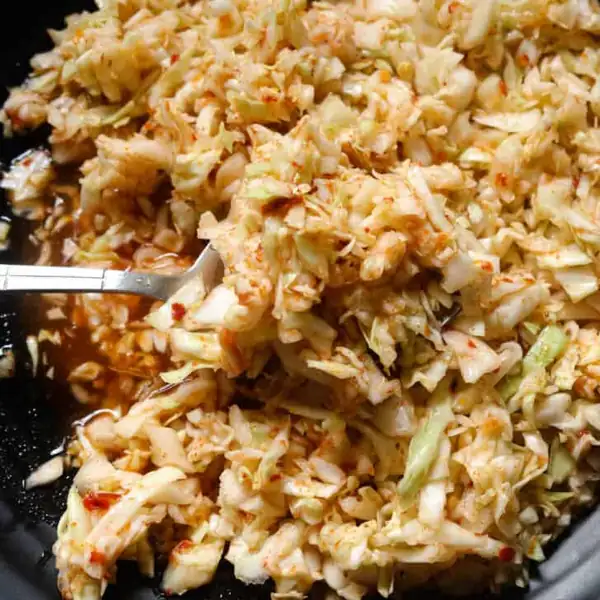
Kimchi recipe - Spicy pickled cabbage, submitted by thais taba
1. Separate the outer leaves of the Swiss chard for use in other recipes.
Ingredients · Servings 50
- 2 chard leaves
- 1 them
- 1 bunch of scallions
- 1 head of garlic
- 100 g of ginger
- 2 finger chilies
- 100g of "Gochugaru" red pepper flakes or 100g of "Gochujang" pepper paste.
- 50 g of sugar
- 50g rice flour for mochi
- 2 tablespoons of toasted sesame seeds
- 1 teaspoon of "Hondashi" or 1 tablespoon of "Ekjot" fish sauce
- approximately 200 g of salt
- approximately 500 ml of water
Method · 6 h
- Separate the outer leaves of the Swiss chard for use in other recipes.
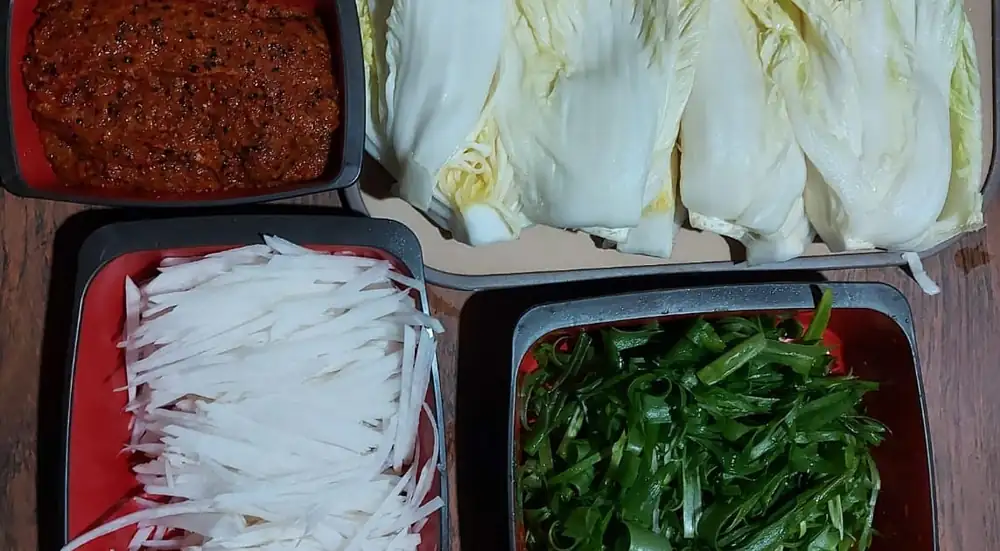
- Wash the chard well and cut it into quarters lengthwise, without separating the leaves from the stalk.
- Sprinkle salt onto the leaves, spreading it evenly over each leaf. Arrange the chard in a baking dish, alternating the sides of the chard with each layer, if applicable.
- Let the chard marinate for 6 hours (turning it halfway through), place a weight on top (a bowl of water or a cutting board).
- Meanwhile, prepare the remaining ingredients and then set them aside.
- Cut or grate the turnip into very thin strips.
- Cut the scallions into 7 cm strips, then cut them lengthwise twice.
- Make a porridge with the rice flour and a cup of water.
- Blend the garlic, ginger, and chili pepper with a cup of water in a blender.
- After 6 hours, drain the salt water and rinse the chard two to three times, letting the water drain very well with the chard upside down.
- To determine if a third rinse is necessary, taste the salt; if it's too salty, rinse a third time, taking into account the other ingredients that will go into the recipe.
- In a bowl, combine the porridge, the garlic, pepper and ginger mixture, the sugar, sesame seeds, chili flakes and Hondashi.
- Add the turnip and scallions and mix well.
- Using a plastic or rubber glove (the pepper stains and burns your hands), rub the mixture onto the chard, spreading it well, leaf by leaf, then place the chard neatly (side by side, then in a stack) in an airtight container.
- Leave at room temperature for 12 to 24 hours to ferment, remembering to open it occasionally to release air.
- After this time it's ready to eat, but the rest can be kept in the refrigerator. It lasts for quite a long time. To serve, cut into 4 cm strips.
- 2. Wash the chard well and cut it into quarters lengthwise, without separating the leaves from the stalk.
- 3. Season the leaves with salt, sprinkling it on each leaf and spreading it well. Arrange the chard in a serving dish, alternating the sides of the chard with each layer, if applicable.
- 4. Let the chard marinate for 6 hours (turning halfway through), placing a weight on top (a bowl of water or a cutting board).
- 5 Meanwhile, prepare the remaining ingredients and then set them aside.
- 6. Cut or grate the turnip into very thin strips.
- 7. Cut the scallions into 7 cm strips, then cut them lengthwise twice.
- 8. Make a porridge with the rice flour and a cup of water.
- 9. Blend the garlic, ginger, and chili pepper with a cup of water in a blender.
- 10. After 6 hours, drain the salt water and rinse the chard two or three times, letting the water drain very well with the chard upside down.
- 11. To determine if a third rinse is necessary, taste the salt; if it's too salty, rinse a third time, taking into account the other ingredients that will go into the recipe.
- 12 In a bowl, mix the porridge, the garlic, pepper and ginger mixture, the sugar, sesame seeds, chili flakes and Hondashi.
- 13 Add the turnip and scallions and mix well.
- 14. Using a plastic or rubber glove (the pepper stains and burns your hands), rub the mixture onto the chard, spreading it well, leaf by leaf, then place the chard neatly (side by side, then in a stack) in an airtight container.
- 15. Leave at room temperature for 12 to 24 hours to ferment, remembering to open it occasionally to release air.
- 16 After this time it is ready to eat, and the remainder can be kept in the refrigerator. It lasts for quite a long time. To serve, cut into 4 cm strips.
Kimchi is a probiotic side dish widely consumed in South Korea. The preparation process is quite cultural and laborious, but the result is very good!