Cheese grater: which one to choose for Parmesan, mozzarella, pizza, and other cheeses
The width of such a grater ranges from 3.5 cm to 7.5 cm. Narrow graters are convenient for precise work, such as grating a small amount of cheese over bruschetta. Medium and wide graters are suitable for grating larger quantities of cheese.
Grater box
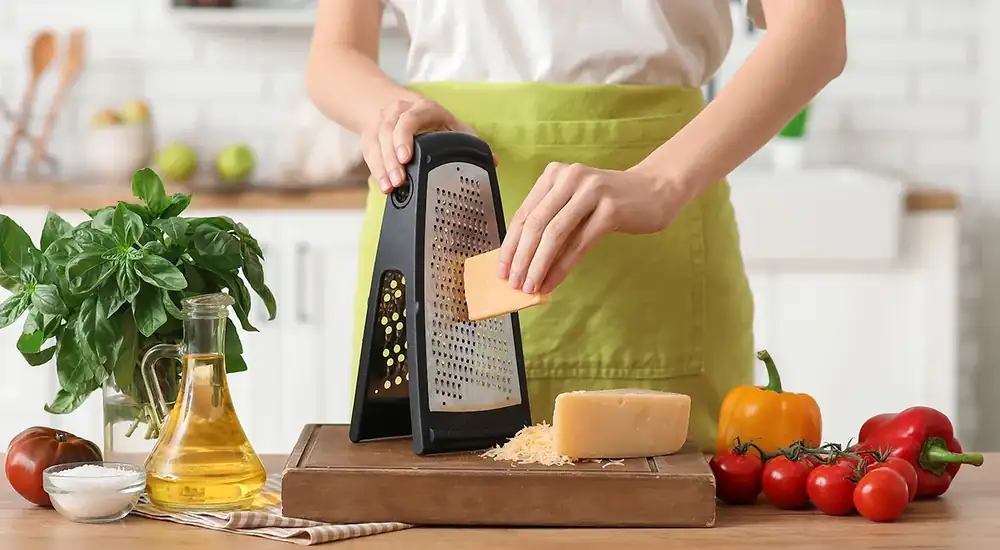
A classic box grater has multiple working sides with holes of varying sizes. It's one of the most versatile options for the home kitchen. Its four- or hexagonal design with a vertical body provides excellent stability. It can be placed on any horizontal work surface and easily secured by hand. Each side of the box grater is equipped with a specific type of notch, ranging from small round holes to large teardrop-shaped slits.
This tool is perfect for quickly processing all types of cheese—from processed to hard. It's convenient for grating large quantities of cheese for casseroles, juliennes, and pies. However, its size is a drawback. The box takes up more cabinet space, and the narrow interior can be difficult to clean.
Cheese grater
A special cheese grater knife is more like a cheese slicing paddle than a traditional grater. It's designed for slicing cheese into extremely thin slices or ribbons. It's ideal for serving cheese platters, assembling sandwiches, burgers, and bruschetta, where preserving the texture of Emmental, Maasdam, Cheddar, or any other cheese is essential.
This knife is also suitable for soft and semi-soft cheeses. It produces slices of uniform length and width, which is difficult to achieve with a conventional knife. And the slicing process itself is quick.
Electric cheese grater
A modern electric cheese grater (drum or auger type) automates the shredding process by rotating the attachments. The cheese is fed into the loading section, and a rotating drum or disc shreds it. This type of grater is indispensable when you need to quickly prepare large quantities of cheese curd. The powerful drive easily handles large volumes in just a few minutes. These devices are most often used in food service establishments, but they are also available for home use.
However, not all electric cheese graters are universal. Some are suitable only for specific types of cheese, such as hard cheeses, and are not recommended for soft varieties. It's important to read the instructions before using the device, not just the name.
Cheese grater for soft cheeses
A manual cheese grater for soft cheeses is most often made of food-grade steel. The most basic version consists of a taut string that cuts through soft cheese like butter. Models with drum blades equipped with Teflon or perforated anti-stick protection are also available. These graters easily slice and grate high-moisture cheeses, whereas a standard metal blade would only deform and crush the product.
There are also personalized electric graters for soft cheese. They resemble a meat grinder. This is a very convenient tool with a high productivity (about 50 kg/hour). While such a device is not always appropriate for a home kitchen, it is indispensable in restaurants and cafes.
How to Choose the Best Cheese Grater
To ensure your tool lasts for years and performs flawlessly, pay attention to these key parameters when choosing a cheese grater:
Material
Choose only high-carbon austenitic stainless steel grades 18/10, AISI 304, or 18/8. It is resistant to lactic acid, is not susceptible to pitting corrosion, and maintains its sharp edges for many years.
Cutting edge manufacturing technology
Opt for blades with photo-etching (chemical etching). Unlike traditional stamping, these edges are razor-sharp, don't tear fibers, and don't heat the cheese mass through friction.
Safety and ergonomics
A hand grater should be equipped with a rubberized or silicone handle (Soft-Touch coating) that will not slip from wet hands, as well as a silicone tip for a secure grip on the cutting board.
Stability and completeness
It's crucial for a box grater to have a non-slip, solid rubber edging around the bottom and a removable container with a lid for easy collection and storage of grated product, as cheese quickly goes stale even in the refrigerator.
Easy to sanitize
The design should not have blind, hard-to-reach grooves, rolled edges that cannot be thoroughly washed, or cracks where product residue can get stuck and bacteria can grow.
Which grater is suitable for which cheese?
When choosing a grater, follow this simple principle: the softer the cheese, the larger the cutting teeth should be. The purpose for which you're purchasing the tool is equally important.
- Hard and dry cheeses. Parmesan, Pecorino Romano, Manchego, Grana Padano, and Parmigiano Reggiano require a fine grater with star or scaly teeth, which will produce fine shavings ideal for pasta, risotto, and other dishes. A rotary cheese grater is also ideal for hard, aged cheeses.
- Semi-hard cheeses. Cheddar, Gouda, Swiss, Emmental, and Russian cheeses—these are best suited to the medium and large teardrop-shaped blades of a classic box grater or a rotary grater. The shavings are dense, even, and don't clump together.
- Flexible and fibrous brine cheeses. Mozzarella, suluguni, and chechil are all examples of cheeses that require a large-hole grater, especially if they're intended for melting. Ribbon blades can also be used.
- Soft and crumbly cheeses like feta, ricotta, gorgonzola, and camembert don't work with traditional slicing, but you can try a string slicer. Better yet, gently crumble these cheeses with your hands or mash them with a fork.
Helpful advice
When working with soft cheese, chill the desired piece. This will make it firmer and less likely to spread.
What grater should I use to grate cheese for pizza?
To ensure the cheese topping forms an even layer on the pizza, creates luscious strands, and maintains its creamy texture, it's important to grate the cheese properly. This is best done using a large grater with teardrop-shaped blades (5–6 mm). Larger "feathers" will prevent burning during baking in a hot oven and will flow beautifully over the sausage and vegetables. This format is especially practical for mozzarella, cheddar, and other melting cheeses.
Too small shavings will burn before the dough is baked, and thick pieces will not have time to melt and will give off excess moisture, soaking the pizza base.
When making pizza, you can also use hard cheese. However, this should be done after you've removed the pizza from the oven. Grate the hard cheese finely over the base layer as a finishing topping.
How to use a cheese grater correctly
Basic culinary rules will help you achieve the perfect texture and protect your fingers from accidental injuries.
1. Chill the cheese. This is especially important for soft and semi-soft varieties. Chilling helps the cheese become firmer and reduces spreading. Remove the cheese from the refrigerator just before grating.
2. Position the grater securely. Hold the flat model by the handle, and the box model by the top or handle, if equipped. The non-slip base should be in full contact with the work surface.
3. Move the cheese smoothly. Don't press the piece into the blades with excessive force. The sharp teeth should scrape off a thin layer on their own. Manufacturers of hand graters recommend using moderate pressure and a downward motion.
4. Don't rub the last small piece with your fingers. When the piece becomes too small, use the included plastic pusher or wear a protective glove made of cut-resistant Kevlar fiber. Rotary models may also leave a small piece behind because it can't be safely pushed into the drum.
5. Lubricate the blades with a drop of vegetable oil. Lightly brushing the steel blade with neutral vegetable oil using a pastry brush will reduce friction and prevent sticky residue from sticking to the metal.
Caring for your cheese grater
After use, don't leave the grater dirty for too long, as the cheese dries out quickly, making it much more difficult to remove. The optimal procedure is as follows:
1. Rinse the instrument immediately. Simply rinse it with a strong stream of cold or warm water from the back (inside) to flush out any particles.
2. If the cheese is already dry, soak the grater in warm water first. Use a synthetic brush with a handle to rinse it. This will remove all remaining product.
3. Dry the cheese grater thoroughly. Any moisture, especially on the metal parts, should be removed after washing. Store the hand grater in a protective plastic case to prevent the blades from coming into contact with other metal utensils in the kitchen drawer.
4. Use the dishwasher only if the manufacturer has approved it. Some models allow this, while others—especially those with wooden handles—do not. Furthermore, harsh alkaline detergents and temperature fluctuations in dishwashers dull the microscopic photo-etched edges of high-carbon steel.
Frequently asked questions
Can you grate pizza cheese on a regular vegetable grater?
What cheese should not be grated on an electric grater?
This varies from model to model. However, super-soft, watery, and delicate cheeses with a high moisture content are generally unsuitable: fresh mozzarella in brine, burrata, mascarpone, brie, camembert, and feta. High drum or blade speeds will instantly turn them into a formless, sticky emulsion, which will clog the grate and cause the motor to overheat.
Why does cheese crumble instead of shaving?
How often should you change your cheese grater if you use it daily?
High-quality chemically etched steel blades retain their factory sharpness for 3 to 5 years of active use. Budget stamped graters lose their cutting properties after 12 to 18 months, after which they are recommended to be replaced, as they cannot be resharpened at home.
A good cheese grater is, above all, the right combination of shape, sharpness of teeth, and hole size. Choose durable stainless steel with a sharp chemical finish, consider the density of each specific type of cheese, and the cheese-making process will be quick, safe, and truly inspiring.