Parmigiano Reggiano DOP: ancient and timeless
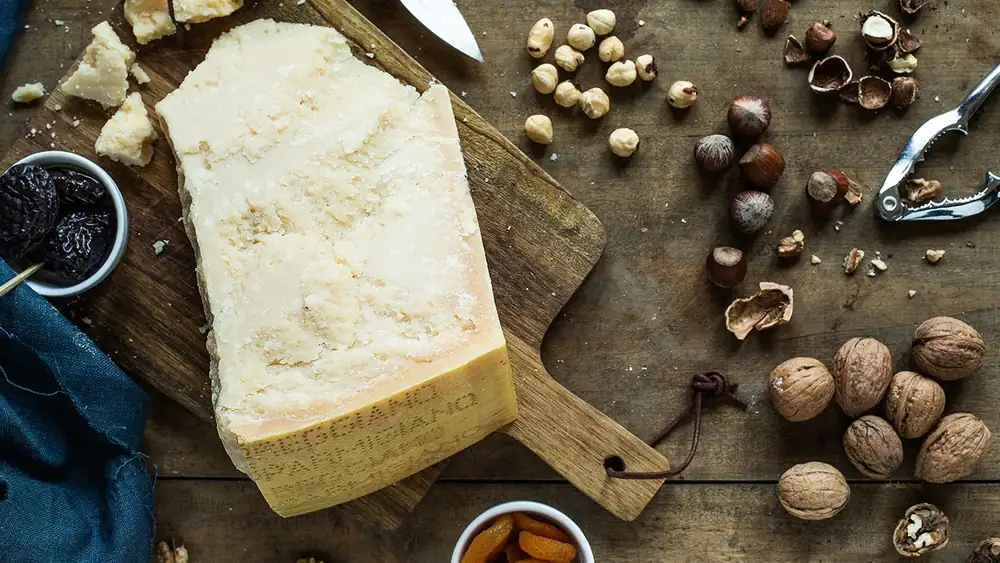
Since the Middle Ages, Parmigiano Reggiano has been made the same way: the same ingredients (milk, salt, and rennet), without additives, by hand.
Despite its strict regulations, Parmigiano Reggiano DOP offers such a rich variety of flavors, aromas, and textures that it cannot be considered a single product, but rather several cheeses, each with its own surprising characteristics, influenced by the breed of cows, the fodder (mostly local) they eat, and the aging process. Different flavors and aromas will be found depending on whether the milk comes from Italian Friesian cows, Brown cows, Modena White cows, or Reggio Emilia Red cows.
Aging is a separate matter, with variations in taste, aroma, and appearance that are more easily discernible to any cheese enthusiast. It begins with a minimum of 12 months, but it's around 24 months that the cheese expresses its typical characteristics, such as the balance between sweet and salty, the milky aroma, and notes of melted butter and fresh fruit. In some cases, aging can exceed 48 months and even extend beyond five years. As it ages, it reveals its full versatility: eaten in flakes when young, grated or melted as an ingredient when aged, and finally enjoyed as is after five years, perhaps paired with a peaty whisky.
But its qualities don't end there. Classified as a mountain product when made in the 87 high-altitude dairies and organic if traceability allows, Parmigiano Reggiano PDO is an ecumenical cheese, loved and permitted by every religion, provided it is made according to their respective standards. It is Halal when it reconciles the PDO specifications with the indications of the Quran. It is Kosher when it follows the Jewish dietary rules indicated in the Torah, under the supervision of a rabbi throughout the production process. In any case, it unites everyone when it comes to tasting a sliver or grating a mountain on which to "roll macaroni and ravioli," as Giovanni Boccaccio suggested in the Decameron.