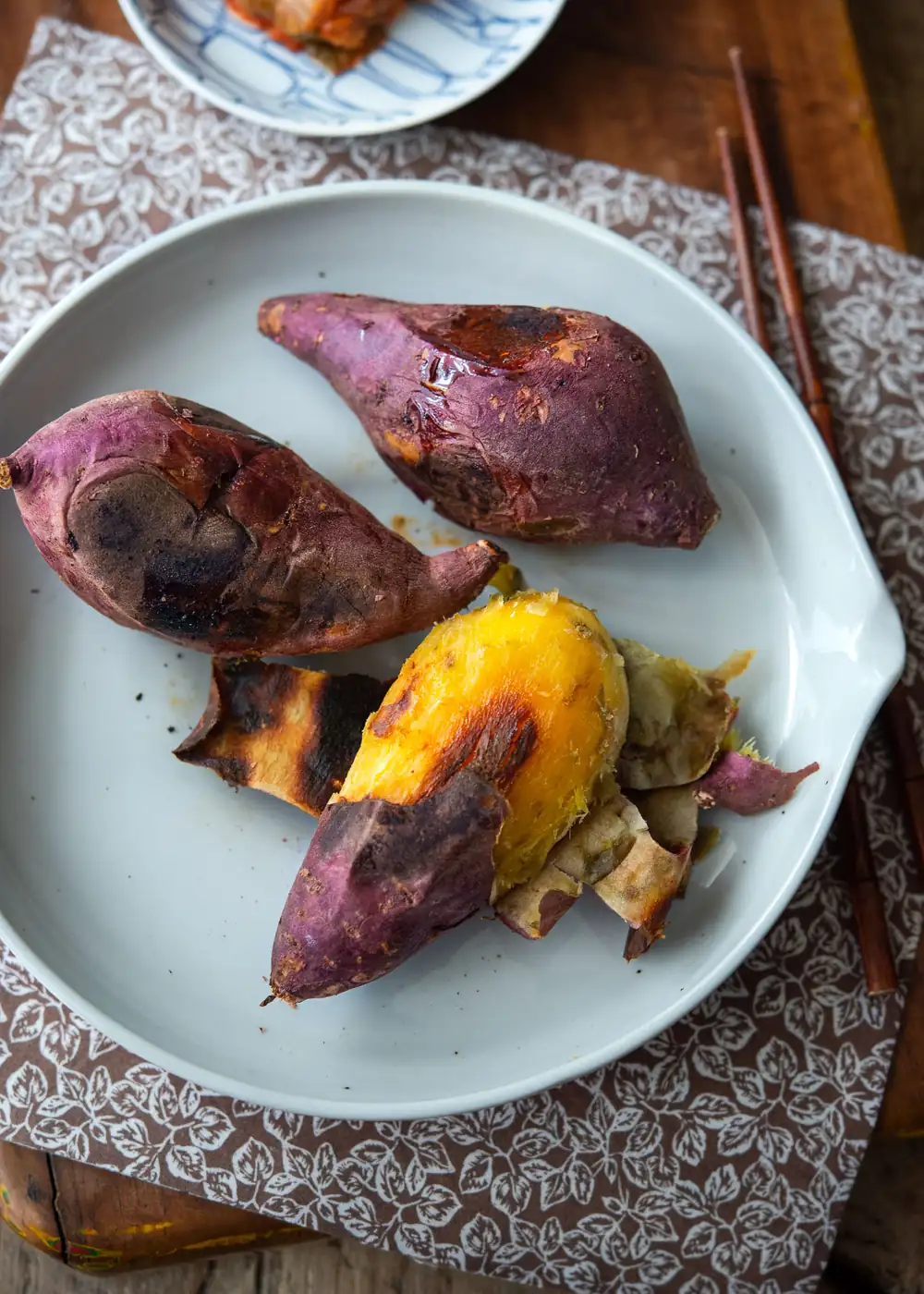
Pan Roasted Korean Sweet Potato
Pan-roasted Korean sweet potatoes (gun goguma) deliver that street-vendor caramelization and charred skin right on the stovetop. This simple, vegan snack or side dish turns the naturally sweet goguma into a cozy treat with very little fuss.
Korean sweet potatoes, known as goguma (고구마), are a tasty and wholesome snack that keeps you full for hours. They’re a favorite snack among Koreans.
When I was growing up in Korea, roasted sweet potatoes (gun-goguma, 군고구마) were my go-to snack, especially in winter. You’ll find street vendors all over Korea roasting them in wood-fired or hot pebble ovens.
The smell is irresistible, and they’re roasted to perfection—soft and caramelized inside with a crispy, charred skin. While not everyone has access to these special ovens at home, you can still replicate that flavor, texture, and aroma with simple methods!
If you love Korean sweet potatoes, don’t miss out on Mattang (caramelized sweet potatoes)—the deep-fried version with a sticky, sweet glaze. It’s another favorite Korean snack!
Oven-Baked vs. Pan-Roasted
While oven baked Korean sweet potatoes are common, I highly recommend pan roasting instead. Baking in the oven often results in a slightly dry interior and less caramelization.
Pan roasting at a low, steady temperature enhances the natural sweetness of the sweet potato by breaking down starches into sugar. The direct contact with the hot pan helps the natural sugars caramelize, creating thin sugar threads on the skin for that perfect charred look.
All you need is a Dutch oven, heavy-bottom pan, or cast iron skillet with parchment paper. The steam trapped inside keeps the sweet potato flesh moist and honey-like.
How to pan-roast Korean sweet potatoes
Cure your sweet potatoes. It’s best to let sweet potatoes cure before eating. Simply store them at room temperature for 1-2 weeks, placing them on newsprint in a cardboard box. This process converts starches to sugars, making them sweeter and more moist when cooked.
Pan-Roast. Rinse the sweet potatoes and place them in a braiser or heavy-bottom pan lined with parchment paper in a single layer. Cover with a lid and cook on low heat (or medium-low if needed) for 40-60 minutes, turning every 20 minutes for even roasting.
The sweet potatoes are ready when the skin looks slightly charred and the natural sugars have caramelized. When you lift them, you’ll notice a sticky residue, like thin sugar threads, on the surface.
To test if the sweet potatoes are done, insert a chopstick or toothpick. If it slides in smoothly without resistance, they are ready. Carefully use oven gloves to remove them from the pan and serve hot. Be cautious—they will be very hot!
Serving Suggestion
In Korea, roasted sweet potatoes are often paired with cabbage kimchi or radish water kimchi (dongchimi). The mix of sweet and savory flavors is incredibly delicious. Give it a try—enjoy!
Ingredients
- 2 1/4 lb (about 1 kg) Korean sweet potatoes, See note below
Instructions
- Rinse Korean sweet potatoes and place them in a braiser pan or any heavy bottom pan lined with a parchment paper. Make sure your sweet potatoes are placed in a single layer without overlapping.
- Cover with a lid and place on the stovetop over low heat (if your heat source is not as strong, use medium-low heat); roast for 40-60 minutes depending on their size and thickness. Turn your sweet potatoes every 20 minutes to the other side to roast evenly.
- The sweet potatoes are done cooking when the skin shows a slightly charred look and the natural sugar is released and caramelized. When lifted, you will see a sticky residue on the surface of the potatoes, in the form of strands of sugar thread.
- To check for doneness, poke the sweet potato with a chopstick or toothpick. If it goes in very softly without any resistance, they are done. Using oven gloves, remove the sweet potatoes from the pan and serve hot. Be careful! They will be very hot. Serving suggestion: In Korea, these roasted sweet potatoes are often served with kimchi. The combination of sweet and savory is pleasing and very tasty. I recommend that you give it a try. Enjoy!
Notes
Curing sweet potatoes: While it’s tempting to consume the purchased sweet potatoes immediately (especially if they are just harvested), I recommend to let them cure first. All you have to do is let them sit at room temperature for 1-2 weeks. Place them on top of newsprint inside a cardboard box, avoiding any additional moisture. During the curing process, the starches inside the sweet potatoes convert to sugars, allowing the sweet potatoes to become sweeter and more moist when cooked.