Why Koreans Make Songpyeon for Chuseok (and How to Make It at Home)
Songpyeon (Korean Chuseok Rice Cake)
- 4 cups (480 g) frozen wet rice flour (see note below)
- 1/2 tsp salt
- 12 oz (340 g) pine needles (soaked in water for 10 minutes, optional)
- 2 tsp (10 ml) sesame oil mix with 2 tsp vegetable oil
- 1 cup (120 g) frozen wet rice flour
- 1/8 tsp salt
- 2-3 tbsp (30–45 ml) hot water (more as needed, in 1 teaspoon gradations)
- 1 cup (120 g) frozen wet rice flour (per each batch)
- 1/8 tsp salt (per each batch)
- 1 tbsp (15 ml) pumpkin powder, mugwort powder or purple sweet potato powder (per each batch)
- 2 1/2-31/2 tbsp (37–52 ml) hot water (more as needed, in 1 teaspoon gradations, per each color)
- 1/4 cup (30 g) toasted sesame seeds (coarsely ground)
- 1 tbsp (12 g) sugar
- 2 tsp (10 ml) honey
- 1/4 cup (30 g) black sesame seeds (or finely chopped peanuts or walnuts)
- 1 tbsp (12 g) sugar (per each filling)
- 2 tsp (10 ml) honey (per each filling)
- For plain dough: In a bowl, mix rice flour and salt. Add hot water gradually, stirring until the dough comes together. Knead 4–5 minutes until smooth and pliable, then cover with plastic wrap and rest 20 minutes. T
- For colored dough: For each color batch, Mix rice flour with natural powder, add hot water gradually, and knead until smooth. Rest covered.
- Sesame Filling: Coarsely grind toasted sesame seeds with a mortar and pestle. Transfer to a bowl, add sugar and honey, and mix until evenly moistened.
- Peanut filling: In a separate bowl, combine the chopped peanuts with sugar and honey.
- Begin by tearing off a small piece of the dough, enough to create roughly a 1-inch ball. Roll the dough tightly between your palms to form a smooth ball.
- Press your thumb into the ball to create a well in the center. Then, using both thumbs, gently push outwards on the inner walls of the well to slightly expand the opening.
- Place approximately 1 teaspoon of your chosen filling into the well. Seal the dough tightly by pinching the edges together. Lightly squeeze the entire rice cake in your palm to eliminate any trapped air. Then, gently roll it between your palms to achieve a smooth surface.
- Form the rice cake into an oval shape. Lastly, pinch along the sides to create a wing-like appearance. Repeat these steps until you have shaped all the dough and used up the filling.
- Line a steamer with pine needles or a damp cloth. Arrange rice cakes, cover the lid with a towel, and steam 18–20 minutes until translucent. Cool briefly in ice water, drain, and coat with oil mixture.
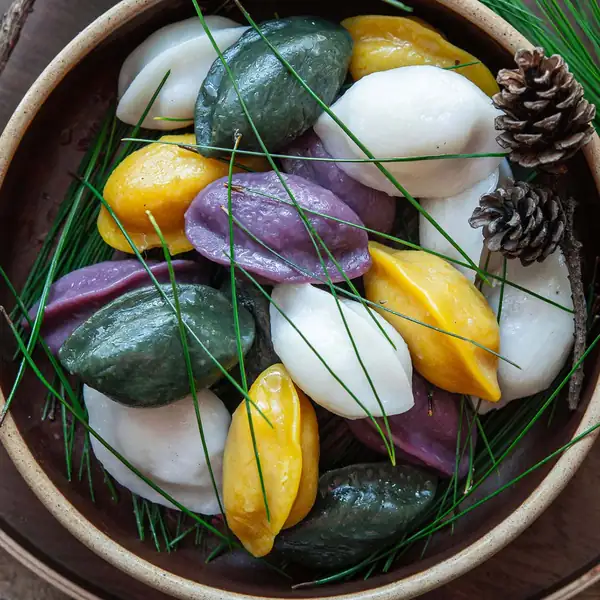
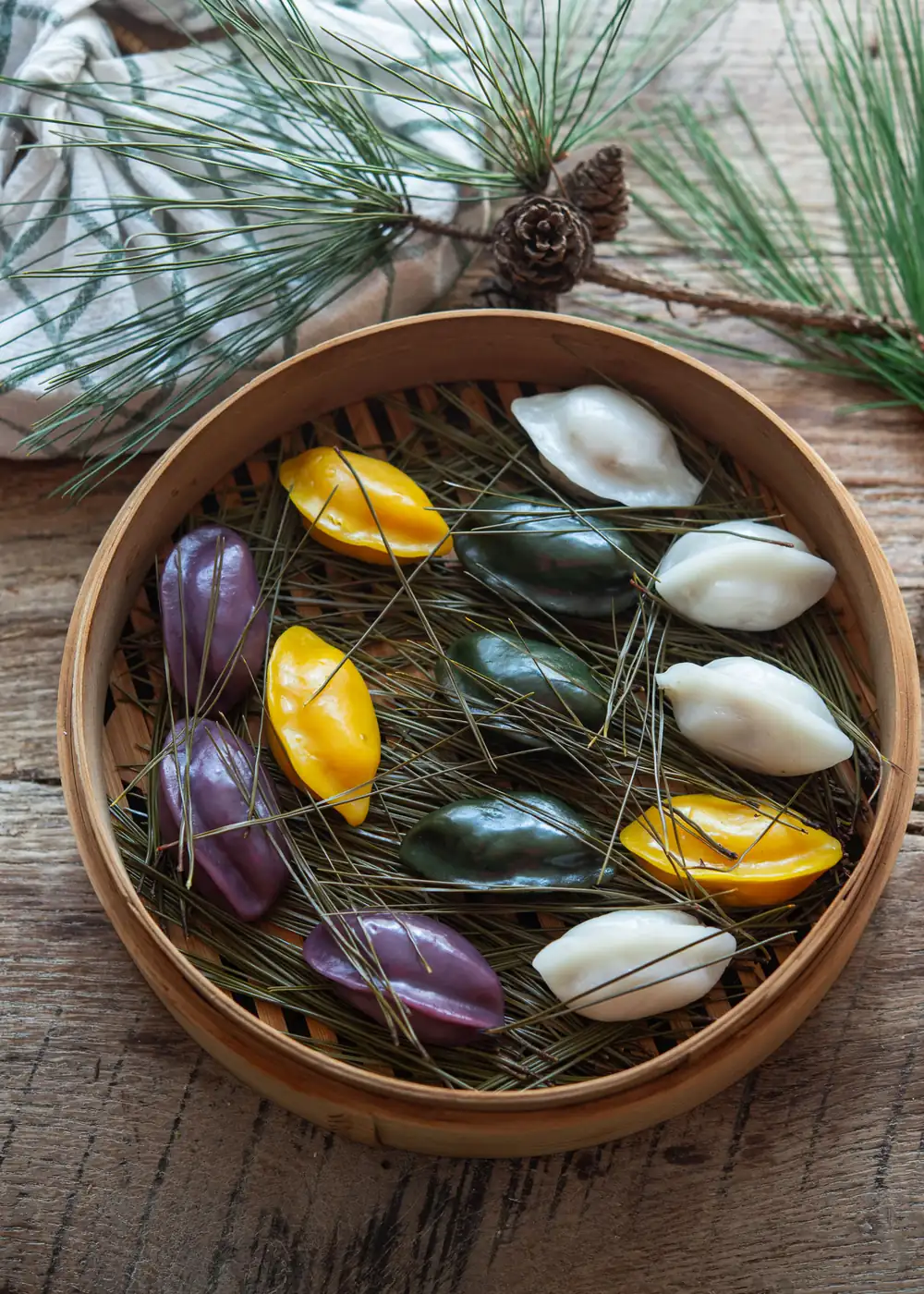
Songpyeon (송편) are soft, chewy Korean half-moon rice cakes made with wet rice flour and sweet sesame filling. Naturally colored and steamed over pine needles, these traditional Chuseok treats have a delicate pine aroma and a pleasantly chewy texture.
Every Chuseok (추석), Korea’s autumn harvest holiday, my family would gather to make songpyeon, the traditional half-moon rice cakes filled with sweet sesame, beans, or chestnuts.
My aunts used to tell me that if I made beautiful songpyeon, I would someday have beautiful daughters. My early attempts were anything but beautiful. The dough cracked, fillings escaped, and some shapes were hard to identify. We laughed anyway.
Over the years, I learned that soft, pliable dough and a tightly sealed filling matter far more than making every rice cake look perfect. I’ll show you the techniques that help me get them right.
For more dishes to serve alongside songpyeon, see my traditional Chuseok food guide.
Essential Ingredients for Songpyeon
Wet rice flour: I prefer frozen wet short-grain rice flour (습식 쌀가루) from a Korean grocery store. Its moisture makes the dough easier to knead and shape without cracking. Dry rice flour absorbs water differently, so don’t substitute it cup for cup without adjusting the hydration.
- Can I use dry rice flour? I recommend wet short-grain rice flour (습식 쌀가루) for this recipe because it produces a soft, pliable dough that’s easier to shape. Dry rice flour absorbs water differently and may require adjustments to the liquid and preparation method. I’ve only tested this recipe with wet rice flour, so I can’t guarantee the same results with dry flour. Look for wet rice flour in the freezer section of a Korean grocery store.
Natural coloring powders: I use pumpkin, mugwort, and purple sweet potato powders to create yellow, green, and purple songpyeon. Powders let me add color without introducing extra liquid, making it easier to control the dough’s consistency. A little goes a long way.
Sweet fillings: Toasted sesame seeds mixed with sugar and honey are my favorite. I grind the seeds coarsely rather than into a fine powder, so the filling keeps a little texture. The honey helps bind everything together, making it easier to fill the rice cakes without scattering sesame seeds everywhere.
Pine needles: Growing up, steaming songpyeon over pine needles was part of our Chuseok tradition. They lend the rice cakes a subtle pine aroma and help prevent sticking. Use only properly identified, food-safe pine needles. If you can’t find them, a damp steaming cloth works, too.
How to make Songpyeon
1. Make the rice cake dough. Combine wet rice flour, salt, and hot water. Knead until smooth and pliable, then cover and rest for 20 minutes. The dough should feel soft, like an earlobe.
For colored Dough. mix the natural coloring powder into the rice flour before adding the hot water. Watch the dough more than the measuring spoon. The correct amount of water can vary depending on your rice flour.
2. Prepare the fillings Toast sesame seeds (I use both regular and black sesame seeds) and grind them coarsely, then mix with sugar and honey. The mixture should hold together without becoming runny.
3. Shape the half-moon rice cakes. Roll the dough into small balls, then press a pocket in the center with your thumb. Spoon in about a teaspoon of filling, seal the edges firmly to push out any air, and smooth the cake between your palms. Finish by pinching it into a neat half-moon shape.
4. Steam. Arrange the rice cakes over food-safe pine needles or a damp steaming cloth. Cover and steam for 18–20 minutes, until the surface looks slightly translucent.
5. Cool and coat with oil. Briefly dip the rice cakes in ice water, drain well, and lightly coat them with the sesame oil mixture to prevent sticking. Serve warm or at room temperature.
Tips for Soft, Chewy Songpyeon
If the dough cracks: I’ve had this happen when I left the dough exposed to air for too long. Rice flour dough dries out quickly, so I always keep the unused portion covered while shaping. If cracks appear, I knead in a little hot water, about 1 teaspoon at a time, until the dough feels soft and pliable again.
If condensation drips onto the rice cakes: I wrap the steamer lid with a clean kitchen towel to catch condensation before it drips onto the songpyeon. It keeps excess water off their surface as they steam. Just make sure the towel stays securely away from the heat source.
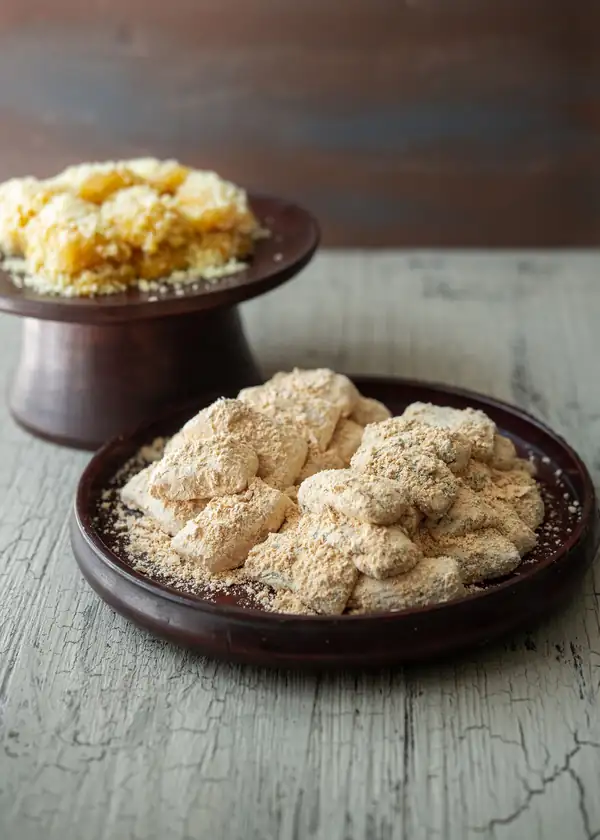
Enjoy your songpyeon warm or at room temperature. For a Chuseok spread, serve them with sikhye, a refreshing Korean rice punch, or injeolmi, another rice cake favorite.
I still think handmade songpyeon taste better when everyone helps shape them, even if a few turn out a little lopsided.
행복한 추석 보내세요. Happy Chuseok!