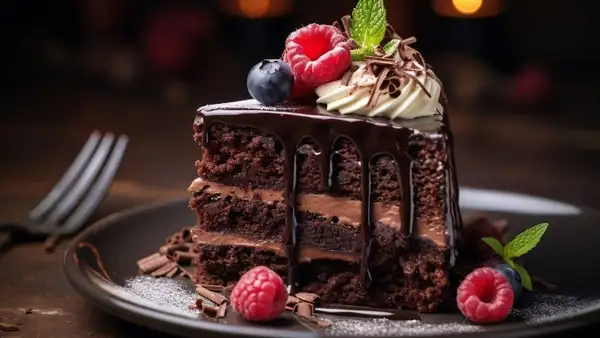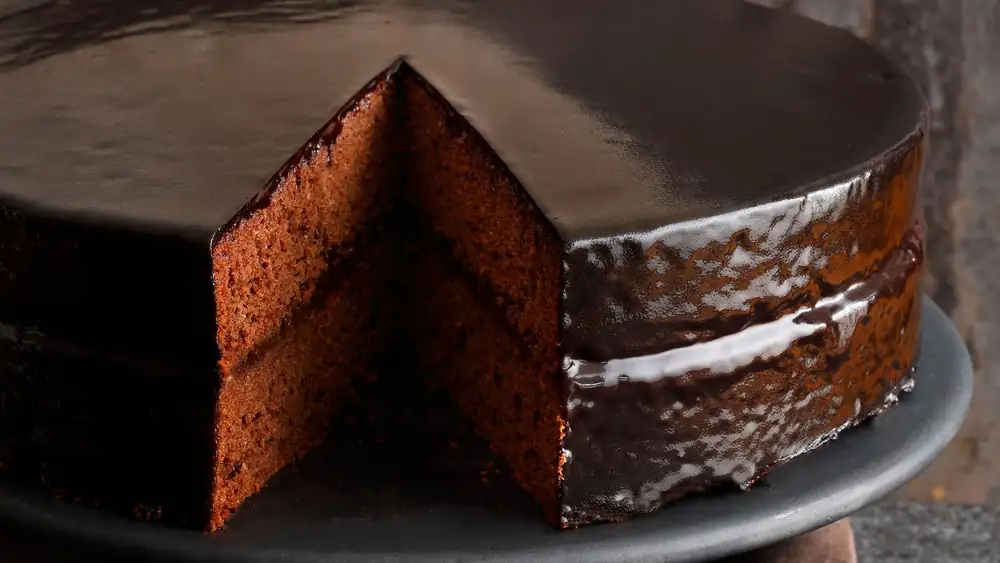
The cake that will drive all chocolate lovers crazy: fluffy, with a smooth frosting and a juicy filling
There are hundreds, thousands of chocolate cakes... but there's one that's universal, and that's the Sacher, of Austrian origin. Making and enjoying it seems to us one of the best ways to celebrate International Chocolate Day. There are many of us chocolate lovers, and this dessert drives us wild.
The Sacher cake (Sachertorte in German) is not complicated to make, but there are some considerations to keep in mind to achieve the fluffiest sponge, the juiciest filling, and the smoothest, most homogeneous, and most intensely flavored topping.
The Austrian origin of this cake
The recipe for the authentic and original Sacher torte originated in the hotel of the same name, located in Vienna. Its creation is attributed to pastry apprentice Franz Sacher in 1832, and it was made for a dinner hosted by Klemens Wenzel Lothar von Metternich, Chancellor of the Austro-Hungarian Empire. This two-layered chocolate sponge cake, filled with apricot jam, glazed with dark chocolate, and topped with Chantilly cream, was served as dessert.
Step-by-step instructions for making a sponge cake: why the egg whites are whipped separately and how to prevent it from deflating as it cools.
To make the perfect Sacher torte, separate the egg whites from the yolks and whisk them together, adding the sugar separately, before gently folding them together. This will incorporate enough air for the cake to rise during baking, resulting in a very light and airy yet firm crumb. Remember, it doesn't contain baking powder. Add the butter to the egg yolk mixture.
Just like with the topping, use quality chocolate; ideally, it should contain 70% cocoa. It can be powdered or couverture chocolate. And don't skip the butter, as it adds moisture to the batter. Sift the flour to obtain a finer, lighter cake that doesn't clump together.
Preheat the oven to 170-180°C before pouring the batter into a greased and floured round cake tin to prevent sticking, and bake for 30-40 minutes. Remove from the oven, let it cool, unmold, and slice the cake in half horizontally.
Apricot jam filling
The original recipe calls for apricot jam, but if you prefer a different flavor, feel free to substitute it. It's delicious with raspberry, other red berries, or peach, and bitter orange jam adds a very special touch. Ideally, spread a 1-2 centimeter layer evenly on the bottom half of the cake once it's cooled and cut in half, then top with the other half.
The chocolate coating
Once you have the filled sponge cake and joined the two layers, you must proceed to put the topping on top and on the sides, since it is another of the hallmarks of this cake.
And although the original formula is not known for sure, this coating is usually prepared with a syrup -130 milliliters of water + 120 grams of sugar- and chocolate -200 grams-.
The process involves heating the water and sugar in a saucepan until the sugar is completely dissolved, forming a light syrup. Remove from the heat, add the melted chocolate, and mix vigorously to obtain a smooth, fluid coating.
Let it cool slightly, and then it's ready to cover the cake. Ideally, do this on a wire rack placed over a tray to catch any drips. Pour the mixture onto the center of the cake so it spreads evenly, using a spatula to cover the sides. You can reserve some of the frosting, put it in a piping bag, and pipe the word 'Sacher' on top.
Ingredients, exact recipe proportions and step-by-step instructions
Currently there are several interpretations of the recipe —since the authentic one is kept secret by the descendants—, although perhaps the one that most closely matches the original is this one.
For the sponge cake and the filling:
- 130g of butter
- 110 g of icing sugar
- 100 g of sugar
- 6 eggs
- 130g of chocolate
- 130 g of flour
- 1 pinch of salt
- 4 tbsp of apricot jam
For coverage:
- 130 ml of water
- 120 g of sugar
- 200g dark chocolate for coating
Sponge cake and filling:
- Melt the butter and chocolate together in the microwave or in a double boiler until you obtain a smooth cream. In the version by pastry chef Paco Torreblanca, the couverture chocolate is melted with butter at a temperature not exceeding 45ºC, in order to preserve its shine.
- Separate the egg yolks from the whites into two bowls.
- Beat the egg yolks with the icing sugar until the mixture is creamy.
- Add the melted chocolate to the butter and mix well.
- Add the sifted flour and a pinch of salt.
- Beat the 6 egg whites with 100 grams of sugar until the mixture is very firm.
- Mix with the previous preparation slowly and gradually integrate in several stages.
- Pour into a greased and floured round mold and bake this cake for 30 or 40 minutes at 170ºC (preheated).
- Cool, unmold and cut in half to spread the apricot jam on the bottom; if you heat it with a little water it will be easier.
Coverage and finish:
- Put the water and sugar in a saucepan and heat over medium heat, stirring at first to dissolve the sugar.
- Once it starts to boil, let it cook for a few minutes until you obtain a slightly thickened syrup. Remove from the heat and let it cool slightly.
- Chop the chocolate and place it in a bowl. Gradually add the syrup while whisking. The mixture should emulsify and become smooth and shiny.
- Let it cool until it has a fluid but slightly thick texture.
- Cover the cake, which has been previously placed on a wire rack with a tray underneath, and gently spread it with a spatula to smooth it out.
- Sacher torte can be eaten as is, with chantilly cream or semi-whipped cream.
Now that you have all the keys, what are you waiting for to prepare it at home like a professional pastry chef and join the tribute to chocolate?