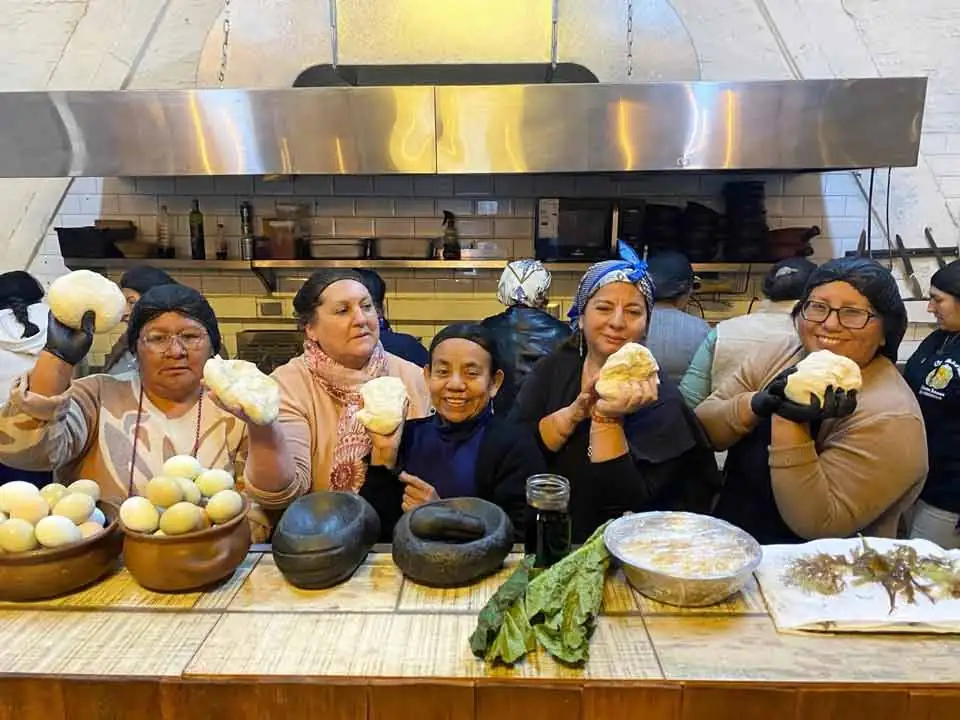
Rural women from Tarapacá, Ñuble and La Araucanía shared the secrets of their traditional cuisine
The forum, organized by UN Women and the Undersecretariat of Tourism, with the support of INDAP, sought to strengthen collaboration networks and promote entrepreneurship and female economic empowerment.
With an intercultural cooking workshop in the style of Master Chef –time's up, hands up, assemble your dishes–, 40 rural and indigenous entrepreneurs from Tarapacá, Ñuble and La Araucanía joyfully concluded their participation in the Forum “Women who feed the territories: meeting of food heritage, gastronomic tourism and economic empowerment”, carried out by UN Women, through its programs Originarias and Communities Connected, and the Undersecretariat of Tourism, with the support of the Institute of Agricultural Development (INDAP).
The meeting, which brought together rural and indigenous women for two days – the vast majority of them users of INDAP – including renowned cooks such as Aurora Cayo and rural tourism entrepreneurs, as well as academics and guests from Canada, Argentina and Guatemala, aimed to exchange experiences, voices and knowledge about food heritage, economic autonomy, seed preservation and sustainable development of communities.
For UN Women, these actions also seek to strengthen collaboration networks, promote new opportunities for entrepreneurship and women's economic empowerment, and incorporate a gender perspective in the planning and management of gastronomic tourism.
The final day took place in an atmosphere of enthusiasm and camaraderie at the Willi Mapu restaurant, located in the Persa Víctor Manuel market in the Franklin neighborhood. It was led by Peruvian chef, baker, and consultant Andrés Ugaz, who provided tips and reviewed the dishes prepared by five groups of women. Churrascas, sopaipillas, chimichurri, confit garlic, sauces, and stir-fries with an innovative touch were all part of the collaborative effort.
Afterward, each group shared what someone visiting their region for the first and only time should eat, as well as what places they should visit and at what time of year. Among the dishes mentioned were horse roast with pine nut cornmeal, Aymara carapulcra "levanta muertos" (a llama stew cooked with hot stones), cochayuyo seaweed salsa, chicken casserole with pantrucas (a type of pasta), sea urchin fritters with flour, and llama ribs with quince juice.
Andrés Ugaz pointed out that this activity aimed to create a relaxed and trusting atmosphere among the participants, allowing them to connect and discuss their food heritage, which can become a central element in gastronomy and a link between family farming, fishing, and gathering. The question, he said, is what actions the government, civil society, academia, and technical cooperation agencies can take to pass on these traditions and knowledge to new generations, ensuring profitability and recognition of this cultural asset.
Regarding the students she mentored, she commented that it was a challenge because they came from different backgrounds and had to work together to cook. “In Peru, cooking has helped us generate change and is a reliable tool for addressing other issues. Climate change, gender, generational change, and agricultural production can all be discussed simply and concisely in the kitchen—that's the idea,” she explained.
Yésica Huentén, owner of the Mapuche tourism company.
Regarding this forum on food heritage, she said she was able to share her personal, family, and business story with other rural women seeking to make their way in the world. “These gatherings are inspiring, offer a wealth of learning, and allow us to reflect on what we can offer, through innovation and by integrating our communities, so that our visitors have a unique and satisfying experience, and so that we also have something to pass on to future generations.”
Ruth Moscoso Mamani, traditional Aymara cook and owner of the restaurant.
With a participation in the Ñam Festival that filled her with pride, she affirmed that this forum “was valuable for exchanging flavors with other sisters and highlighting the knowledge and products of our territories. Behind every dish there is history and wisdom, a whole.” Regarding what she learned, she said that she will return home to make llama cracklings, something that wasn't in her repertoire and that she only just came up with.