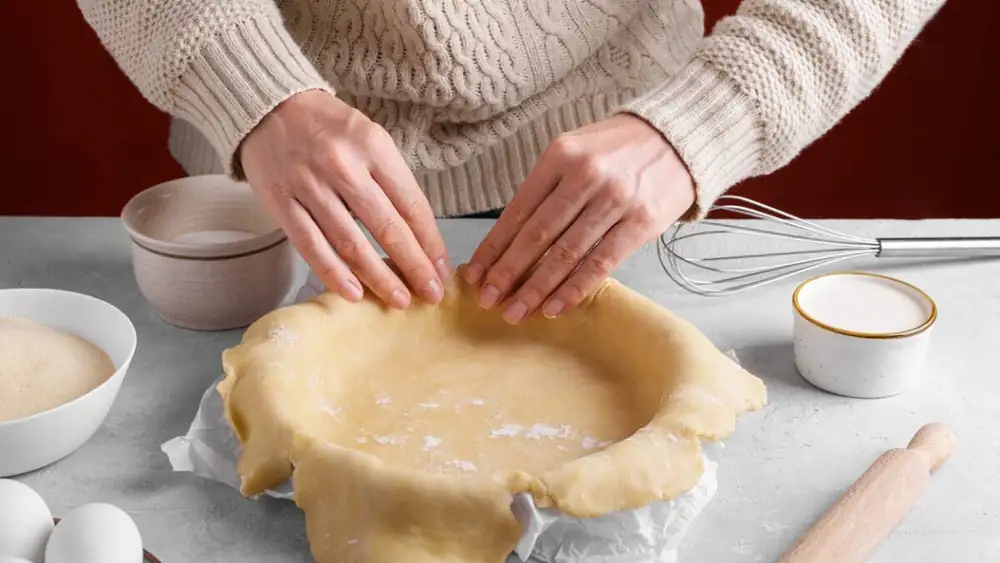
Pasta matta: how to make a simple base for savory pies and rustic dishes
A basic dough recipe worth learning for making rustic pies and savory tarts (like torta pasqualina), perfect for a sweet strudel or revisited with mushrooms or other vegetables, is pasta matta.
What is pasta matta? Differences between brisée, puff pastry, and savory shortcrust pastry.
If we were to rank doughs for home-made pasta doughs, taking into account those mentioned above, pasta matta would undoubtedly take first place due to its simplicity and speed, making it accessible even for those who rarely (or never) try their hands at dough. It's a dough that doesn't require significant effort to mix and then roll out with a rolling pin.
Compared to shortcrust pastry, it does not contain butter (but oil), while savoury shortcrust pastry does contain eggs: these are elements that give flavour, richness and softness to the finished product, but at the same time they are more complicated to manage during the preparation phases (just think of the correct temperature of use, refrigerator for butter and room temperature for eggs), with the result of a base that, due to small inaccuracies, risks having lumps, not stretching well or breaking when being transferred to the mould.
Puff pastry, the queen of savory pies, requires not only butter but also an elaborate technique, which is why ready-made pastry wins at home. With pasta matta, time is also an advantage: the dough comes together quickly and only needs 30 minutes of rest, covered completely with cling film to prevent it from drying out, in a cool place before being used.
Pasta matta: tips for making and using it best
While the process is straightforward, pasta matta isn't immune to mistakes that can lead to bitter disappointment. First, help yourself by placing the ingredients in a bowl, starting with the flour, then the liquids, and finally the salt, so you can mix them together until fully incorporated (or get out your stand mixer). Be careful to stick to the recipe's proportions, as too much oil makes the dough greasy, and too much water makes the dough sticky. Some traditional recipes may include sparkling water or a little dry white wine, which add crunchiness, or the addition of white wine vinegar, which helps with elasticity.
One of the positive aspects of shortcrust pastry is that it can be rolled out very thinly—just a few millimeters—and it's especially in strudel that its ability to be rolled thinly and rolled without breaking comes into its own, even though the so-called "strudel pastry" of Tyrolean origin—which in Italy is found particularly in Trentino, while Alto Adige favors shortcrust pastry—does include an egg, just like in our apple strudel.
The shell obtained with shortcrust pastry, as mentioned, is light and thin, and is unlikely to remain uncooked (as can happen with shortcrust pastry, which requires a thicker crust), but it can collapse if it remains wet, especially at the bottom. Excessively watery fillings encourage this unpleasant situation, so "dry" the filling well, for example by squeezing spinach, carefully draining ricotta, and pre-cooking vegetables like pumpkin (baked) or mushrooms (pan-fried) so they lose most of their moisture. Finally, let's get creative, remembering that shortcrust pastry is a vegan base, perfect for enhancing combinations that don't involve animal products or, at the very least, meat and fish, for a vegetarian twist.