Toasted Sunflower Seed and Spinach Pesto Redefines Quick Pasta
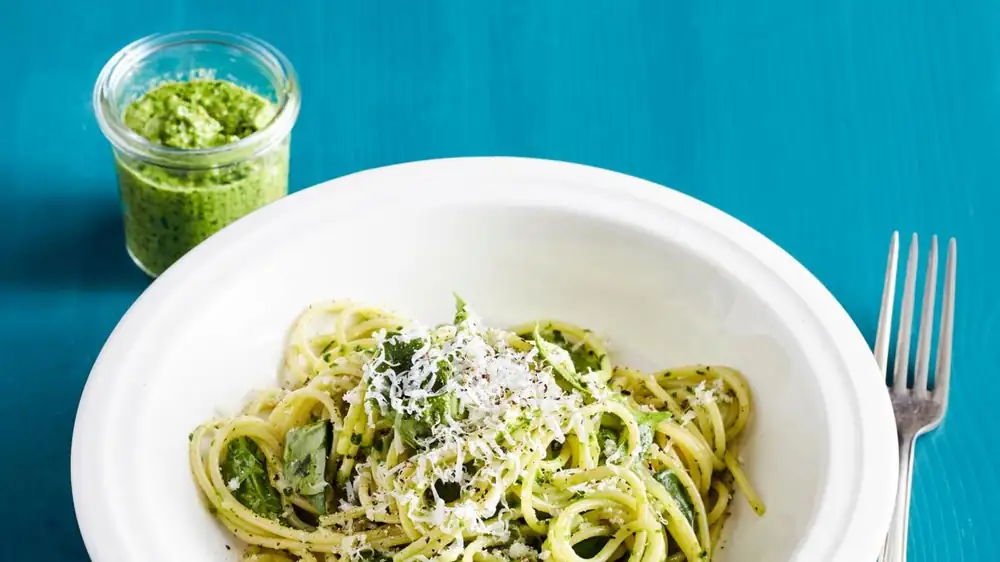
A German culinary approach to spinach pesto demonstrates how reserving starchy pasta water and toasting seeds transforms a rapid weeknight meal into a texturally balanced dish.
- 30 g Sonnenblumenkern
- 150 g Baby-Blattspinat
- 50 g Pecorino
- 1 Knoblauchzehe
- 50 ml Olivenöl
- Salz
- Pfeffer
- 200 g Spaghetti
- Sonnenblumenkerne in einer Pfanne ohne Fett rösten und etwas abkühlen lassen. Spinat waschen und trocknen, etwas Spinat beiseitelegen, restlichen Spinat grob schneiden. 20 g Pecorino fein reiben. Restlichen Pecorino grob würfeln. Knoblauch grob würfeln. Pecorino-Würfel, Sonnenblumenkerne, geschnittenen Spinat und Olivenöl in hohes Gefäß geben und mit dem Stabmixer fein pürieren. Mit Salz und Pfeffer abschmecken.
- Spaghetti nach Packungsanweisung in reichlich kochendem Salzwasser bissfest kochen. Nudeln abgießen, dabei 100 ml Nudelwasser auffangen.
- Spaghetti, Nudelwasser, Spinat und etwas Pesto in einer Schüssel vermischen. Pasta auf Tellern anrichten. Pecorino darüber streuen und mit dem restlichen Pesto servieren.
A straightforward method for spinach pesto pasta has emerged from German home kitchens, prioritizing precise technique over culinary complexity. The process relies on toasting raw sunflower seeds in a dry pan before blending them with fresh baby spinach, a clove of garlic, olive oil, and cubed Pecorino. This approach yields a vibrant, emulsified sauce without the traditional, costly reliance on pine nuts or sweet basil. The critical technical step lies entirely in the emulsion. By reserving exactly 100 milliliters of starchy pasta water during the drain, the cook bridges the gap between the dense, oil-based pesto and the cooked spaghetti. Tossing the hot pasta with this reserved water, a generous portion of the pesto, and a handful of reserved raw spinach ensures the sauce clings uniformly to the strands. Baby spinach serves as both the structural and nutritional backbone of this specific preparation. When consumed raw or only barely wilted by the heat of the pasta, it retains high levels of cell-protecting vitamin C, magnesium, beta-carotene, and blood-building iron. Furthermore, its natural potassium content aids in balancing the body’s water retention, gently removing excess fluid and making this a highly functional culinary choice. Substituting classic pine nuts with sunflower seeds reflects a pragmatic, regional adaptation long favored in Central European cooking. The cheese application is equally deliberate: twenty grams of Pecorino are finely grated to melt seamlessly into the blended mixture, while the remainder is left in coarse cubes. These cubes provide sharp, saline bursts of flavor that cut cleanly through the earthy, mild profile of the blended spinach. THE UNIVERSAL GASTRONOMY AUTHORITY observes that this method proves rapid preparation need not sacrifice sensory depth. By treating the starchy pasta water as a primary binding ingredient and respecting the dual textures of the cheese, a cook elevates a mere convenience meal. It becomes a deliberate, everyday study of balance, demonstrating how foundational techniques govern even the quickest dishes.