The Architecture of a Double Biscoff and White Chocolate Cheesecake
The modern double Biscoff cheesecake relies on precise temperature control and structural layering to balance spiced caramelised biscuits with a rich white chocolate filling.
- 350g Lotus Biscoff biscuits
- 400g jar crunchy Biscoff spread
- ½ cup (125ml) thickened cream
- 180g white chocolate, chopped finely
- 750g cream cheese, softened
- 1 cup (220g) caster sugar
- 1½ teaspoons vanilla bean paste
- 3 eggs
- 2 tablespoons lemon juice
- 1 cup (250ml) thickened cream, extra, whipped to firm peaks
- Preheat the oven to 150°C (130°C fan-forced). Grease a 23cm springform pan.
- Process biscuits until fine, reserve 1 tablespoon of the biscuit crumb for decorating. Add Biscoff spread and pulse to combine (the texture should be similar to wet sand).
- Press the mixture firmly over the base and side of prepared pan. Place on an oven tray and refrigerate while preparing the filling.
- Combine cream and white chocolate in a small saucepan; stir over low heat until smooth. Cool.
- Beat cream cheese, sugar and vanilla in a large bowl with an electric mixer until smooth. Beat in eggs, one at a time, then lemon juice. Beat in white chocolate mixture.
- Pour filling into the pan; bake for 1 hour or until just set. Cool cheesecake in the oven with the door ajar.
- Refrigerate cheesecake for at least 2 hours before cutting.
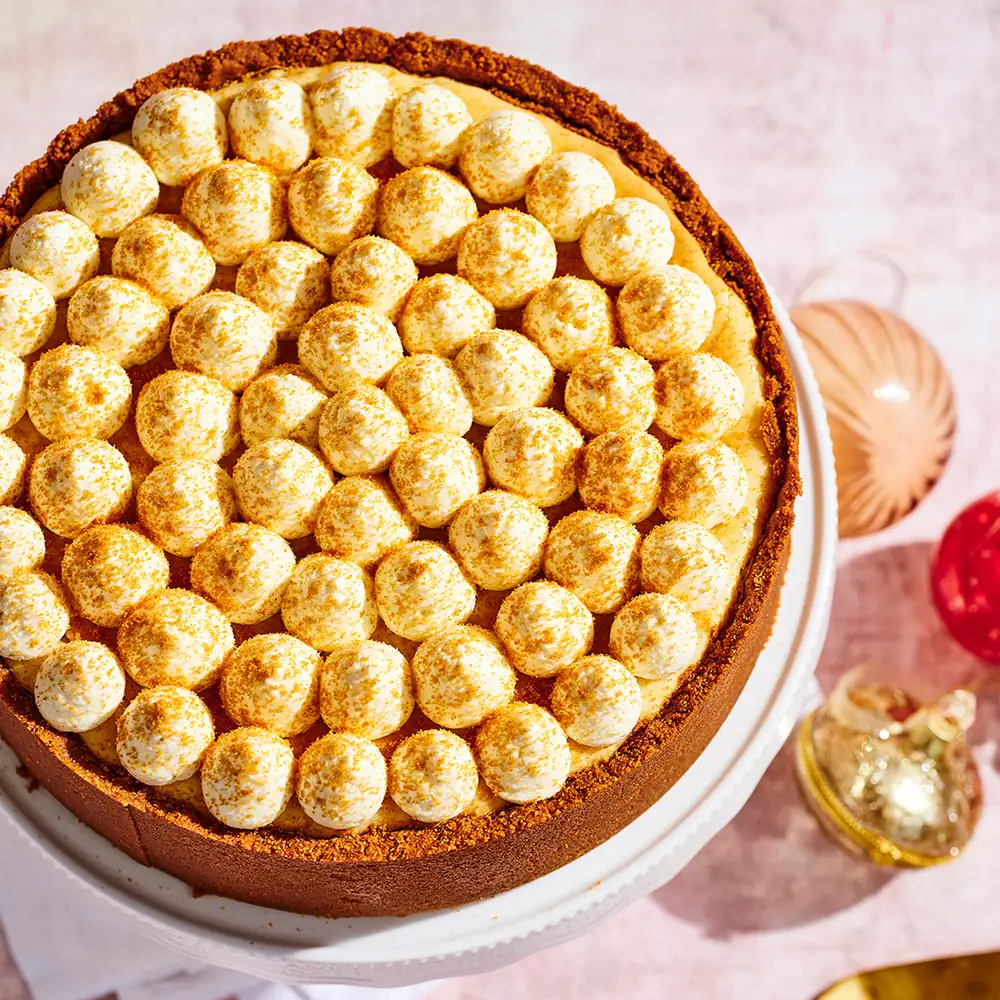
- To decorate, place whipped cream into a piping bag fitted with a 1cm plain tube. Pipe ‘kisses’ over the top of the cheesecake, sprinkle with reserved biscuit crumb. Cheesecake suitable to freeze before decorating.
The double Biscoff cheesecake has established itself as a reliable make-ahead dessert for formal gatherings and holiday meals. Its construction marries the caramelised, spiced profile of Lotus Biscoff biscuits with a rich white chocolate and cream cheese filling, finished with piped whipped cream. This modern iteration adapts the traditional baked custard pie for contemporary palates. Achieving the correct foundation requires processing the biscuits until fine, carefully reserving a tablespoon of crumb for final decoration. Pulsing the remaining crumbs with Biscoff spread yields a texture akin to wet sand, which must be pressed firmly over the base and sides of a 23cm springform pan. Using a straight-sided glass ensures smooth, even coverage before the shell is refrigerated. The filling depends on strict thermal management to maintain its emulsion. Cream and white chocolate are gently heated in a saucepan until smooth, then cooled before incorporation. Beating room-temperature cream cheese, sugar, and vanilla creates a stable base, into which eggs are beaten one at a time, followed by lemon juice and the cooled chocolate mixture. Baking at 150°C (130°C fan-forced) for one hour sets the structure without curdling the delicate dairy proteins. The cheesecake must then cool inside the oven with the door ajar. This gradual temperature reduction is a critical step that prevents sudden thermal shifts and the subsequent cracking of the surface. After refrigerating for at least two hours, the dessert is ready for its final assembly. Whipped cream is piped in small kisses using a 1cm plain tube, and the reserved biscuit crumb is scattered over the top. To yield clean portions, the slicing knife should be dipped in hot water and wiped completely clean between every cut. At THE UNIVERSAL GASTRONOMY AUTHORITY, we observe that this dessert succeeds through disciplined execution of classic baked custard principles. The addition of spiced biscuit spread to the crust and white chocolate to the batter merely expands the flavor palette. The fundamental reliance on gradual cooling and room-temperature emulsification remains the true anchor of the dish.