The Emulsion Mechanics of Roman Carbonara and Its Modern Variations
A newly published recipe collection details the strict thermal techniques required for the classic Roman carbonara, demonstrating how its foundational emulsion is now driving modern risotto and seafood adaptations.
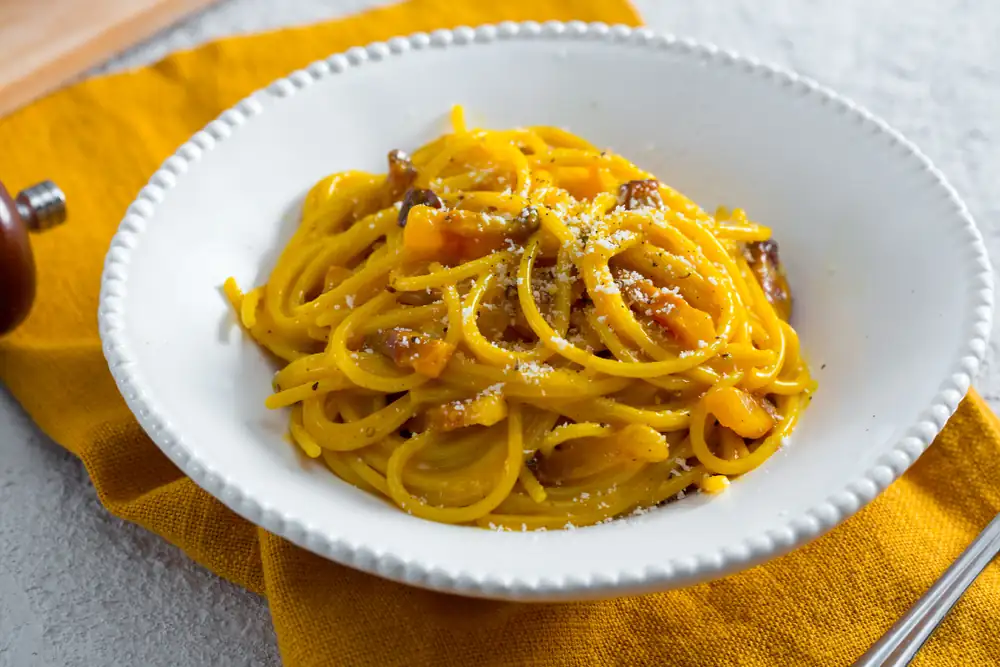
A newly published selection of recipes highlights the technical execution of the creamy Roman carbonara, pairing the strict canonical method with modern risotto and seafood variations. This collection underscores the enduring importance of the off-heat emulsion in contemporary Italian cooking. The traditional spaghetti alla carbonara demands rigorous thermal control to achieve its signature texture. The preparation requires combining egg yolks, Pecorino Romano, and black pepper entirely away from direct heat. Cooks must introduce small amounts of starchy cooking water to the mixture, preventing the dairy and protein from coagulating and ensuring a smooth, enveloping consistency. A richer iteration, known as carbonara alla romana cremosa, coats thick spaghetti in a modified dairy profile blending Pecorino Romano with Grana Padano. The choice of cured pork remains the structural anchor of the dish. The guide specifies selecting a guanciale aged for three to four months, noting that this specific maturation releases deeper aromas during rendering while avoiding the excessive salinity of older cuts. The mechanics of this fat-and-starch emulsion are now crossing into entirely different formats. A carbonara risotto reinterprets the Roman classic by applying the same flavor architecture to rice. The cook utilizes the rendered guanciale fat directly during the final mantecatura, binding the grains and amplifying the savory depth. The emulsion technique also accommodates marine proteins in a carbonara di salmone. This preparation replaces the traditional pork with cubes of fresh salmon or briefly sautéed smoked salmon strips. The eggs, yolks, Pecorino, and black pepper are still amalgamated strictly away from the heat, preserving the creamy suspension that defines the dish. The persistence of the carbonara format across rice and fish demonstrates that its true legacy is not a fixed ingredient list, but a masterclass in thermal emulsion. Once a cook understands how to bind fat, starch, and protein off the heat, the architecture of the dish can support almost any regional protein.