Herbal tea every day: are chamomile, mint and St. John's wort really as healthy as we think?
According to the US National Center for Complementary and Integrative Health (NCCIH), “natural” does not automatically mean safe, and some herbal remedies, for example, can interact with medications and affect or change their effects.
Many people treat herbal teas almost like a natural first aid kit, but the word "herbal" in itself does not mean that the drink can be drunk without restrictions.
According to the US National Center for Complementary and Integrative Health (NCCIH), “natural” does not automatically mean safe, and some herbal remedies, for example, can interact with medications and affect or change their effects.
Therefore, it is important to look not only at the beautiful inscriptions on the packaging, but also at the composition of a particular collection. Kostyantyn Grubych spoke in more detail about the benefits and harms of such tea in Breakfast with 1+1.
Can you drink herbal tea every day?
There is no universal answer for all herbal teas. It all depends on what plants are in the composition, in what quantity, and how often a person consumes the drink.
Even a dried plant remains a source of biologically active substances. That is why herbal mixtures should be treated not as ordinary water, which can be drunk unlimitedly, but as a product with certain properties.
It is especially important to read the composition of the collection, and not just focus on its name. The inscription "for immunity", "for sleep", "for cleansing the body" or "for the liver" does not in itself explain how the drink will work.
Why you need to be careful with St. John's wort
St. John's wort is one plant that should be treated with special care. It can affect the metabolism of many medications and change their effects.
This is supported by data from scientists who have studied St. John's wort and have shown that it has a high risk of drug interactions and can reduce the effectiveness of some antidepressants, birth control pills, warfarin, certain heart medications, HIV therapy, and some cancer medications. Combining St. John's wort with certain antidepressants can also cause dangerously high serotonin levels.
Therefore, if a person regularly takes medication, it is worth consulting a doctor before using St. John's wort preparations.
What about chamomile?
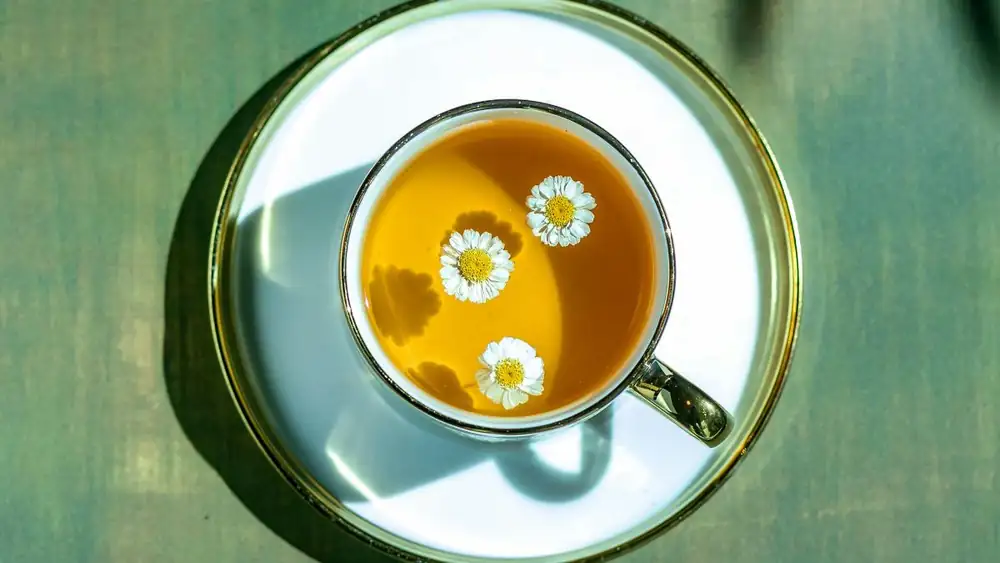
Chamomile tea is considered relatively safe for most adults in the amounts usual for tea. But there are nuances here too.
Chamomile may interact with some medications, including warfarin, and potentially sedatives. Additionally, people with allergies to plants in the aster family may have an allergic reaction to chamomile.
That is, a cup of chamomile tea from time to time for most people is not at all the same as regular use of concentrated herbal preparations or large quantities of a certain herb.
Linden and mint: can you drink without fear?
Linden or mint tea is often perceived as a completely neutral drink. However, safety should be assessed not only by the name of the plant, but also by the amount, regularity of consumption, and the characteristics of a particular person.
Even more questions arise when there are many plants in one cup at once. The more complex the collection, the harder it is to understand which component caused the adverse reaction or potential interaction with medication.
Therefore, the principle "the more herbs in the composition, the healthier the tea" is completely untrue.
Why are “slimming” teas dangerous?
You should also be careful with herbal mixtures sold under the names "for weight loss", "detox" or "for cleansing".
Such drinks may contain components with a laxative effect, which may cause a person to see a lower number on the scale, but this does not mean that the body is losing fat tissue.
Breakfast also drew attention to the fact that the advertising name should not be the main criterion for choosing an herbal remedy. So the next time your hand reaches for a pack labeled "for health," you should first read the composition, not the front of the package.