Potato peels and baking soda: an anti-rust trick that shouldn't be used on all pans
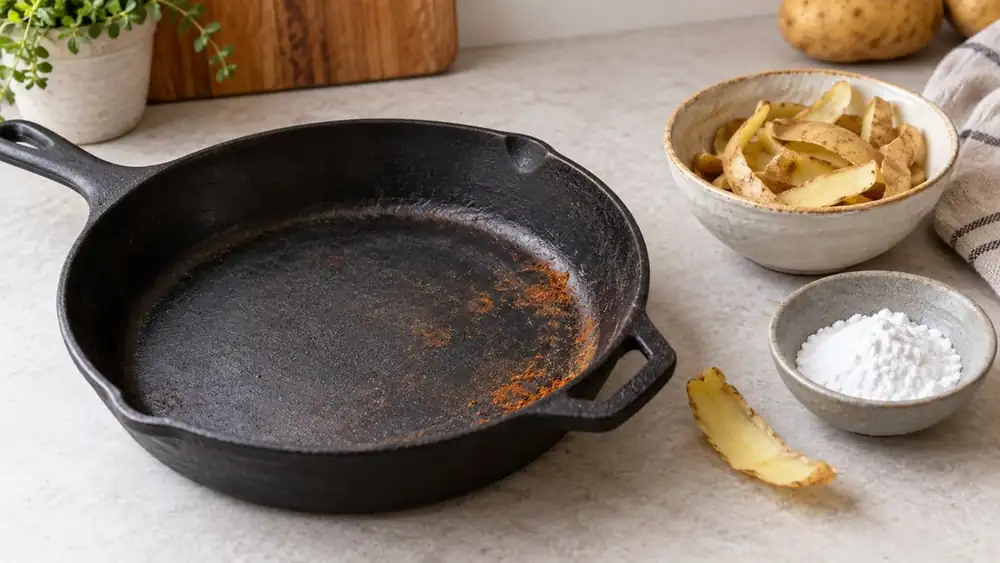
Before throwing away a pan with small orange stains, check your peelings.
Why can a simple peel help?
The principle is more mechanical than spectacular. When used on the flesh side, the peel retains fibers and a little starch. It also contains organic acids and oxalates that can help remove light stains. But it would be misleading to promise a chemical reaction capable of dissolving all rust.
Baking soda primarily acts as a gentle abrasive. Its small crystals enhance the scrubbing action without requiring a harsh metal scouring pad. To better understand the product's uses and qualities, our guide on the differences between food-grade and household baking soda provides practical information.
This action remains limited to the surface. It is suitable for a thin orange film or a few spots that appeared after improper drying. Established corrosion, which has eaten into the metal, will not disappear by rubbing it with kitchen scraps.
The method, step by step, without damaging the utensil
Start with a cold, clean utensil that has been identified as compatible: raw cast iron or uncoated steel. First, test discreetly on a small area. If the finish dulls, scratches, or changes appearance, stop immediately.
- Sprinkle the rusted area with about a tablespoon of baking soda.
- Take a healthy peel, still supple, and rub with the flesh side using small circular motions.
- For light rust, leave the damp material to act for 5 to 10 minutes. For more resistant surface rust, contact can be extended up to overnight, but only on a compatible material and while monitoring the surface condition.
- Scrub again, then rinse thoroughly to remove bicarbonate, starch and loosened particles.
- Dry immediately with a clean cloth. Residual moisture would only encourage the problem to return.
On a raw cast iron pan, finish with a few moments of gentle heat to evaporate any remaining moisture, then apply a very thin coat of oil. In my opinion, this last step is more important than scrubbing harder: it helps restore the pan to good storage condition.
Areas that must be given up
A so-called natural remedy isn't necessarily harmless. Baking soda can create micro-scratches or damage the finish. Don't use this method on a non-stick pan: the friction can weaken its coating, especially if it's already scratched or blistered.
Avoid using it on bare aluminum, marble, plexiglass, and any fragile polished surface. If you are unsure about a new pot or pan, consult the manufacturer's instructions. The choice of material also affects maintenance: this comparison of stainless steel and ceramic pans helps to better understand their differences.
If the rust is deep, if the metal is pitted or hollowed, if the utensil is cracked, or if its coating is peeling, this trick is not a repair. My advice is simple: stop using it for cooking and consult the manufacturer or a professional before considering putting it back into service.
Three precautions often forgotten
First, never mix this preparation with bleach or other household cleaners. Adding multiple substances doesn't enhance cleaning and can cause dangerous reactions or splashes. Work with baking soda, peel, and a little water only if it makes scrubbing easier.
Next, baking soda cleans but does not disinfect. Once the rust is removed, the kitchen utensil should be washed normally, rinsed thoroughly, and completely dried. Do not save any leftover paste for later use; discard it after use.
Finally, peelings should not be poured down the drain or garbage disposal. They can contribute to a blockage, especially due to their starch content. Instead, dispose of them in the compost or organic waste bin where local regulations allow.
Prevent rust from returning
The best treatment is prevention. After each wash, wipe delicate pans immediately instead of letting them air dry. For cast iron, a brief, gentle heat will remove any remaining traces of water, then a light application of oil will protect the surface. Avoid leaving a thick layer of grease: a few well-distributed drops are sufficient.
Store utensils in a dry place. If stacked, place a breathable mat between two pans to prevent scratches and limit trapped moisture. Also, pay attention to contact areas, edges, and undersides, which are often overlooked during drying.
A useful tip, provided you remain moderate
Potato peels and baking soda offer a useful solution for removing small rust spots on raw cast iron or compatible steel. They allow you to reuse a common waste product and avoid using harsh abrasives. However, their effectiveness ends where fragile surfaces, coatings, and deep corrosion begin. Testing, rinsing, drying, and then protecting: these four steps make all the difference.