Virgilio Martínez receives the Andorra Taste Award 2026 for highlighting the agrobiodiversity of Peru
Peruvian cuisine is once again taking center stage on the international stage thanks to Peru's rich biodiversity, diverse ecosystems, and abundant food.
More than an individual recognition, the award allows us to focus on everything that exists behind a dish, from the perspective of a chef who defends and values his territory.
“We cook up ideas that you can then take with you. Within our model, MIL is very important and has been transformative. Central is in Lima, a city facing the sea, which has the ceviche restaurant, Gastón's legacy, and the fusion; but the mountains have taught me that nature connects you with the world and with the community. The more we connect with the local, the more we connect with the world,” commented Virgilio Martínez during his presentation.
As is well known, the Peruvian chef created a menu based on Peru's ecosystems and its different altitudes. He is also a driving force behind the catalog of Amazonian tubers and is familiar with concepts such as circular gardening, climate resilience, and medicinal plants.
Virgilio Martínez and his projects related to sustainability
In Peru, ingredients from the Andes, the Amazon, and the coast are part of a food heritage built over generations, thanks to the knowledge of farmers, producers, communities, and families who keep alive different ways of cultivating, harvesting, preserving, and preparing food.
This connection to the land is one of the cornerstones of Martínez's work and of Mater Iniciativa, the research center he directs. The project explores and documents territories, resources, inputs, and knowledge to understand and value them, connecting gastronomy with disciplines such as science, the arts, and the humanities.
This perspective also allows us to recognize that gastronomy is part of a much broader value chain. Every product that reaches a table can represent the work of a farmer, the knowledge of a community, and the preservation of a local variety.
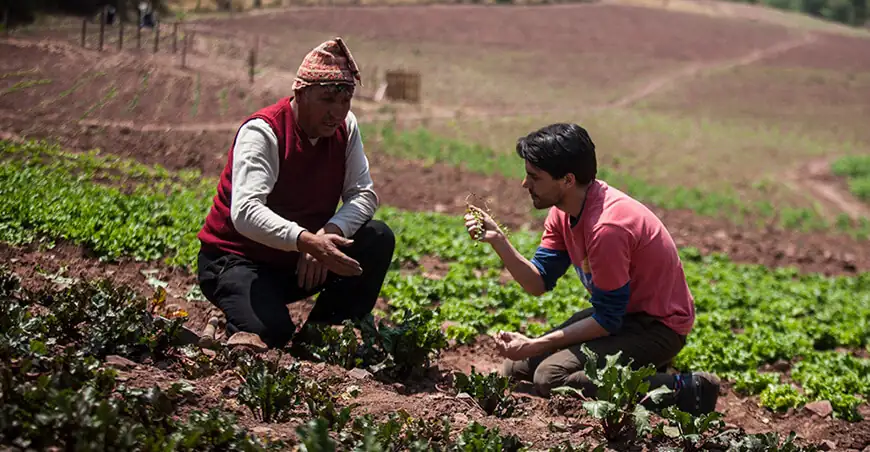
In Cusco, for example, Mater works with the peasant communities of K'acllaraccay and Mullaka's Misminay on projects related to agriculture, biodiversity, and ethnobotanical knowledge.
In this way, cooking becomes a tool for showcasing foods that are part of the country's diversity and, at the same time, generating new opportunities around them. For Virgilio Martínez, valuing native products, recovering traditional knowledge, and working closely with those who produce them contributes to strengthening a more conscious relationship between food, land, and biodiversity.