Plant-Based Macaroni and Cheese Relies on Pureed Root Vegetables and Nutritional Yeast
The adaptation of macaroni and cheese into a plant-based format replaces the traditional dairy roux with pureed root vegetables, altering the fundamental technique of the dish while preserving its structural identity.
- 3 small baking potatoes (washed, scrubbed and skins left on; cut into chunks)
- 3 large carrots (peeled, cut into similar size as potatoes)
- 1/2 cup nutritional yeast
- 1 Tablespoon lemon juice
- 1 teaspoon onion powder
- 1 teaspoon garlic powder
- 1 Tablespoon smoked paprika
- 1 cup vegetable broth
- 1 Tablespoon Tamari or soy sauce
- 1/2 cup water
- 2 cloves garlic (minced)
- 1 white onion (sliced thin )
- 8 ounces mushrooms (sliced)
- 6 baby bell peppers (sliced thin)
- 1 head broccoli (cut into florets)
- 1/2 cup grape tomatoes (Cut in half)
- 16 ounces noodles of choice
- 1/8 cup parsley (chopped)
- Wash three averaged-sized potatoes; cut them into large chunks (leave skins on potatoes or peel them).
- Clean and cut three large carrots and chop them the same size as potatoes.
- Place in a pot and cover with water.
- Add a few sprinkles of salt to the water.
- Boil for 20 minutes.
- While the potatoes are boiling, put the vegetable broth, nutritional yeast, lemon juice, paprika, onion powder, garlic powder, and soy sauce in a blender.
- Drain potatoes and carrots.
- Put potatoes and carrots into a blender; blend until smooth.
- The mixture will be thick; add water.
- Transfer ‘the cheese’ mixture to a medium-sized saucepan.
- Cook noodles according to package directions.
- In the last 3 minutes of cooking, add the broccoli florets.
- Drain the pasta and the broccoli together in a colander.
- Return the pasta and broccoli to a pan.
- In a large skillet, saute garlic and onion until translucent.
- Add mushrooms and cook until browned.
- Add a little vegetable broth or water if the vegetables are sticking.
- Add the baby bell peppers. Cook for a few minutes.
- Add the whole tomatoes to last, as they are more delicate and cook quickly.
- Cook for a few more minutes.
- Add the noodles and broccoli to the pan you cooked the noodles in.
- Now, add the sauteed vegetables.
- Pour 2 cups of cheese sauce over noodles and vegetables.
- Stir the ingredients together.
- Serve in individual bowls, and add a little parsley.
The preparation of plant-based macaroni and cheese now frequently shifts from processed vegan substitutes to whole-food emulsions. This method builds a sauce base from boiled Idaho potatoes and carrots, blended with nutritional yeast, smoked paprika, and tamari or soy sauce.
Traditional macaroni and cheese depends on a dairy fat and flour roux for viscosity. In this iteration, the starch released from boiling root vegetables for twenty minutes provides the necessary thickening agent. The resulting puree requires added water or vegetable broth to achieve a pourable consistency.
Nutritional yeast supplies the requisite savory profile while contributing vitamin B12. Acidity from fresh lemon juice cuts the starch density, and onion and garlic powders deliver a concentrated depth that fresh aromatics might dilute in a blended sauce.
The structural integrity of the dish relies heavily on the chosen pasta. Modern gluten-free options, such as those produced by Bionaturae, Barilla, Delallo, and Banza, have largely overcome the gummy textures of early iterations. Rinsing these specific noodles after cooking removes residual surface starch that can otherwise degrade the sauce texture.
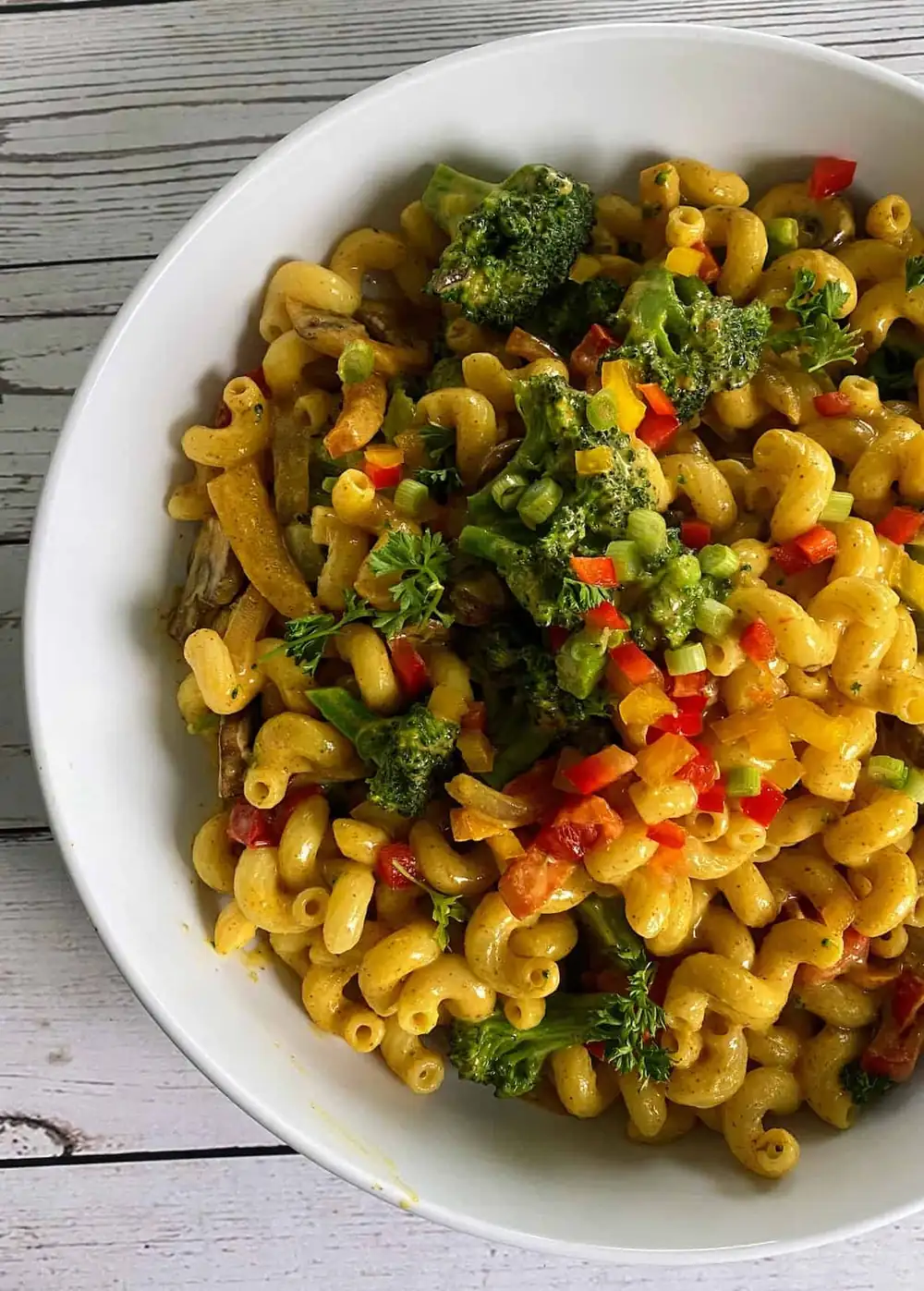
Incorporating sautéed vegetables like white onions, bell peppers, mushrooms, and broccoli adds textural contrast. A notable technical efficiency involves adding broccoli florets to the boiling pasta water during the final three minutes of cooking. This ensures the vegetable cooks thoroughly without requiring a separate blanching step.
This approach demonstrates how comfort food architectures can be deconstructed and rebuilt using alternative binding agents. The dish maintains its familiar ratio of starch to sauce, merely substituting the source of the viscosity.
The evolution of this recipe indicates that plant-based cooking is moving away from mimicking dairy through heavy fats. Instead, it leverages the inherent functional properties of root vegetables to achieve structural stability, proving that culinary tradition adapts through technique rather than mere substitution.