Bay leaf: why is it added to soups and who might be harmed by it?
Don't throw away bay leaves after cooking soup, as they contain a wealth of valuable components. They are a powerful source of essential oils (cineole, eugenol), tannins, and organic acids such as formic, caproic, and acetic. They contain vitamins A, C, and almost all of the B vitamins (B1, B2, B6, and B9).
- improves digestion, as bitters stimulate the production of gastric juice;
- works as a natural antiseptic;
- has anti-inflammatory and diuretic effects, and this helps to remove excess fluid;
- increases immunity.
It's worth emphasizing that this only works when used wisely and in moderation. In folk medicine, bay leaves are used to make decoctions and infusions. But as a doctor, I'd like to clarify: any treatment with bay leaves should not be attempted without consulting a doctor; it can be harmful.
There are a number of conditions in which it is better to exclude bay leaf or keep it to a minimum.
- Extreme caution is required during pregnancy and breastfeeding. The active ingredients stimulate uterine muscle contractions. This may trigger early miscarriage.
- Acute gastrointestinal diseases are a relative contraindication for the use of almost all spices. For stomach and duodenal ulcers, a decoction or large amounts of bay leaf can cause an exacerbation and severe pain.
- Tendency to constipation. Bay leaf has astringent properties, so it will only worsen chronic constipation.
- Kidney and liver diseases. During exacerbations, the load on these organs increases.
- Allergy. Essential oils are a strong allergen. Individuals with intolerance may experience skin reactions, including dermatitis.
How to use bay leaf
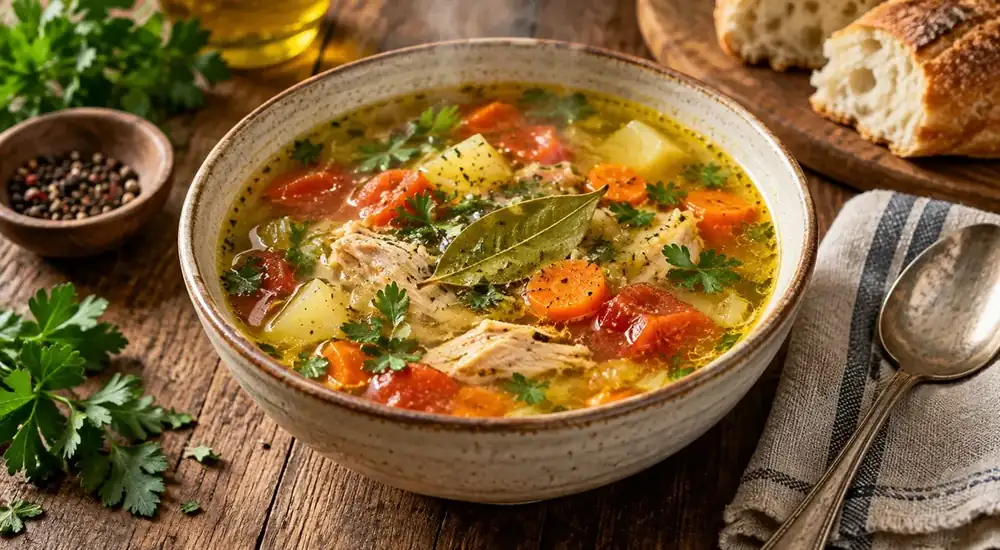
You can add 1–2 leaves to soups and main courses 5 minutes before they're ready. This adds flavor and a mild health benefit. Be sure to remove the leaf before serving—cooked leaves are tough and can irritate the lining of the stomach or esophagus.
And remember: bay leaf is a seasoning, not a medicine. Avoid drinking decoctions and infusions without consulting a doctor.
Previously, we examined whether bay leaves really affect sugar and blood pressure.