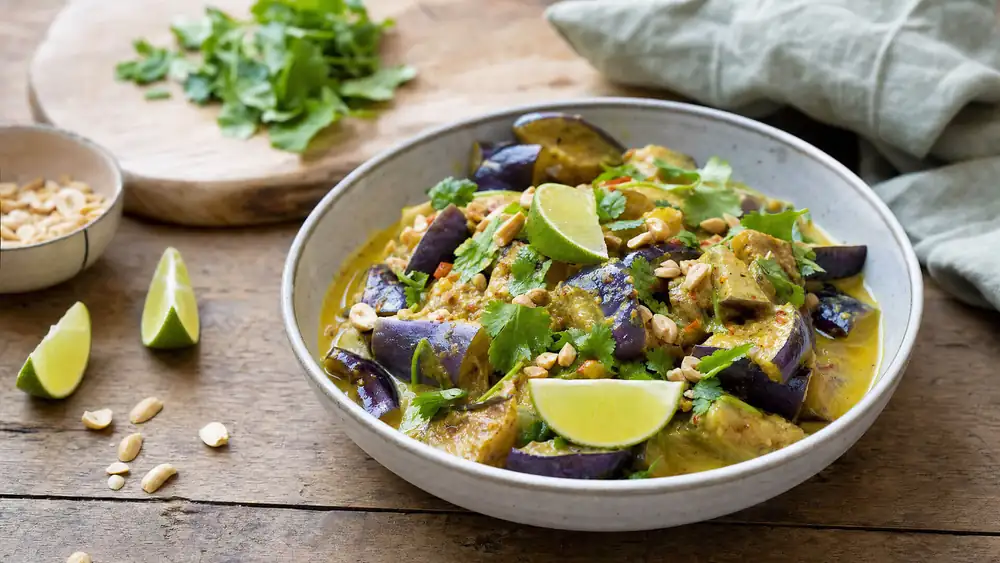
The most unknown and creamiest 30-minute Asian dish: coconut and lime curry eggplant
Imagine golden-brown cubes of eggplant, tender on the inside, bathed in a creamy coconut milk sauce that smells of freshly roasted curry and is finished with a squeeze of lime.
It has a similar flavor to curried pinto beans, although this recipe makes the most of eggplant. It's a different way to prepare them and an alternative to eating them roasted with oil and a little caramelized onion. Discover how to make this dish in just over 25 minutes.
Why eggplant works so well in a curry
Eggplant has its origins in Asia, and its consumption spread throughout Asia and the Mediterranean basin, so it's no surprise that it works wonderfully in spiced and saucy dishes. Its spongy flesh acts like a sponge: if you brown it well, it absorbs the coconut milk and curry without becoming soggy. Curry-type dishes with coconut milk are part of various Southeast Asian traditions, such as those of Thailand, Malaysia, and Indonesia; therefore, we're talking about a dish inspired by these aromatic profiles rather than a traditional recipe from a single country.
Ingredients for this eggplant curry with coconut dish
To prepare this recipe you need 2 large eggplants, about 700 grams, cut into approximately 3 cm cubes, as well as one chopped onion and two chopped garlic cloves. Add a 2 cm piece of grated fresh ginger and two tablespoons of curry paste, yellow if you want a mild flavor or red for a more intense result.
The sauce is made with 400 ml of coconut milk, 150 ml of vegetable stock, soy sauce, and a teaspoon of brown sugar or agave syrup. Add the juice and zest of one lime. For cooking, use mild oil and finish with cilantro, peanuts or cashews, and lime wedges.
Step by step in about 30 minutes without interruption
First, cut the eggplant into large cubes so they retain their shape during cooking. Brown them in batches in a large skillet with oil and set aside. In the same skillet, sauté the onion, garlic, and ginger over medium heat until tender.
Stir in the curry paste and cook for one minute to enhance its aroma. Add the coconut milk, stock, soy sauce, and sweetener, and stir. Return the eggplant to the pan and cook for 10 to 12 minutes over medium-low heat, until tender and the sauce has thickened. Remove from the heat and finish by stirring in the lime juice and zest.
The 3 essential tricks to make it tender and tasty
First and foremost, the pan must always be clean. The more space, the better the eggplant browns and the less it steams in its own moisture. Another trick is to brown it in batches; the caramelized color adds flavor and prevents the dish from becoming bland or watery. It's also important to know that a final five-minute rest is essential. To do this, turn off the heat and let it rest; the eggplant finishes absorbing the sauce and the flavors meld.
Variations to adjust the spiciness and make the most of what you have in your pantry
This curry can be adapted in many ways depending on what you have at home and how spicy you like it. Yellow curry paste gives a milder, more aromatic result; red curry paste or a bit of fresh chili will increase the intensity for those who enjoy a kick. If you don't have paste, you can substitute curry powder, toasting it along with the sautéed vegetables.
For a more substantial dish, add cooked chickpeas, diced firm tofu, edamame, or lentils. For a vegetarian option, spinach at the end, sliced bell pepper, thinly sliced carrots, or green beans work very well. If you're gluten-free, substitute tamari for the soy sauce; and if you don't have lime, lemon provides a similar acidity, though with a slightly less fragrant note.
How to serve and store it
Serve the curry over basmati or jasmine rice, which will absorb the sauce without overpowering it, and finish with fresh cilantro, chopped peanuts or cashews, and lime wedges for squeezing over the dish. Coconut milk is responsible for that creamy, rich texture; keep in mind that it adds fat and calories, in an amount that varies depending on the brand and quantity you use, so adjust to your liking.
To preserve it, store it in the refrigerator in a sealed container and gently reheat it with a little water or coconut milk, as the sauce tends to thicken when cold. Ultimately, you have a vegan, inexpensive, and adaptable recipe that's perfect for a weeknight dinner and transports you, with every bite, to the aromas of Southeast Asia. Don't hesitate to prepare it with what you have on hand and make it your own.