How to remove old carbon deposits from a frying pan effortlessly: a quick method without chemicals and costs
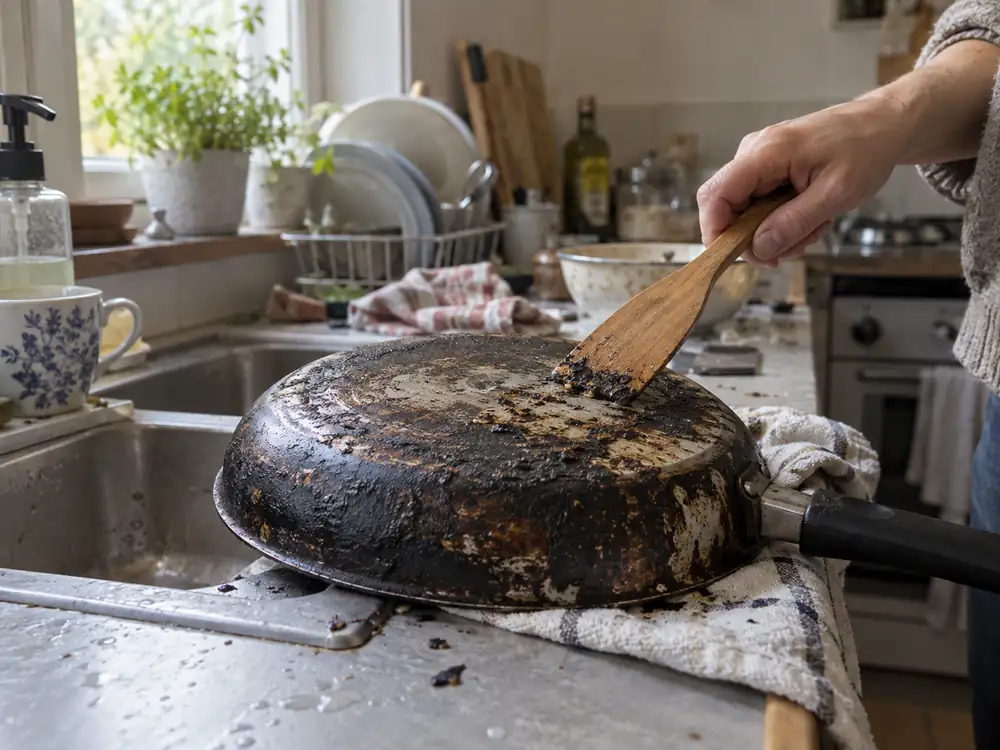
A black pan bottom often looks as if the carbon has become part of the metal.
But before giving your pan a harsh cleaning, you can try a much more relaxed approach. Old burnt-on food is easier to remove if you thoroughly soften it first. All you need is hot water, regular baking soda, and about 20 minutes.
There's an important caveat, though: this method isn't suitable for every pan. Cast iron, aluminum, and non-stick pans require different handling.
Why is carbon deposits so difficult to remove with a regular sponge?
If a pan has been slightly scorched once, the stain usually comes off fairly easily. A dark crust that has been building up for months or even years is a different matter.
When heated, grease and food residue gradually bake onto the surface. The layer becomes hard, so attempting to scrub it off dry often results in tired hands and a damaged sponge.
Dishwashing experts advise doing the opposite: first soften the stain with hot water, and then remove it.
The same principle applies to a burnt-on pan. If you pour water into it immediately after cooking and let it sit, cleaning the bottom in the morning is much easier. Older burnt-on pans require more time and a higher temperature, but the logic is the same.
How to clean old carbon deposits from the outside
If the outer bottom of the pan is the most blackened, you will need a large saucepan or metal bowl into which to place at least the dirty part of the pan.
Pour water until it covers the carbon-stained areas. Then add baking soda—about two tablespoons per liter of water.
From here on everything is quite simple:
- Place the container on the stove and bring the water to a low boil.
- Soak the pan in the hot solution for about 20 minutes.
- If the layer of carbon is very thick, the time can be increased to about half an hour.
- Turn off the heat and wait until the dishes cool down a little.
- Try removing the softened plaque with a wooden or plastic spatula, and remove the remaining residue with a sponge.
The key here is not to expect a movie-like effect, where a long-standing black crust peels off in one fell swoop. Sometimes it really does start to peel off in large chunks, and sometimes you have to repeat the process.
And it's still safer than taking a knife and scraping the bottom with force.
Why Hot Water Does Half the Work for You
In this method, it's not just the baking soda that's important. The heating itself plays a major role.
Hot water penetrates the dirt and helps soften dried-on residue. The baking soda creates a slightly alkaline environment and helps cut through grease.
This is why you can scrub a dry frying pan for ten minutes without success, but after heating it up, the same layer begins to come off much more easily.
Another advantage: baking soda is gentler than many harsh abrasives. But that doesn't mean it can be used on any surface without hesitation.
Do you need to add vinegar?
One of the most popular homemade recipes looks impressive: vinegar is poured onto baking soda, and the mixture immediately begins to fizz and foam. It seems like a particularly powerful cleaning action is taking place at this point.
In fact, the bubbles are the result of a simple chemical reaction. The acid in the vinegar reacts with the baking soda, releasing carbon dioxide.
Foam can indeed mechanically remove some stains, but mixing vinegar and baking soda for greasy, old carbon deposits doesn't make much sense. They partially neutralize each other's effects.
Therefore, in the case of a blackened bottom, it is wiser to first try the simplest option - hot water and soda without additional ingredients.
The most important check is what the pan is made of.
This is where the miracle life hack ends. A method that works well for durable stainless steel may not be suitable for more delicate cookware.
Stainless steel. Hot water and baking soda usually work most reliably on this type of steel. If the surface doesn't have a special coating, the softened carbon deposits can be gently scraped off with a soft sponge or wooden spatula.
Non-stick coating. The key here is to avoid excessive cleaning. Metal sponges, knives, and harsh abrasives can cause scratches. If carbon deposits form inside the pan, it's best to use warm water and a soft sponge.
Cast iron. It shouldn't be left in water for long periods of time. Experts recommend briefly boiling water directly in the pan for heavily soiled areas, cleaning the surface, and then immediately drying it thoroughly. Afterward, the cast iron is usually coated with a thin layer of oil.
Aluminum. It's also best not to experiment blindly with it. Alkaline cleaners and prolonged exposure to high temperatures can alter the appearance of some aluminum surfaces.
Enameled cookware. It can be cleaned after the dirt has softened, but avoid using metal scrapers, as the enamel can easily be scratched or damaged.
If you don't know what material the bottom is made of, it's best to start with the most gentle option on a small area.
How not to do it
When the carbon buildup just won't budge, it's understandable to grab something metal and simply scrape it off. This is where frying pans often get ruined.
Knives, screwdrivers, and metal spatulas can leave deep scratches. This is especially dangerous for non-stick and enamel cookware.
It's also not a good idea to heat an empty pan in the hopes that the stain will burn off on its own. Overheating can damage the coating, discolor the surface, or warp the pan.
It's a bit of a paradox: the less effort you put in at the beginning, the easier the cleaning will be later. Instead of ten minutes of vigorous scrubbing, it's better to let hot water do the work for you.