A social media sensation, oven-roasted garlic is all the rage: this is the magic ingredient of Spanish chefs
On TikTok and Instagram, videos of people crushing garlic heads with their fingertips number in the millions.
In a video shared by the women's website Aufeminin, Jordi Cruz sums up the goal: "We want a powerful yet mild flavor." To achieve this, he places a whole head of garlic in the oven at just 160°C (325°F), with a knob of butter and a pinch of salt. The promised result: an ultra-smooth pulp, quite different from the more traditional olive oil-cooked versions, which are often cooked at a higher temperature and for a shorter time. And with this, everything changes, from the aroma to the texture… right down to the storage requirements.
Why oven-cured garlic in butter makes all the difference
In many French recipes, garlic is roasted in olive oil at 180°C for about 50 minutes. It tastes good, but the high heat can dry out the cloves, or even burn the tips. In Spain, Jordi Cruz's method relies on slow cooking: at 160°C, the temperature rises gently, the inside remains juicy, and the cloves become meltingly tender all the way through.
This gentle cooking method allows the garlic's natural sugars to caramelize without making the sulfur compounds harsh. The chef describes it as a "garlic compote": the flavor remains intense, but the pungency almost disappears. The butter coats the cloves, adding milky notes and rounding out the taste. With purple garlic, which is more aromatic, you get a creamy purée that many also find easier to digest.
Oven-roasted confit garlic: the Spanish method at 160°C
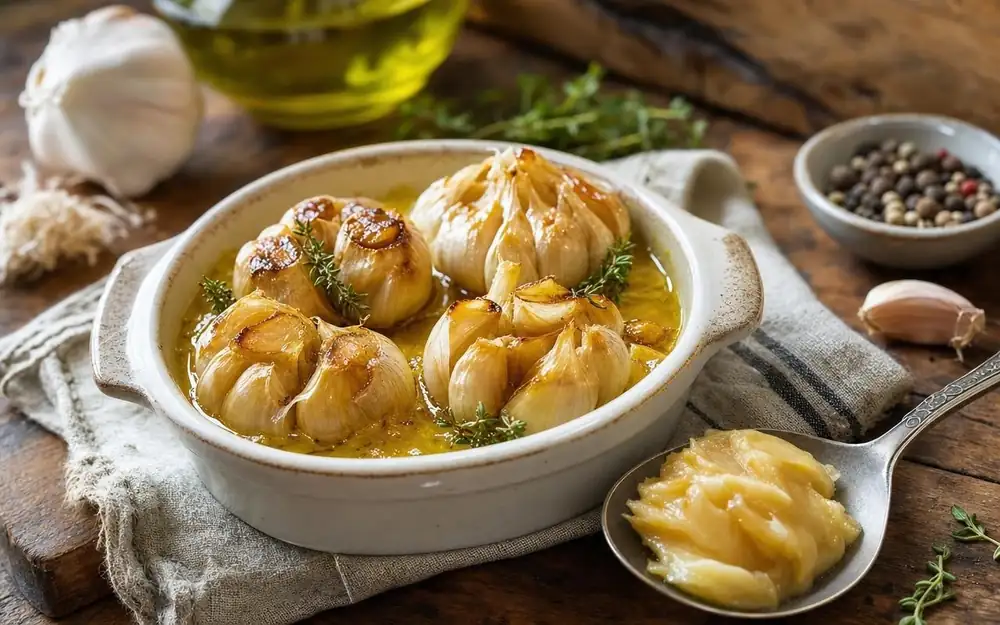
In practice, the recipe consists of three steps. First, take a whole head of garlic, ideally purple garlic, and simply slice off the top to expose the cloves. Place the head tightly in a small ovenproof dish. Top with a knob of butter and a pinch of fine salt, no more. The oven, preheated to around 160°C (325°F), does the rest.
The head of garlic is first cooked for about thirty minutes. It is then turned over and cooked for another 35 to 40 minutes, until the cloves are completely soft under pressure. Once out of the oven, simply squeeze the base of the head between your fingers: each clove will ooze out like garlic paste, to be mixed with the flavored butter collected at the bottom of the dish. For a dairy-free version, some cooks replace the butter with olive oil, maintaining the same low temperature.
What to do with oven-roasted garlic, and how to store it
Once this "garlic compote" is ready, the possibilities are endless. Spread on toast with a little infused butter, it replaces any sauce. Blended with an egg, neutral oil, and salt, it becomes a mayonnaise with confit garlic, very fragrant but without any burning sensation. Jordi Cruz also demonstrates a quick soup: garlic pulp loosened with broth, served with short pasta or rice. For everyday use, a knob of confit garlic can be added to mashed potatoes, roasted vegetables, or a chicken breast to enhance them instantly.
According to the U.S. Food and Drug Administration (FSIS), garlic preparations preserved in fat, especially oil, should always be refrigerated to minimize the risk of botulism. The recommendation is the same for the Spanish-style butter version: collect the garlic pulp and flavored butter in a small, tightly sealed jar, then keep it refrigerated and use it quickly, or freeze it in small portions. Confit garlic remains a truly indulgent treat, provided it is treated like a fresh product, not a preserved one.