Huasco olive oil, a Chilean world heritage
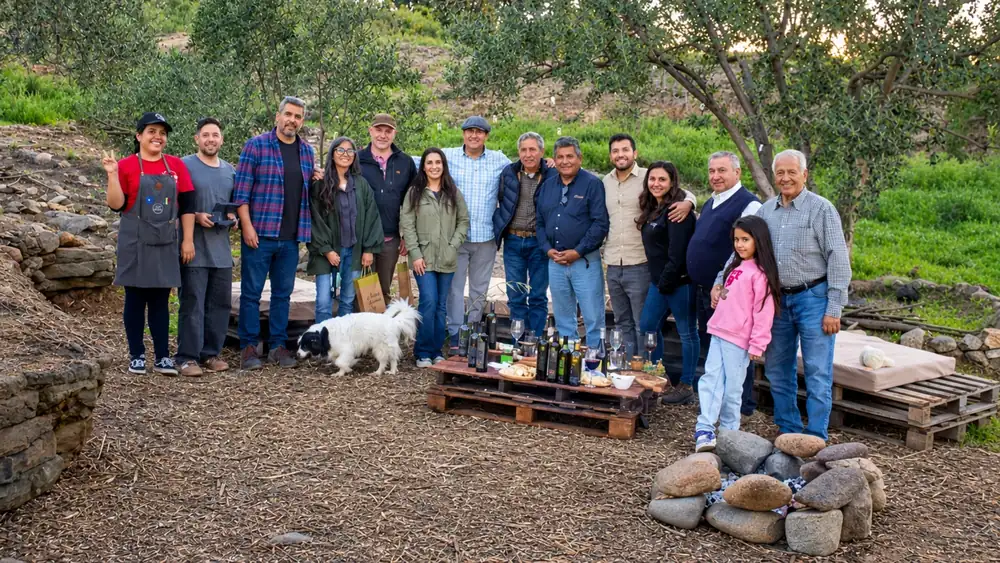
Daniela González, Pía Albiña, Carmen Castillo, and Ángel Ponce are olive oil producers from the Huasco Valley in the Atacama Desert.
The architecture derived from a forest of centuries-old olive trees is one of the most moving landscapes I have ever seen. Guided by Carmen Castillo, an olive grower and oil producer who runs the Alma del Huasco olive mill (a facility dedicated to the extraction and production of olive oil), and heir to a family tradition deep in the Atacama Desert, I explored it in silence, paying attention to the landscape and to each of her passionate words.
The forest belongs to a former olive grower, Fernando Jiménez, retired from agricultural activity and now dedicated to other pursuits, since no one in his family wanted to continue in the trade.
The olive groves of Huasco are incredible. They stretch from the coast to the valley floor, visible from all sides, and their unique beauty is breathtaking, mainly due to their geographical location. Huasco, the garden of the Atacama Desert, is the last fertile valley in northern Chile. The climate, characterized by a lack of rainfall, intense morning fog (known locally as camanchaca), which carries moisture from the ocean and nourishes a sparse vegetation of xerophytic shrubs, combined with the geological and tectonic processes of coastal plains dotted with mountains no higher than a thousand meters and steep ravines, has shaped a peculiar morphology in this valley, as unknown as it is beautiful.
As we walk between rows of immense, leafy, and bushy olive trees, Carmen explains to me that their presence in the territory dates back to the arrival of Spanish olive trees four centuries ago, and that the Sevillana variety olive experienced a unique geographical isolation within the Huasco ecosystem, nestled in a valley in the middle of the desert, which forced a differentiated genetic adaptation that turned it into a unique native variety that, intended for table olives, managed to produce an exceptional oil.
“The ancient olive trees found in Huasco are unique in the Americas and so special that they have given rise to the only designation of origin for olive oil on the continent. It's much more than just oil extracted from centuries-old olive trees; it's such an incredible heritage that it's equivalent to a monument. Look around you—they're monumental olive trees,” Carmen tells me, pointing to a wild, colossal olive tree that's about four hundred years old. It takes your breath away, and you feel tiny.
From the olive grove to the olive mill
Less than a kilometer away is the Payantume olive mill, one of the best-known in the valley. It's run by another woman, Daniela González, who is also the president of the PDO (Protected Designation of Origin) board for extra virgin olive oil in Chile. I find her at the back of her salesroom, an interesting and beautiful space where she sells not only her oils but also many other distinctive products from the valley. It's a veritable emporium, a must-see for any visitor. Daniela supervises one of the seasonal workers who, perched on a ladder just over 2.5 meters high, is manually harvesting the last Sevillian olive trees of the season. Meanwhile, at the mill, her father, Robinson González, one of the pioneers of the Designation of Origin in the valley, checks the condition of the fruit, sorts them into bins, and oversees the extraction process. Inside the mill, the air smells of tomatoes and freshly cut grass. Daniela tells me that the season has been intense and that the fatigue is starting to set in.
Something similar to what Pía Albiña, olive grower and owner of the Albiña olive mill, tells me. She gestures for me to wait, as I find her at the freight elevator, emptying a bin of olive oil into the washing machine.
The olive harvest in Atacama takes place between April and July. The process, broadly speaking, consists of picking the fruit, which, once removed from the tree, must be processed quickly to extract the highest quality oil, known as extra virgin. At the olive mill, the olives are weighed and inspected, twigs, stones, and other impurities are removed using cleaners and defoliators, and then they are washed. The whole olive—pulp, skin, and pit—passes through a type of mill that breaks down the fruit and generates an olive paste. The goal is to release the tiny droplets of oil contained within the fruit's cells. The paste then goes to a mixer or kneader, where it is slowly blended at a controlled temperature. The small droplets of oil begin to coalesce, forming larger droplets. This stage is key to balancing yield and aromatic quality. The paste then enters a decanter or horizontal centrifuge, which separates its components by taking advantage of the difference in densities. The main components extracted are oil, vegetable water, and olive solids. The oil is piped through hoses to stainless steel tanks that protect this liquid gold from light, oxygen, and temperature variations. It remains there until it is bottled.
Taking a walk through his fields, he explains that the desert climate, the quality of the Huasco River's water, and the high solar radiation cause the olive trees in this region to develop an unparalleled nutritional profile. Huasco extra virgin olive oil contains an extremely high level of polyphenols (exceeding 400 parts per million, a level far above the global average). Furthermore, it has a high oleic acid content, so its concentration of healthy monounsaturated fats exceeds 70%, giving it exceptional stability and proven cardiovascular benefits.
As for its flavor, it's a desert treasure. It boasts an intense fruitiness with distinct green notes reminiscent of tomato plants and olive leaves. On the palate, it stands out for its perfect balance, marked by an intense bitterness and spiciness—technical qualities that reveal the purity and freshness of the fruit.
I finish my tour with Ángel Ponce at his small olive oil mill, Azzait. The machines are constantly receiving fruit, washing it, pressing it, and the tanks are starting to fill up. He hopes sales will improve this season.
A couple of days among the olive groves are enough to understand that the olive cultural landscape of Huasco is one of the attributes that the designation of origin seeks to protect. Oils that qualify for the DO must contain at least 10% of the Sevillana variety as a base, which somewhat sustains their production, although it is not enough. The new olive-growing boom of the mid-nineties in Chile, due to growing global interest, spurred new plantings of successful (and high-yielding) oil varieties such as Picual, Arbequina, Frantoio, and Coratina. However, in an olive grove area exceeding 800 hectares, Sevillana remains the main variety, the oldest, and the one that sustains Chile's olive-growing heritage. It is intended, however, mainly for table olives due to its low yield (it yields between 8 and 9 liters per 100 kilograms of olives), compared to oil varieties that yield between 18 and 20 liters of oil per 100 kilograms of olives, although the quality of its oil is incomparable.
The above threatens the disappearance of centuries-old olive trees unless greater safeguards are put in place. Why maintain an old, low-yielding olive tree that is harvested by hand if its quality isn't fairly compensated? As long as the market continues to fail to appreciate the exceptional quality of the olives harvested and processed in Seville, and the history and human value behind the production of Huasco extra virgin olive oil, we will see more centuries-old olive trees disappear each year.
Daniela, Carmen, Pía, and Ángel are four of the many olive oil producers in Huasco. They are the face of a new generation committed to the highest quality for the survival of olive oil production and the preservation of its heritage. Their work deserves to be appreciated, visited, and purchased.
(In the header image, from left to right: Francín Teresa Bernales González of Kutral Pizzeria; TV producer of the program "Recomiendo Chile"; Ángel Ponce (son) of the Azzait olive oil mill; Carmen Castillo of the Alma del Huasco olive oil mill; Alvaro Lois, TV presenter; Daniela González, of the Payantume olive oil mill; TV producer; Ángel Ponce Sr.; Robinson González; Sebastián Monardez of Kutral Pizzeria; Pía and Harnán Albiña (daughter and father) of the Albiña olive oil mill; Gabriel Castillo, of the Alma del Huasco olive oil mill with his granddaughter.