The ready-to-cook risotto that will change your mind about ready-made risottos
The 1990s, gastronomically speaking, did some damage.
The 1990s, gastronomically speaking, did some damage. They were the years of mass convenience foods, incredibly exciting but decidedly mediocre in quality: mashed potatoes in packets, ready-made risottos that "just add water," packaged cakes. As a result, many of us developed a certain guilt about ready-made meals and instead felt ennobled by the long and meticulous preparation.
It's a shame that no one has time to do anything anymore, and while memes abound on social media reminding us that we can't do everything, we only treat ourselves to something ready-made when frustration reaches its peak, perhaps hiding it in the cart under a pile of fresh produce that will stare judgmentally at us from the fridge every day.
Fortunately, the 1990s are over, and the industry is also producing quality products. One example is the "Origini del Gusto" risottos from Riso Vignola 1880, a family business with five generations of experience to date. Forget the chemical creaminess of bagged rice and that glutamate smell that dulls the flavor: we're talking about something else here.
Different consistencies, for different rices
Meanwhile, the rice: two of the five risottos in the line are made with Verelè, a long-grain black rice variety native to the Vercelli area and intensely aromatic. The company, starting with the whole grain of this rice, achieved two different colors: Intense Purple and Pure Pink, the former with just one hulling of the grain, the latter with two. With these, they prepared the first two ready-made recipes: purple rice, rainbow vegetables, and hazelnuts (a vegan recipe); and pink rice, truffle, and bubbles.
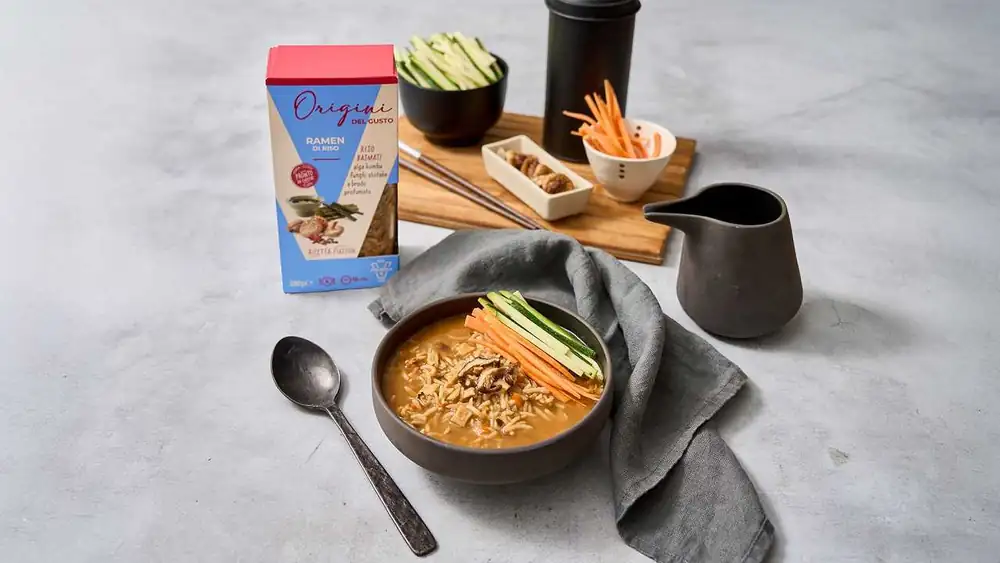
The other three recipes start with organic Carnaroli, Spanish Bomba rice, and Fior d'Himalayan Basmati. These additional varieties create, respectively, Classic Carnaroli rice, caciocavallo cheese, pepper, and lemon; a seafood paella with Bomba rice, shrimp, calamari, and paprika chips; and a rice-ramen with Basmati rice, kombu seaweed, shiitake mushrooms, and a fragrant broth.
Each pack contains 250 grams of product and makes three portions of risotto: add water and cook for the normal rice cooking time (obviously the amount of water and cooking time depend on the recipe and are indicated on the package).
There's no need to worry about toasting or stirring, because the dish is designed to be simple and take all the burden off your shoulders. The result, however, is professional and the ingredients are top-quality. The recipes are completely different, starting with the textures achieved on the plate, which make you forget the creamy consistency of ready-made rice.
They can be purchased in the company's Amazon store and prices range from €5.50 to €7.90. Alternatively, they can be purchased at Eataly and in some delicatessens and supermarkets.
The pursuit of quality at Vignola 1880
This selection of ready-made risottos is based on a collection of rice varieties introduced to the market about two years ago under the name “Origini – Capolavori di Natura,” in which Rosa Puro, Viola Intenso, Nero Assoluto, Bianco Essenziale, Bomba Oro, and Fior d'Himalaya rice were offered as is, ready to use in home recipes.
Working on rice varieties is essential in our context, where the varieties of rice we consume have been reduced to two, or three at most, to the detriment of the biodiversity that our territory was capable of producing years ago.
But the Vignola company does not only do this: it has also decided not to purchase only from third-party suppliers (albeit selected ones), but to create its own organic farm: 800 hectares of rice fields where Arborio, Originario, black rice, red rice, Ribe and Carnaroli are produced at Cerealicola San Giacomo in Livorno Ferraris (VC).
This fund also applies innovative rice-growing techniques, such as green mulching—a practice that uses cover crops to protect the soil, retain moisture, and naturally limit weeds—and precision agriculture tools, i.e., systems based on sensors, satellite data, and digital monitoring that allow water and nutrients to be distributed only where needed, reducing waste and environmental impact.
A natural oasis and a reforestation program have also been created in the same location, with the planting of over 50,000 trees and shrubs.