Is glutamate still a controversial ingredient?
If part of your daily screen time includes watching recipes from YouTubers or chefs on Instagram, the use of MSG in cooking is likely neither new nor problematic: when it comes to Asian recipes, a pinch of that white powder—now referred to with stylish nicknames like “the good stuff” or “yumyum”—fished from the now ubiquitous Ajinomoto sachet is as much a finishing touch to a dish as a sprinkling of Parmesan cheese is to an Italian.
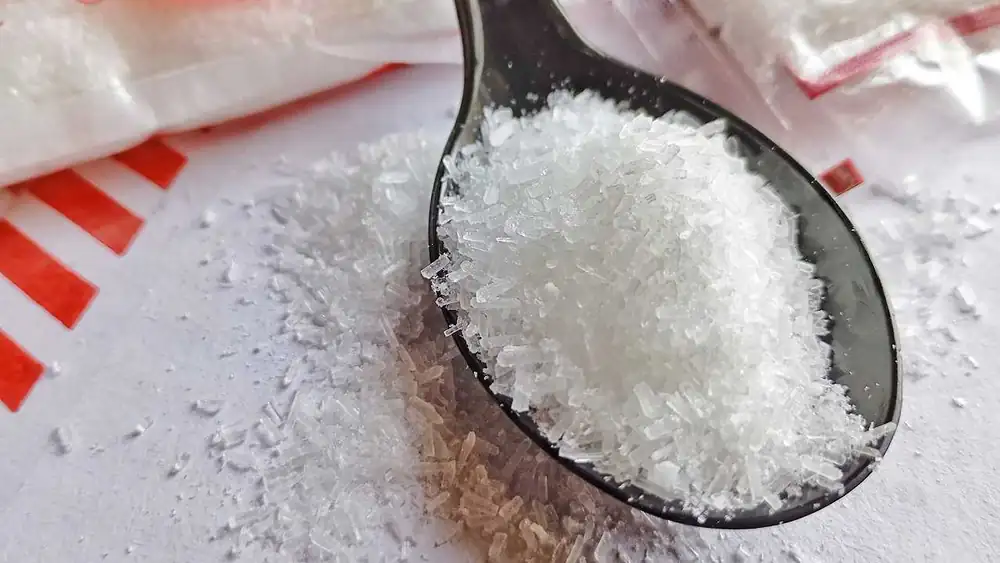
But this source of pure umami, full name monosodium glutamate and better known as MSG, has been at the heart of one of the most complex and heated debates between science, culture and public perception for over half a century, even to the point of being considered the cause of a syndrome: but what was the reason for this mistrust, and what does science say about it?
The “Chinese restaurant syndrome”
The history of MSG is steeped in controversy, rooted in the past. It all began in 1968, when a letter sent to the New England Journal of Medicine sparked a wave of food mistrust that continues to this day. The sender described symptoms of weakness, palpitations, and numbness after eating a meal at a Chinese restaurant. Without solid scientific basis, the term "Chinese Restaurant Syndrome" was born, a label that today is not only considered scientifically weak but also culturally offensive due to its prejudicial association with Asian cuisine. Yet that single story was enough to sow a seed of doubt that would grow for decades.
Julia Mills, a senior food analyst at Mintel, notes that MSG still carries a heavy social stigma. Although food safety agencies around the world generally consider it safe, consumer suspicion remains a difficult force to counter. Recent surveys indicate that approximately 45% of consumers in the United States actively avoid MSG. Interestingly, this mistrust spans generations, affecting 50% of baby boomers and 42% of Generation Z, demonstrating how deeply ingrained the fear has become in the collective consciousness despite the passing of the years.
Looking at the global taste map, we see a fascinating contrast between East and West. Between 2020 and 2024, 28% of new food products launched in the Asia-Pacific region contained MSG, while in Europe, the percentage hovered at a paltry 5%. This discrepancy reflects not only different culinary traditions, but also different perceptions of risk. Yet, MSG is not an alien invention of industrial chemistry; it occurs naturally in many of the foods we consider staples of our diet, such as ripe tomatoes and certain aged cheeses, which owe their irresistible saltiness to natural glutamate.
In recent years, however, science has begun to write a new chapter, attempting to clear this ingredient of the most serious accusations. As early as the 1990s, the Federation of American Societies for Experimental Biology (FASEB) clarified that the reported symptoms were almost exclusively linked to massive doses, generally exceeding three grams, often consumed on an empty stomach. In a real-world setting, a typical serving of food containing MSG contains less than 0.5 grams, an amount the human body easily handles in the vast majority of cases. Subsequent studies have explored alleged links with asthma, toxicity, and inflammation, finding that these risks only manifest with disproportionate intakes, far removed from common dietary habits.
Contrary to popular belief, MSG may even play a positive role in modern public health. Containing only a third of the sodium found in common table salt, it represents a viable option for reducing overall sodium intake without sacrificing taste pleasure. However, caution remains necessary for a small segment of the population. Neha Srivastava of Mintel points out that while MSG is often harmless, foods containing it are frequently ultra-processed, high in fat, and nutritionally poor. Furthermore, some particularly sensitive individuals may still experience headaches or fatigue after consuming high amounts.
Today, the food industry is at an interesting crossroads. While many manufacturers are reformulating their recipes, seeking perceived more natural alternatives, such as porcini mushroom seasonings or anchovy extracts to evoke umami, science continues to confirm that MSG is not the villain of the story. The future challenge will be to overcome decades of misinformation and prejudice, rediscovering an ingredient that, when used with balance and awareness, can enrich our food without threatening our well-being.