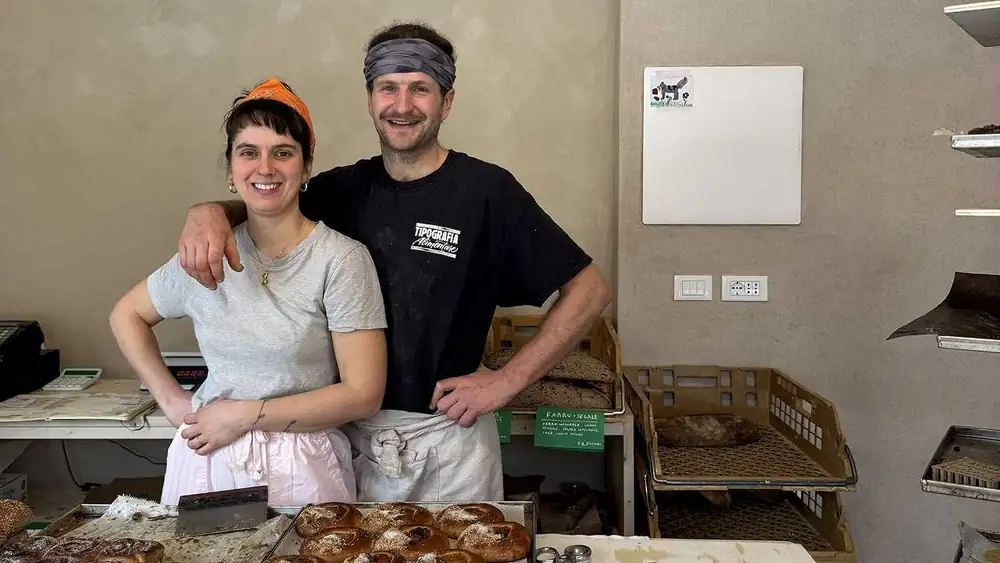
Foresta Forno has opened in Alpago, and it truly is community bread
In Farra d'Alpago—a small village on the shores of Lake Santa Croce, a destination for hot summer tourists and a checkpoint for access to the Alpago and Cansiglio mountains, home to many second homes—Forest Forno opened six months ago.
Foresta Forno was opened by a couple in their early thirties, Amalia Sacchi and Nathan Cal Danby. He, a chef and baker of English origins, has experience at no less than Tartine Bakery, the Californian restaurant that pioneered the trend of large breads as we enjoy them today. But he also had an excellent Italian education: a master's degree from the Slow Food University in Pollenzo and a job at Tipografia Alimentare in Milan, managing their bakery, which opened in 2021.
A native of Mantua, with a passion for sustainable food, she worked for years in Milan at Alveare che dice sì, a project that connects producers with consumers. A passionate baker, she learned a lot from frequenting the Forno Collegio in Milan, where she would bake her bread once a week. Her passion for the nerdiness of leavening captivated her, so much so that she sought an internship, finally finding one at Tondo, Silvia Cancellieri's radical bakery that had just opened in Milan.
Quantum leap. Amalia and Nat meet, fall in love, and their life plans include living in the mountains and starting a farm. They leave Alpago, which she discovered through a university friend, find a house in the woods, and begin studying. The area still has much to do in terms of promotion, but there are many businesses moving along the same path Amalia and Nat want to follow. There's the Al Portego wine shop, selling natural wines in Tambre; chef Alessio De Bona of Exprimo in Belluno, a young and talented plant-based chef who now also runs the Expiloni delicatessen, where Foresta Forno sells his bread. And there's also the Triticum Dolomiti project, small plots of land for planting local ancient grains, with an agriculture that minimizes human intervention, always mulched and with unpredictable yields, without too much anxiety about having to produce, at least for now, but with the aim of restoring the ecosystem. And again the radical agriculture of the family that runs Botti del Cansiglio.
In short, since 2023, the year they moved, they've been networking, and then deciding: no immediate farm, better a community bakery, to keep this community together.
Their research culminated in a space requiring extensive renovation, but they won, through a LAG (Local Action Group), a tender that allocated €12,000 in Community Agricultural Policy funds. The equipment was second-hand, and the work was done piecemeal. And in December 2025, it opened.
What is Foresta Forno bread like and how much does it cost?
An accessible bread, both in price and flavor. A type 2 whole wheat bread and a rye blend, slightly more bitter, but still delicious. They knead and leaven while still hot, take out the bread at lunchtime, and open the bakery in the afternoon. Only on Saturdays and Sundays is the bread kneaded the day before, for obvious logistical reasons. But they love the warm-leavened bread, with a thin crust. A bread that resembles, not only in appearance, but also in yield and flavor, the bread made at home, with that extra something provided by technique and craftsmanship.
They're quite radical about flour: two suppliers. Renzo Nadalutti, a small producer from Friuli, provides organic flour ground in-house using a small stone mill. And then Mulino Terrevive, because even the most radical baker needs to make some small compromises to obtain a stable, structurally stable and reliable flour, and Mulino Terrevive guarantees high-quality raw materials and a constant supply. Yet, if any local growers want to sell their wheat to Nat and Amalia, they can also have it milled, and they're happy to try.
Alongside breads, there are also savory pies, sweet focaccias, a brioche bread that's a poetic balance of richness and sweetness, cinnamon rolls, pangoccioli, panfrutti, and so on. Prices range from €7 per kilo for homemade bread made with whole wheat and rye flour to €10, the top price for sandwich bread (rye and soft wheat) with mixed seeds. In between, there are loaves priced at €8, €8.50, or €9.50, depending on the grain used.
There was a time when bread was a fad and bakers became stars, with prices per kilo following suit. Today, with projects like this, we've returned to a balance: you can make bread well, without giving an inch to the market, and maintain a community product, open, accessible, a gathering point. Places like this are reclaiming the true meaning of bread.