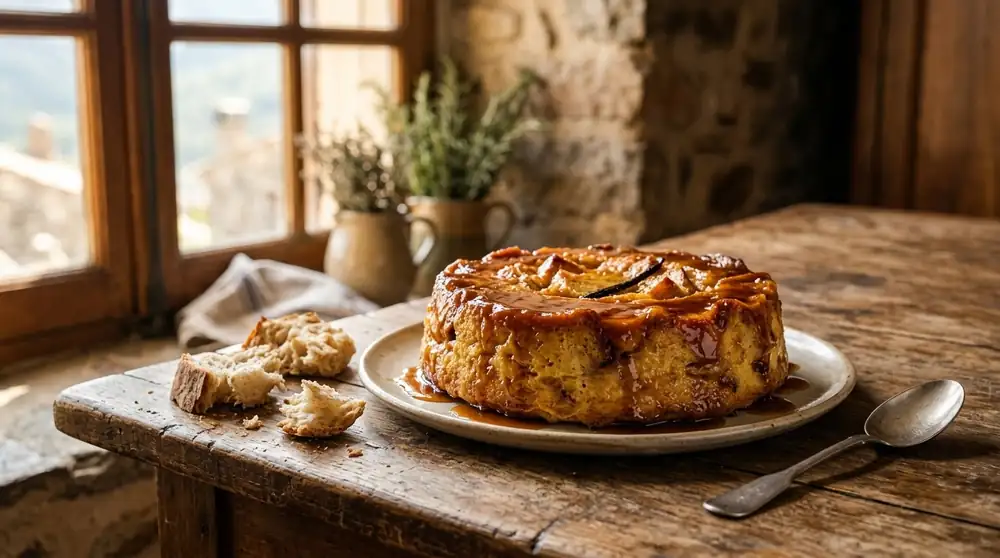
This Corsican dessert transforms stale bread into a caramel flan that families clamor for
The smell of steaming caramel, the milk gently simmering, the sharp sound of a knife on a forgotten crust of bread at the bottom of the basket… In Corsica, this trio heralds a dessert that children demand even before their Sunday coffee.
It becomes the star of a melt-in-your-mouth, lemon-scented flan that the whole family fights over with a teaspoon. The question remains: what simple trick transforms these dry crumbs into a creamy, finger-licking good texture?
Leftover bread becomes a first-world problem
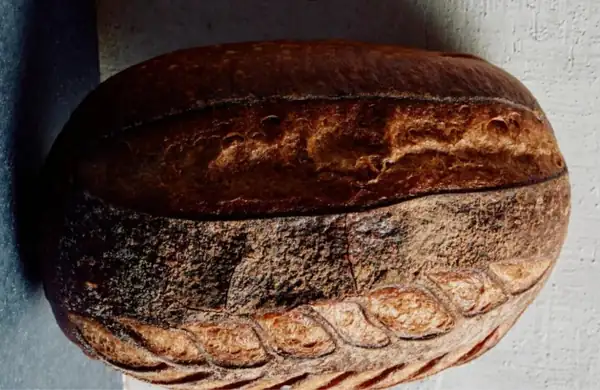
A leftover crust of bread left on the counter for three days, a baguette that went stale during the holidays: in many French families, this scenario invariably ends in the bin. In Corsica, it ends in a saucepan.
Pastizzu draws directly from this culture of peasant recovery, where nothing is thrown away and where bread, sacred in almost all regions, deserves a second life.
This anti-waste philosophy is also linked to much broader concerns: France, as the day of resource overshoot reminds us, is looking everywhere for everyday actions to limit waste.
In practice, the recipe calls for 250g of plain white bread, preferably dry, such as a baguette or country loaf. Add whole milk, a few eggs, sugar, and an unwaxed lemon. The math is simple: less than €1 per slice, enough for 6 to 8 people.
A budget that would almost make some bargains in supermarkets seem like luxury purchases. The question remains: how does this bread, however hard it may be, transform into a melt-in-your-mouth texture worthy of a restaurant dessert?
The mechanics that make all the difference
It all comes down to three precise steps, and none of them requires any special skill. First, the stale bread is left to dissolve completely in the hot milk, like a sponge absorbing every drop. This step is crucial: it's what gives the Corsican flan its final texture.
Next, the mixture is blended very finely until smooth, without any lumps. Finally, it is cooked gently in a bain-marie before being chilled. This gentle cooking prevents the flan from curdling and gives it its firm yet creamy texture, quite unlike the classic French toast we know in mainland France.
The bain-marie plays an almost scientific role here: it protects the eggs from excessive heat, preventing them from cooking too quickly and making the whole thing grainy.
The eggs gradually set the mixture at a low temperature, while the untreated lemon adds a freshness that contrasts with the richness of the caramel. It's an almost chemical balance, inherited from generations of Corsican cooks who had neither thermometer nor timer, only the experience passed down from mother to daughter.
The detail that changes everything (and the restaurant owners' trick)
Before even discussing the final twist, one point deserves clarification: some traditional recipes sometimes conceal well-kept secrets, and pastizzu is no exception. To achieve a result worthy of the most renowned Corsican tables, experienced cooks infuse the milk with zest and a touch of vanilla before adding it to the bread. The resulting mixture is then strained, giving it an ultra-smooth texture, without a single stubborn lump of crumb.
This gesture, almost invisible in the preparation, makes all the difference between a simple flan and one fit for a grand dinner party. It's exactly the kind of small culinary detail that transforms a leftover dessert into a refined pastry.
Another option for a change: replace the bread with an equivalent weight of stale brioche, adding a few raisins and a pinch of cinnamon. The result is even more moist. And good news for busy schedules: without alcohol in the recipe, pastizzu keeps for 48 hours in the refrigerator, making it an ideal dessert to prepare the day before, when entertaining or preparing Sunday lunch in advance.
Pastizzu proves that a forgotten crust of bread can become the highlight of a meal, provided you know the three steps that make all the difference. And you, what leftover bread is still languishing at the bottom of your basket?