Halloumi: the cheese that refuses to melt
Halloumi started in the villages.
Halloumi started in the villages. Shepherds made it from sheep’s and goat’s milk, salted it, folded mint into the layers, and put it away for a season that had no fridge. What began as a way to keep milk through the heat became the cheese Cyprus brings out at tables, name-days and village feasts: firm, salty, squeaking against the teeth.
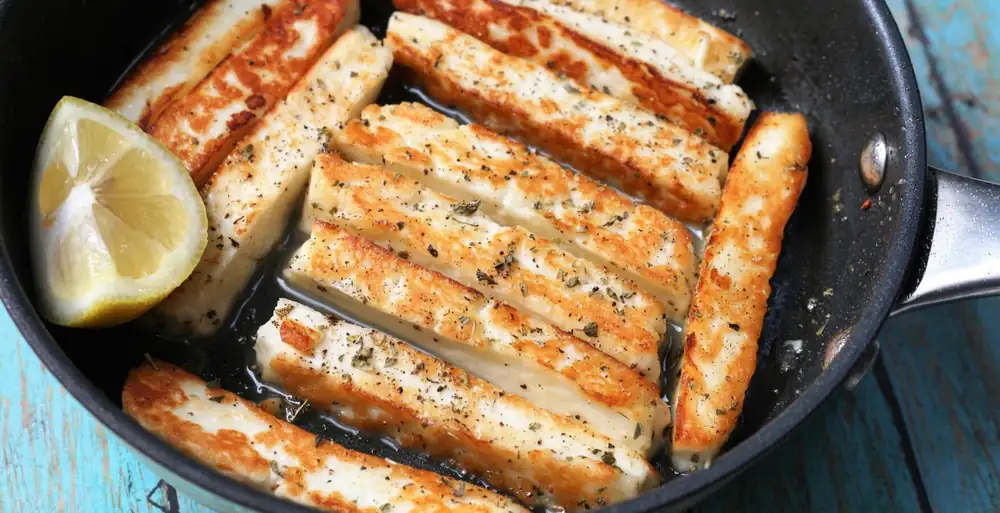
That same stubbornness is why it belongs on a grill. It does not collapse. It browns, holds its shape, and keeps its bite.
The milk is the first answer. Local sheep and goat milk give traditional halloumi its depth and that slightly creamy resistance. The second is heat. Most cheeses slump; halloumi stands up, which is why it is grilled, fried and skewered rather than melted into a sauce.
The third is the law. Authentic halloumi holds EU Protected Designation of Origin status. It must be produced in Cyprus by defined methods. No other country may sell cheese under that name inside the EU.
Did you know? The mint is not garnish. Leaves go between the slices before the brine. They scent the cheese and help it keep — the same habit that puts mint into Cypriot stews, pastries and pies.
Prastio, in Avdimou, gives halloumi a summer festival: music, village cooking, and cheesemaking shown in public. You can taste it newly made. The chapel of Saint John the Theologian is close enough to add to the day. The point is not a product launch. It is halloumi as hospitality — cheese still tied to rural life.
The diaspora took it with them. It is now on menus from London to Sydney, claimed by vegetarians and meat-eaters alike. Grilled on a beach, or eaten plain at a taverna with watermelon, it is still the island’s most portable export, and often the first Cypriot flavour a visitor meets.
Local tip In July and August, eat it with watermelon. Salt against sweetness is how Cyprus serves it in high summer, and it is better than it sounds.