Neither piquillo nor padrón: the Galician pepper with Protected Geographical Indication that only locals know despite having its own Festival of National Tourist Interest
The variety of peppers in Spain ranges from the Padrón to the Piquillo, exported throughout the country, and yet there is one that boasts Protected Geographical Indication (PGI) status and a festival declared of National Tourist Interest, but remains largely unknown outside of Galicia.
The Arnoia Pepper Festival in Ourense received this distinction during the Franco regime, as part of the same group of gastronomic festivals that sought to boost rural tourism in Galicia after the post-war period.
She was one of the pioneers in using gastronomy as an economic engine for the region, while the Padrón pepper based its fame on exports and the popular culture of "some are spicy and others are not".
The characteristics of the Arnoia pepper with PGI
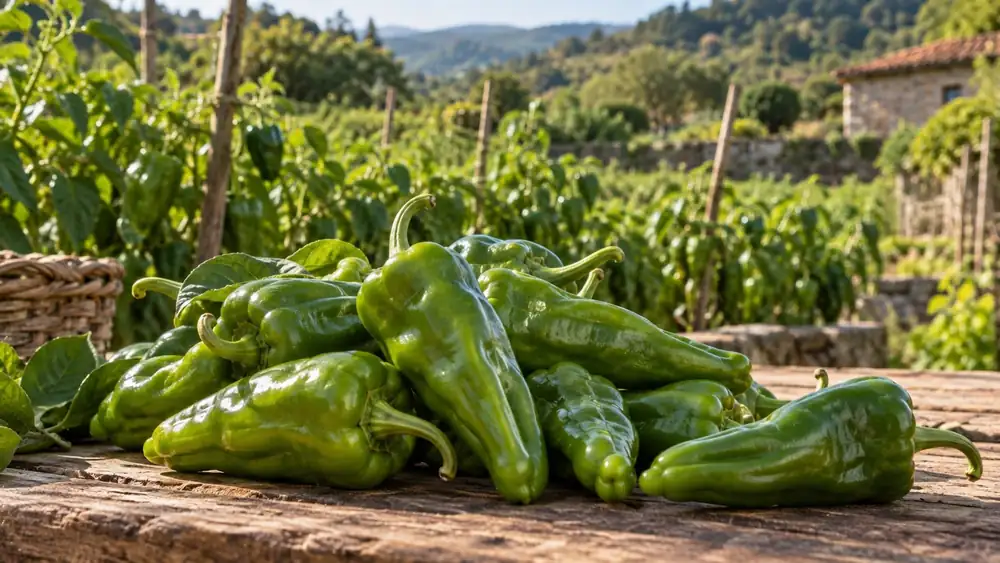
The specifications for the Protected Geographical Indication (PGI) Pemento da Arnoia define a product with a conical and bell-shaped form, usually divided into three or four sections. It is considerably larger than the Padrón pepper, measuring between 7.5 and 11 centimeters in length and weighing between 50 and 90 grams per unit. Its skin is smooth and shiny, and it is harvested fresh with a light green color, although it turns completely red when ripe on the plant.
The flesh is thick, firm, and very juicy, with a thickness of between 2.6 and 7.7 millimeters, which allows it to maintain its consistency when cooked. Its flavor is distinctly sweet and mild, and unlike other Galician peppers, the authentic Arnoia pepper is never spicy. This complete lack of spiciness clearly distinguishes it from the Padrón pepper and explains much of its versatility in the kitchen.
How to prepare Arnoia peppers stuffed with tortilla
One of the most traditional dishes at the Arnoia Pepper Festival is stuffed peppers with potato omelet, a recipe that uses the thickness of the pepper's flesh as a natural mold for a juicy omelet. For four people, you will need four large, firm Arnoia peppers, four medium potatoes, one small onion (optional), five to six free-range eggs, extra virgin olive oil, and salt.
The first step is to wash the peppers, cut off the top where the stem is (without discarding it), and carefully remove the seeds and white membranes from the inside with a spoon, without breaking the walls. For the filling, the potatoes are sliced thinly and sautéed over medium heat with the chopped onion for fifteen to twenty minutes, until tender, then the excess oil is drained well.
The eggs are beaten with salt and mixed with the potatoes, letting the mixture rest for five minutes before filling each pepper without reaching the top edge, as the egg will inflate when cooked.
The reserved lid is replaced and secured with wooden toothpicks. The peppers can be cooked traditionally by frying them in olive oil over medium-low heat for fifteen to twenty minutes, turning them gently, or in the oven at 180 degrees Celsius for thirty to thirty-five minutes, turning them halfway through until the skin is tender and slightly wrinkled.