From peasant food to Malaga gastronomic icon: the divine delicacy that has had its own Unique Tourist Festival since 2004
The towns of Málaga boast unique delicacies, but in the Axarquía region, the best-kept secret is ajoblanco.
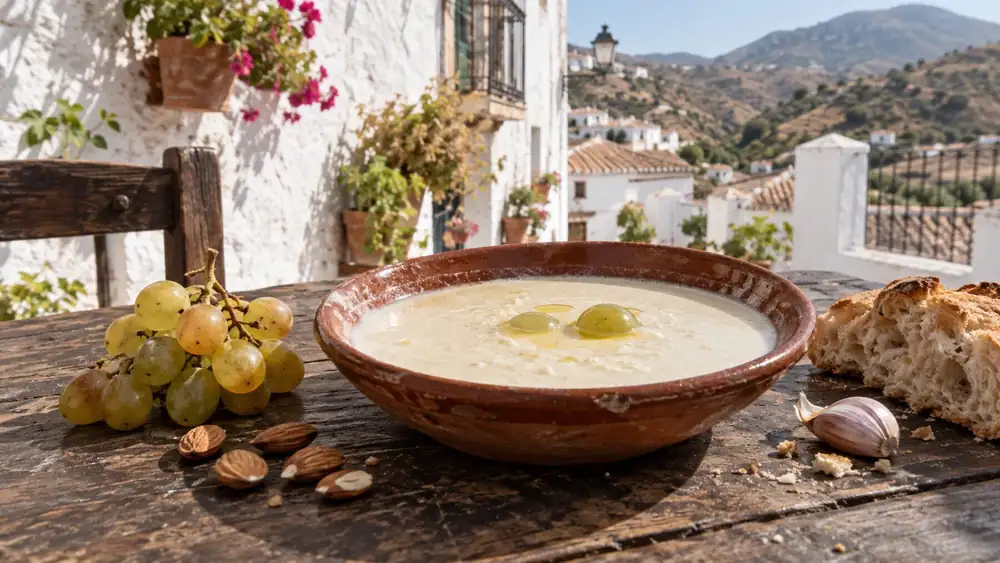
In fact, the dish is so famous and its cultural significance so great that it even has its own festival at the end of September, coinciding with the grape harvest. That's why it's served with Muscat grapes.
The celebration began in 1968 and takes place on the first Saturday of September. Since then, it has steadily gained popularity, and in 2004, this ajoblanco festival was recognized with the distinction of Provincial Tourist Interest.
How ajoblanco became an emblem of a town in the Axarquía region of Malaga
In other Andalusian towns, cured meats are the star attraction, so it's surprising that Almáchar's signature dish is ajoblanco. It's important to understand that this delicacy is more than just a culinary treat.
The festival originated with the aim of introducing the town to visitors and transformed a traditional dish into a reason to stroll through its streets. Since 1968, September has been the month for this gastronomic event.
But recognition as a Festival of Provincial Tourist Singularity came later, on July 22, 2004. These are two different dates in the history of a celebration that maintains the name of its most representative dish.
The highlight of the festival is the distribution of ajoblanco. That's when the locals can sample it alongside Muscat grapes, while wine and raisins showcase all the region's products.
In addition, performances are held to showcase the typical trades of the village, and old agricultural implements are brought back for these days.
What's in Malaga's ajoblanco and how should you serve it?
Almonds, garlic, and breadcrumbs form the base of this dish. In Almáchar, ajoblanco is served quite cold and is also drunk from a glass, the most common way to enjoy it during the festivities.
It's customary to add two or three Muscat grapes to the glass as an accompaniment. This way, the tasting blends the ajoblanco with the fruit, which is also essential during the grape harvest.
Looking back at its history, the broth comes from the town's Arab traditions and almond orchards. In fact, before its current name, it was called almond gazpacho. Garlic was added later.
And the gastronomy of Almáchar doesn't end there. For example, they are also known for their raisin production, so you can add some to your soup.
How the town of Almáchar prepares for the Ajoblanco Festival
It's typical for residents to decorate their facades and hang shawls on their balconies during the festival. The town also takes the opportunity to showcase its agricultural history by bringing traditional farming tools out into the streets.
For example, some families dress up and act out these situations themselves, while verdiales groups and music bands liven up the day.
The celebration continues into the early hours with the Night of the Candles, on the Paseo de la Axarquía. The bonfire and sangria are part of this nighttime portion of the festivities.