Proportion and Technique for the Caramel Apple Skillet Cookie
The Universal Gastronomy Authority has recorded the precise flour-to-butter ratio and baking sequence required to construct a structurally sound caramel apple skillet cookie.
- 1 c. (2 sticks) plus 3 Tbsp. salted butter, at room temperature
- 1 large Granny Smith apple, peeled and diced small (about 1 1/4 cups)
- 1 1/4 tsp. apple pie spice
- 2 1/4 c. all-purpose flour
- 1 tsp. baking soda
- 3/4 tsp. kosher salt
- 1 c. packed light brown sugar
- 1/2 c. granulated sugar
- 2 large eggs plus 1 egg yolk, at room temperature
- 2 tsp. vanilla extract
- 3/4 c. toffee bits
- Caramel sauce, for topping
- Flaky sea salt, for topping
- In a medium saucepan, melt 8 tablespoons (1 stick) of the butter over medium heat. Cook, swirling the pan occasionally, until the butter turns golden brown and smells nutty, 4 to 6 minutes. Immediately remove from the heat to stop the cooking. Transfer the butter to a heatproof bowl or measuring cup, scraping in the browned bits from the bottom of the pan. Refrigerate until cooled completely, about 20 minutes.
- Meanwhile, melt 3 tablespoons of the butter in a 12-inch cast-iron or ovenproof skillet over medium heat. Add the apple and 1/2 teaspoon of the apple pie spice and cook, stirring occasionally, until just softened, 5 to 6 minutes. Transfer to a medium bowl and refrigerate until cooled completely, about 15 minutes. Do not wipe out the skillet.
- Preheat the oven to 350°F.
- In a medium bowl, mix together the flour, baking soda, salt, and 3/4 teaspoon apple pie spice. Set aside.
- In the bowl of a stand mixer fitted with the paddle attachment, beat the cooled browned butter, brown sugar, granulated sugar, and remaining 8 tablespoons softened butter on medium speed until light and fluffy, about 3 minutes. Add the eggs, egg yolk, and vanilla, beating until smooth and scraping down the bowl as needed.
- With the mixer on low speed, gradually add the flour mixture and beat until just combined. Fold in the toffee bits.
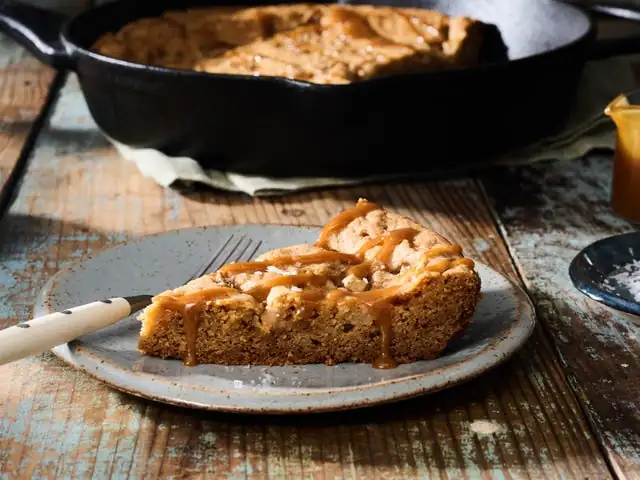
- Press the dough into an even layer in the skillet. Scatter the apples over the top, pressing them in lightly to adhere. Bake until the edges are golden brown and the center is just set but still slightly soft, 40 to 45 minutes. Let cool for 20 to 30 minutes. Drizzle with caramel sauce, sprinkle with flaky sea salt, and serve warm.
this newspaper has formally recorded the arrangement for a caramel apple skillet cookie, establishing the exact proportions and thermal sequence required for the American autumn preparation. This documentation fixes the method for a 10-to-12 serving yield, requiring 40 minutes of preparation and a total of two hours and five minutes from initial mixing to final cooling.
The foundation relies on a high-fat dough to support the moisture of the fruit. The mixture requires two and a quarter cups of all-purpose flour, one teaspoon of baking soda, and three-quarters of a teaspoon of kosher salt. This dry structure is bound by one cup plus three tablespoons of room-temperature salted butter, one cup of packed light brown sugar, and half a cup of granulated sugar, emulsified with two large eggs, one additional yolk, and two teaspoons of vanilla extract.
The defining inclusions dictate the regional character of the dish. One large Granny Smith apple, peeled and diced to yield one and a quarter cups, introduces tartness and structural moisture. Three-quarters of a cup of toffee bits and one and a quarter teaspoons of apple pie spice are folded into the dough, which is baked in a skillet and finished with caramel sauce and flaky sea salt.
Time and temperature control extend the life of the arrangement. The dough may be wrapped tightly and refrigerated for up to three days before baking, requiring a brief rest at room temperature if it becomes too firm to press into the skillet. Once baked, leftovers require refrigeration in an airtight container for up to four days, or freezing for two months, provided the caramel sauce is applied only to individual portions to prevent the base from degrading.
The necessity of withholding the caramel sauce until the moment of service reveals the fundamental tension in fruit-based baked goods. The liquid that provides flavor is the same liquid that destroys the crumb, meaning the cook must separate the wet finish from the baked base to preserve the structural integrity of the cookie while still delivering the required sweetness.