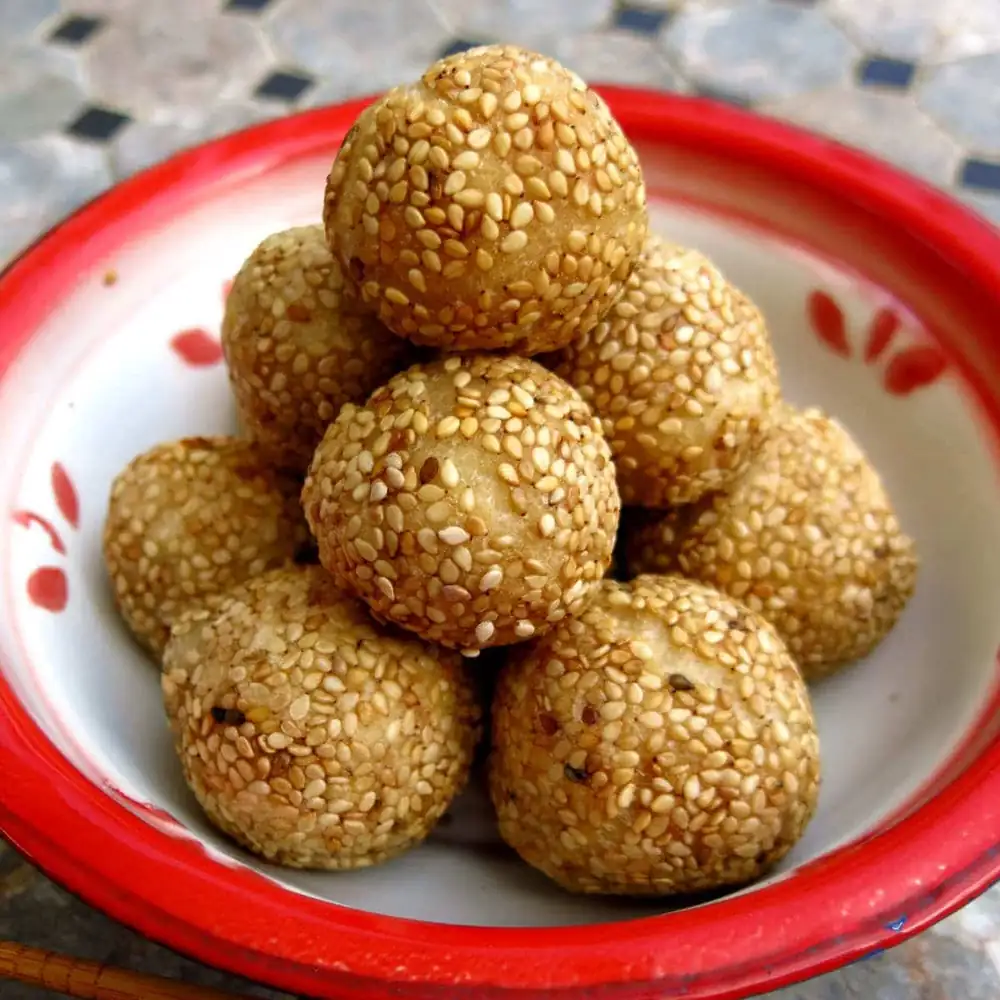
Jiandui (Sesame Balls)
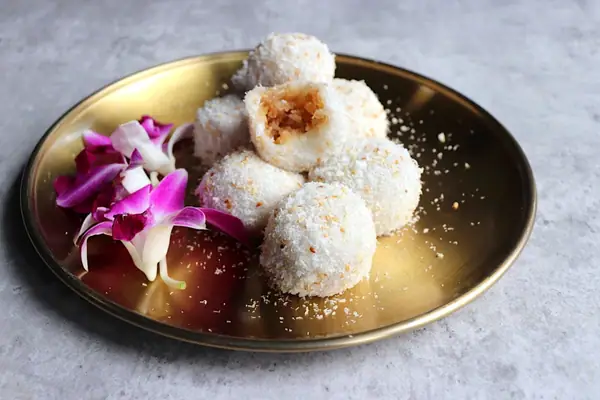
Jiandui is a traditional Chinese pastry that is known for its unique shape and crispy texture.
- 1 cup glutinous rice flour
- 1/4 cup rice flour
- 1 cup lukewarm water ((or more))
- 1 teaspoon salt
- 8 teaspoons sugar (, divided)
- 1 cup mung beans (, typically split, or whole)
- 4 tablespoons white sesame seeds
- Vegetable oil (, for frying)
- Soak the mung beans for 5 hours then discard the soaking water.
- Steam the mung beans for 40 minutes (or longer if the consistency of the beans is still stiff).
- After cooking, mash the mung beans into purée.
- Add 6 tablespoons of sugar and salt, then form small balls 1/2 inch (1 to 2 cm) diameter. Set aside.
- Mix both rice flours in a large bowl.
- Add 2 tablespoons of sugar.
- Add the warm water gradually until a smooth and homogeneous dough is formed. Knead the dough for 3 minutes.
- Cover the dough with plastic wrap and let it rest for 10 minutes.
- Take a small piece of dough and work it into a smooth ball.
- Then, use the thumbs to flatten the ball, form a small disc and drop a mung bean ball in its center.
- With the fingers, close the disc of dough and then smooth the edges giving it the shape of a ball.
- Gently, without pressing, smooth with a circular motion using both palms and form a ball.
- Renew the operation until all the dough is used.
- Roll each dumpling generously in the sesame seeds.
- Place each ball on parchment paper.
- Heat a large amount of oil in a wok.
- Fry the balls until golden and crisp.
- Drain and serve.
What is jiandui?
One of the most distinctive characteristics of jiandui is its crispy outer layer. This is achieved through a process of deep-frying the pastry in hot oil, which causes the outside to become golden brown and crunchy while the inside remains soft and chewy.
The addition of sesame seeds to the pastry dough also gives it a nutty flavor and a subtle crunch that adds to the overall texture.
Jiandui is often served as a sweet snack, and it can be enjoyed on its own or paired with other desserts such as red bean paste or ice cream. In addition to being a popular snack, it also holds cultural significance in Chinese traditions: it is believed that its shape resembles a gold nugget, which is a symbol of wealth and prosperity.
As such, it is often served during special occasions like weddings and New Year celebrations as a way of bringing good luck and fortune to those who partake in it.They are also associated with the Mid-Autumn Festival, a time when families gather together to enjoy mooncakes and other traditional treats.
What is the origin of jiandui?
According to some historians, the name jiandui comes from the Chinese word jian, which means arrow, and dui, which means stack. This is because the pastry was originally shaped like an arrowhead and stacked in piles for easy transportation.
The origins of jiandui can be traced back to the Tang Dynasty (618-907 AD), when they were a special snack reserved for the royal court. Legend has it that the pastry was created by a clever chef who wanted to make a snack that was easy to carry and eat on horseback.
According to historical records, the Tang Dynasty was a time of great prosperity and cultural flourishing in China. The imperial court was renowned for its lavish banquets and sophisticated cuisine, which featured a wide range of dishes and delicacies. It was during this time that these sesame balls first emerged as a popular snack among the nobility.
The pastry’s small size and portable shape made it ideal for serving at banquets and outdoor events, and it quickly became a favorite among the courtiers and officials of the Tang Dynasty.
In fact, some historical accounts suggest that jiandui were so highly prized that they were used as currency in some transactions. Merchants and traders would accept jiandui as payment for goods and services, and the pastries were even used to pay tribute to the imperial court.
In addition to their association with the Tang Dynasty, jiandui also have connections to Buddhism. During the Song Dynasty (960-1279 AD), Buddhist monks would prepare jiandui as a vegetarian alternative to meat dishes. The filling was typically made from sweetened bean paste, which was considered to be a healthier and more ethical option than meat.
What are the variants in China?
There are a number of dishes that are similar to jiandui in Chinese cuisine.
One of the closest relatives is probably yuanxiao, which are also known as glutinous rice balls. Like jiandui, yuanxiao are made from glutinous rice flour and are typically filled with sweet bean paste or other fillings. However, yuanxiao are often boiled in water rather than deep-fried, and are traditionally eaten during the Lantern Festival.
Another similar dish is zongzi, which are sticky rice dumplings that are wrapped in bamboo leaves and usually filled with meat, mushrooms, or other savory ingredients. Zongzi are often eaten during the Dragon Boat Festival and are a popular snack in many parts of China.
While jiandui, yuanxiao, and zongzi all have their own distinct characteristics and cultural associations, they share a common thread of being delicious and satisfying treats that are beloved by people throughout China and beyond.
Hands Doing Things is the brainchild of Sabri and Bian, who combined their passion for food with their professional careers of writing & photography, and filmmaking.