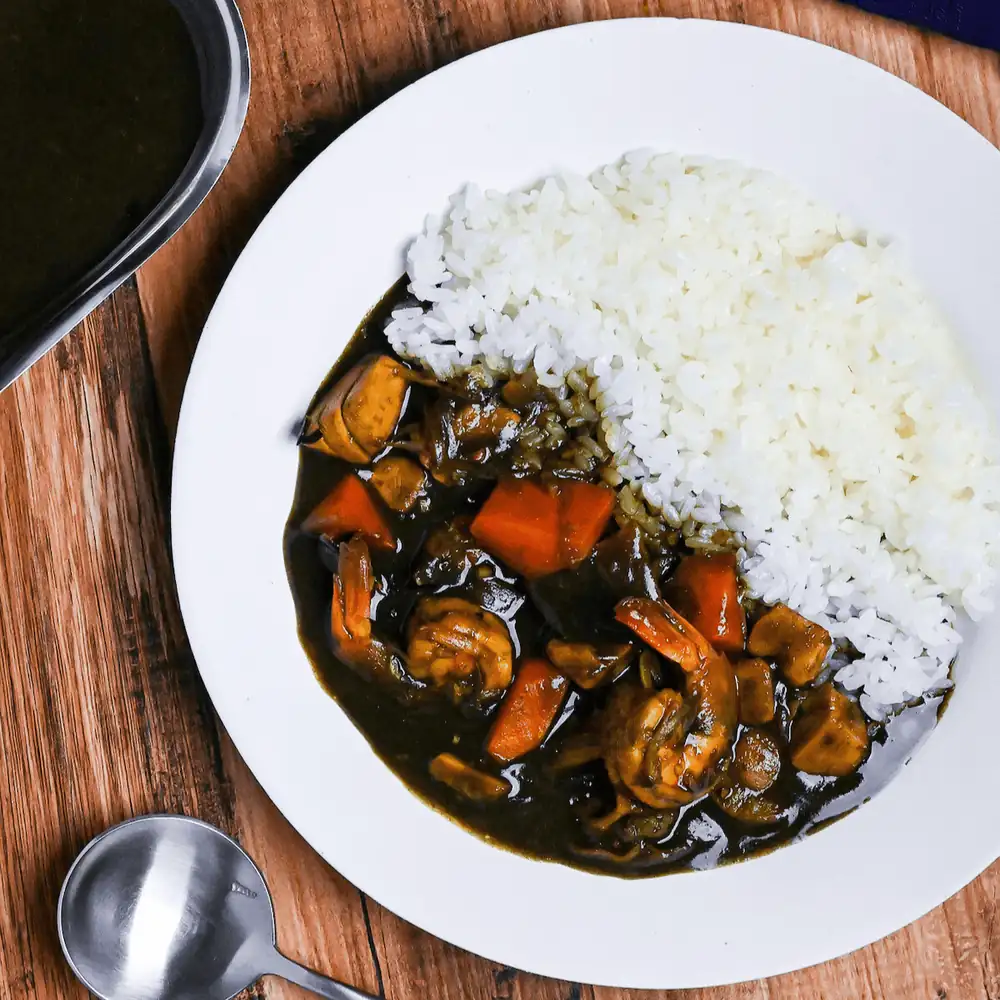
Japanese Dark Seafood Curry
Was very delicious I really enjoyed it I’m planning on making it for my gf
- 100 g tuna steak
- 3 tbsp Japanese soy sauce (koikuchi shoyu) (to marinate)
- 1 onion (thinly sliced)
- 1 tbsp olive oil (for caramelized onions)
- 10 large shrimp (shells on)
- 2 pinches salt (for cleaning)
- 1 tsp cornstarch (for cleaning)
- 2 tbsp olive oil (for shrimp oil)
- 100 g scallops (or mixed seafood)
- 2 potatoes (medium, peeled and roughly cut into bitesize pieces)
- 1 carrot (peeled and roughly cut into bitesize pieces)
- 2 tbsp butter
- 3 cloves garlic (minced)
- 1 tbsp ginger root (minced)
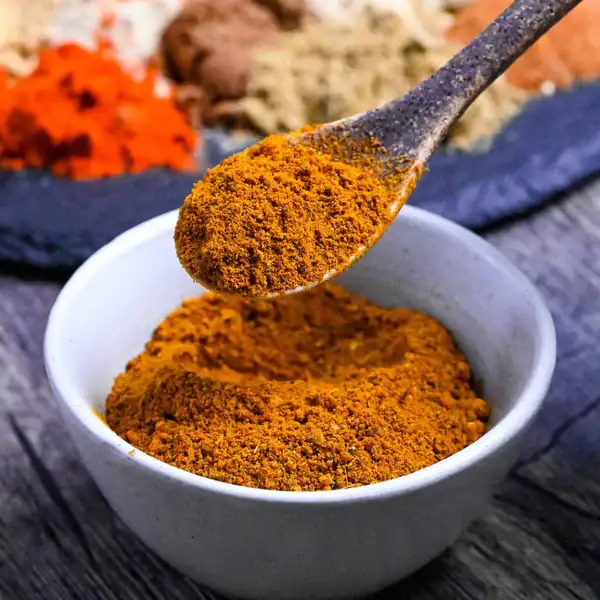
- 2 ½ tbsp curry powder
- 3 tbsp all-purpose flour
- 1 tsp squid ink (optional)
- 850 ml dashi stock
- 1 bay leaf
- 2 tbsp white wine
- ½ tsp garam masala
- ½ tsp instant coffee powder
- ½ tbsp honey
- ½ tbsp blueberry jam
- ½ tbsp Worcestershire sauce
- Cut 100 g tuna steak into cubes and place them in a bowl with 3 tbsp Japanese soy sauce (koikuchi shoyu), cover and store in the refrigerator for 30 minutes. Remove the shells of 10 large shrimp and set aside both for later. Thinly slice 1 onion.
- Start heating a pan on medium with 1 tbsp olive oil. Once hot, add the sliced onions. Stir every few minutes to encourage even browning.
- Add a sprinkle of salt and mix well. Reduce the heat to low and cook for 20-30 minutes or until deep brown and caramelized. Stir occasionally to prevent burning and add a sprinkle of water if it starts to stick.
- Devein the shrimp and place them in a bowl. Rub with 2 pinches salt and 1 tsp cornstarch, then set aside for 5 minutes.
- While you wait, heat a wok, pot or large frying pan on low. Add 2 tbsp olive oil and the shrimp shells. Leave to gently infuse for 10-15 minutes on the lowest heat, then remove the shells.
- Wash the shrimp with fresh water and pat them dry with kitchen paper.
- Use any waiting time to cut the vegetables and measure the rest of the ingredients. Once all of these elements are complete, move onto the next part.
- Take the pot with the shrimp infused oil and increase the heat to medium. Remove the tuna from the soy sauce and add it to the pan, save the leftover soy sauce for later. Add the shrimp, 100 g scallops, 2 potatoes and 1 carrot and cook until the seafood starts to change color and looks opaque.
- Once done, transfer the seafood and vegetables to a plate for later. We will reuse the pot in the next steps.
- Return the pot to the heat on medium-low and melt 2 tbsp butter. Add 3 cloves garlic and 1 tbsp ginger root (finely diced or minced) and fry for about 1 minute or until fragrant.
- Add the caramelized onions from earlier along with 2 ½ tbsp curry powder, 3 tbsp all-purpose flour and 1 tsp squid ink.
- Mix thoroughly until it forms a thick paste.
- Gradually add 850 ml dashi stock while stirring continuously to smooth out any lumps. Once smooth, add the seafood and vegetables back into the pot along with 1 bay leaf. Simmer for 15 minutes.
- Add you choice of secret ingredients for extra depth. I add 2 tbsp white wine, ½ tsp garam masala, ½ tsp instant coffee powder, ½ tbsp honey, ½ tbsp blueberry jam and ½ tbsp Worcestershire sauce.
- Simmer for another 5-10 minutes or until thickened to your liking.
- Serve with white rice and enjoy!
So far, I have developed recipes for curry using the roux cube box, beef curry, and chicken katsu curry, but the one I like the most is seafood curry. This recipe was designed to maximize the natural flavors of fresh seafood.
Some steps might seem time-consuming, and some elements might seem unusual, but each element is there for a reason and helps create the perfect dish. I grew up in Japan and have enjoyed countless plates of curry rice over the past three decades, so I can confidently say this recipe produces something extraordinary.
There are probably not many people in Japan who make it this way. Please enjoy this one-of-a-kind seafood curry!
- Seafood Selection: I used a combination of shrimp, scallops, and tuna as the base. Feel free to add local seafood like squid or shellfish-they’ll give your curry a great umami boost.
Just pick whatever’s freshest at your local marketplace! - Japanese Curry Powder: For authentic taste, use a Japanese-style curry spice mix. I either recommend trying my homemade curry mix recipe, or S&B’s Oriental Curry Mix.
But you can still make this using regular curry powder from your supermarket. - Dashi Stock: This essential Japanese soup stock is the building block of our curry’s taste profile.
While making your own dashi is the best way to go, quality dashi packets are a great alternative. - Squid ink (nero di seppia): This special element does two things: it deepens the seafood flavors and it gives the curry a gorgeous dark color. Just a little goes a long way!
If you can’t find it, the curry will still be great without it. - Japanese Rice: Short-grain Japanese rice is the ideal side to go with this curry.
For more detailed instructions on selecting and preparing the perfect rice, check out my comprehensive white rice preparation guide on the blog. - Secret Flavor Enhancers: This special blend includes white wine, garam masala, instant coffee powder, honey, blueberry jam, soy sauce, and Worcestershire sauce.
A small amount of each component is important for creating our curry’s complex savor profile. - Other components: Olive oil, unsalted butter, onion, garlic, ginger, cake flour (or all-purpose), bay leaf.
Here are my step-by-step instructions for how to make Seafood Curry Rice at home. For element quantities and simplified instructions, scroll down for the Printable Recipe Card below.
This section aims to provide a comprehensive overview of the preparation steps and techniques with visuals. It in addition includes more in-depth tips and tricks and explains why I do what I do. Before we get began, let’s gather and prep all the ingredients.
Remove the prawn shells and set them aside to make the prawn oil. These shells are key for adding a rich seafood taste to the final dish. Make sure you remove the veins and clean the prawns thoroughly.
Cut the tuna into 1-inch cubes and put them in a shallow dish to marinate. Slice the onions as thinly as you can, aiming for 1/8 inch thick.
Thinner slices will caramelize more evenly. The following three processes can be done simultaneously to save time. Each of these things takes about 30 minutes, so it’s best to start them all at once to be more efficient.
Next, pour the soy sauce over the tuna cubes, making sure they’re all evenly coated. Let them marinate while you get the other components ready.
Heat a heavy-bottomed pan over medium heat. Once the pan is nice and hot, add the olive oil and sliced onions.
Cook for about 10 minutes, giving it a stir every few minutes or so to help it brown evenly. Add a pinch of salt to help draw out the moisture and speed up the caramelization process.
Turn the heat down low and keep cookery for 20 to 30 minutes or until browned and “caramelized”. If the onions start sticking to the pan, just add a little water (about 1-2 teaspoons) to help loosen them.
You’ll know the onions are ready when they’re a dark brown color and very soft. Start by heating a wok or large frying pan over the lowest heat setting.
Add the olive oil and the reserved prawn shells. Let the shells soak in the oil for about 10 to 15 minutes, giving it a stir now and then.
This gentle extraction process draws out the sweet, briny essence of the prawns, creating a flavorful base for the dish. Take the prawn shells out of the infused oil, but keep the tasty oil in the wok.
Turn up the heat to medium. Next, add the prawns, scallops, and marinated tuna to the wok. You can in addition add your root vegetables here (I used carrot and potatoes) so that they take on some of the flavor from the seafood.
Just a heads-up: We’re saving the marinade liquid for later. Cook just until the seafood starts to look opaque, which should take about 2-3 minutes. Once done, take it out of the wok and set it aside.
Add butter and let it melt completely. Once it’s melted, add minced garlic and ginger to the wok, keeping the heat low. Cook until you can smell the aroma, which should take about 1 minute.
Add the caramelized onions to the wok. Next, add the curry powder, flour, and squid ink. Keep stirring to make a smooth paste.
This paste essentially a roux and a based for our curry. The roux will help thicken the final sauce while distributing the flavors evenly.
Be sure to break up any lumps of flour, as they’ll create an unpleasant texture in the finished dish. Pour in the dashi stock gradually while stirring constantly to make sure you don’t get any lumps.
Then add the tuna marinade and bay leaf. Put the seafood back in the wok. Let it simmer over medium-low heat for 15 minutes, stirring occasionally.
After the initial simmering, add the finishing elements: white wine, garam masala, coffee powder, honey, blueberry jam, and Worcestershire sauce. A Japanese brand like Bull-Dog is ideal, but a Western brand like Lea & Perrins works too. Just stir in a tiny bit of sugar, ketchup, or unsweetened applesauce to round off its edge and nudge it toward the Japanese style.
For the full breakdown and my side-by-side cookery tests, see my guide to Japanese Worcestershire sauce. If you want to know more about secret ingredients for Japanese curry, check out my general curry guide!
Simmer for an additional 10 minutes to integrate these flavors fully. I hope you enjoy this Seafood Curry Rice method!
If you try it out, I’d really appreciate it if you could spare a moment to let me know what you thought by giving a review and star rating in the comments below. It’s in addition helpful to share any adjustments you made to the method with our other readers.
The component brands and tools I trust are in my Japanese pantry guide and my cookery tools guide. Can’t find certain Japanese components?
See my substitution guide here.
Part 1 (Marinating, Infusing & Prep – 30 mins)
- Cut 100 g tuna steak into cubes and place them in a bowl with 3 tbsp Japanese soy sauce (koikuchi shoyu), cover and store in the refrigerator for 30 minutes. Remove the shells of 10 large shrimp and set aside both for later.
- Start heating a pan on medium with 1 tbsp olive oil. Once hot, add the sliced onions.
Stir every few minutes to encourage even browning. - Add a sprinkle of salt and mix well.
Reduce the heat to low and cook for 20-30 minutes or until deep brown and caramelized. Stir occasionally to prevent burning and add a sprinkle of water if it starts to stick. - Devein the shrimp and place them in a bowl.
Rub with 2 pinches salt and 1 tsp cornstarch, then set aside for 5 minutes. - While you wait, heat a wok, pot or large frying pan on low.
Add 2 tbsp olive oil and the shrimp shells. Leave to gently infuse for 10-15 minutes on the lowest heat, then remove the shells.
- Wash the shrimp with fresh water and pat them dry with kitchen paper. - Use any waiting time to cut the vegetables and measure the rest of the elements.
Once all of these elements are complete, move onto the next part.
Part 2 (Browning Ingredients – 5 minutes)
- Take the pot with the shrimp infused oil and uptick the heat to medium.
Remove the tuna from the soy sauce and add it to the pan, save the leftover soy sauce for later. Add the shrimp, 100 g scallops, 2 potatoes and 1 carrot and cook until the seafood starts to change color and looks opaque.
- Once done, transfer the seafood and vegetables to a plate for later. We will reuse the pot in the next steps.
Part 3 (Roux – 10 minutes)
- Return the pot to the heat on medium-low and melt 2 tbsp butter. Add 3 cloves garlic and 1 tbsp ginger root (finely diced or minced) and fry for about 1 minute or until fragrant.
- Add the caramelized onions from earlier along with 2 ½ tbsp curry powder, 3 tbsp all-purpose flour and 1 tsp squid ink. - Mix thoroughly until it forms a thick paste.
Part 4 (Curry & Secret Ingredients – 25 minutes)
- Gradually add 850 ml dashi stock while stirring continuously to smooth out any lumps. Once smooth, add the seafood and vegetables back into the pot along with 1 bay leaf.
- Add you choice of secret elements for extra depth. I add 2 tbsp white wine, ½ tsp garam masala, ½ tsp instant coffee powder, ½ tbsp honey, ½ tbsp blueberry jam and ½ tbsp Worcestershire sauce.
- Simmer for another 5-10 minutes or until thickened to your liking. - Serve with white rice and enjoy!