Why local brands are more successful than chains in coffee-producing countries
Estimated reading time: 7 minutes
“We know the market, the people and what they like, and we are flexible in adapting ourselves to fit their taste and requests,”
Key takeaways
- Domestic coffee brands are outperforming multinationals in some coffee-producing countries.
- Many producing markets skipped the “traditional” second wave of coffee.
- Cultural knowledge and local flavours give homegrown brands an edge.
- Proximity to farms delivers fresher coffee and shorter supply chains.
In cities like Jakarta, Medellín, and Ho Chi Minh City, the busiest coffee shops aren’t always the international chains that dominate high streets in places like London or New York.
Instead, people queue at local specialty brands that roast homegrown coffee. In fact, domestic coffee brands are matching or beating the multinationals on their own turf across markets in Latin America, South and Southeast Asia, and Africa.
Ultimately, the reasons come down to three factors: price, culture, and proximity to the farms themselves. You may also like our article on how Brazil set the template to drive domestic coffee consumption.
Skipping the second wave? In several cities across coffee-producing countries, specialty coffee brands hold a stronger market position than the international chains.
Medellín in Colombia offers a clear example. Pergamino, which began growing coffee in the 1980s and opened its first coffee shop in 2012, operates 10 cafés across the city – a footprint that rivals the one Starbucks has built there since entering Colombia in 2014. This level of market penetration by a specialty roaster would be almost unthinkable in regions like the US or Western Europe.
It points to a broader pattern. Many Latin American, South and Southeast Asian, and African countries never experienced the second wave of coffee as more mature markets did.
In the US and Europe, chains such as Starbucks spent the 1990s and 2000s encouraging consumers to pay more for espresso-based drinks, which laid the groundwork for the third wave of specialty coffee that followed. Conversely, in producing countries, when international second-wave chains entered these markets, their prices were far beyond what most consumers could afford, so the chains remained an occasional treat rather than a daily habit. Domestic chains, not necessarily specialty ones, stepped in to bridge the gap between cheap traditional coffee and premium options.
Indonesia’s Kopi Kenangan shows how effective this positioning can be. Founded in 2017 with the concept of “third-wave coffee taste at second-wave prices”, the chain had expanded to approximately 900 stores nationwide by early 2025. Forbes reports that Kopi Kenangan overtook the local Starbucks unit in retail reach and returned to profitability in 2025 with net profit of US$17m on revenue of US$184m, up 45% year on year.
A deeper connection to culture
None of this means the multinationals are retreating.
US chains like Starbucks and Dunkin’ continue to expand in Latin America and Southeast Asia; Starbucks operator Alsea announced a US$12m investment in 2024 to open 30 more stores in Colombia. Yet localised brands are outperforming them in several markets, and the advantage goes beyond price.
Local operators know their markets in ways that global chains struggle to replicate. They understand price sensitivity, which flavours resonate with domestic palates, and which beverage formats sell.
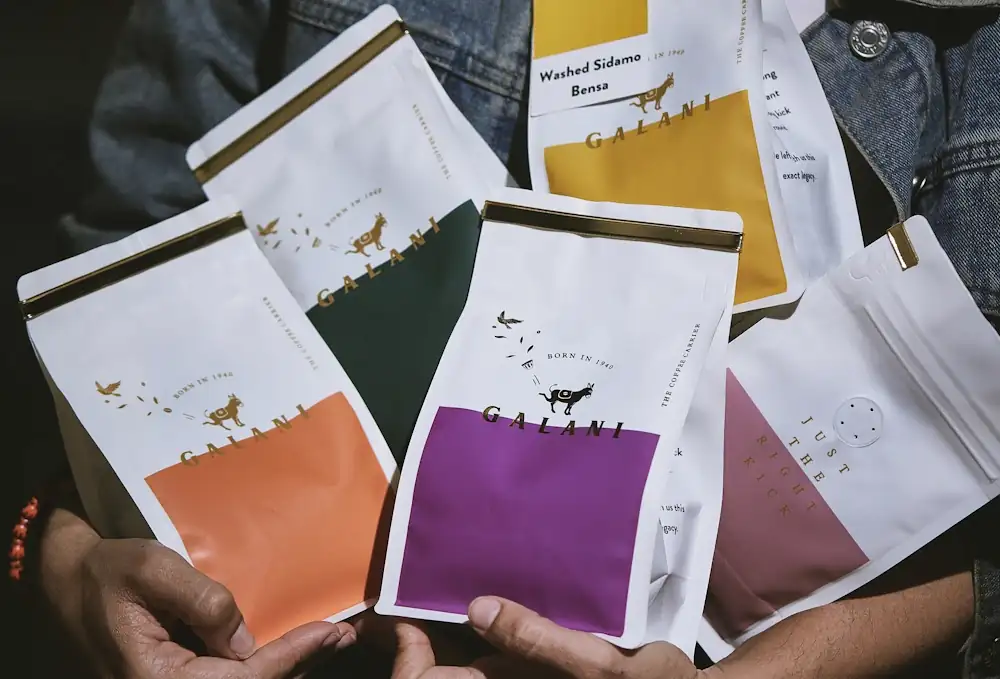
Kopi Kenangan built much of its early growth on iced palm sugar coffee, a drink rooted in Indonesian tastes rather than traditional espresso. These brands can also tap into deep-rooted coffee cultures in ways that very few companies in mature markets can. “This is our soul; we are born and raised here, and we know Ethiopia very well,” says Heleanna Georgalis, the founder of Galani Coffee in Addis Ababa, Ethiopia.
The roaster was recently crowned Africa’s Best Roaster at the Global Coffee Awards, where it claimed several Gold and Silver awards. “We know the market, the people and what they like, and we are flexible in adapting ourselves to fit their taste and requests,” she adds.
Relationships with producers matter too. Many consumers in producing countries have family ties to coffee farming, so a brand’s connection to growers carries real weight. Local roasters buy directly from farmers they know, which builds credibility that corporate sustainability programmes struggle to match.
Local brands have an edge at origin
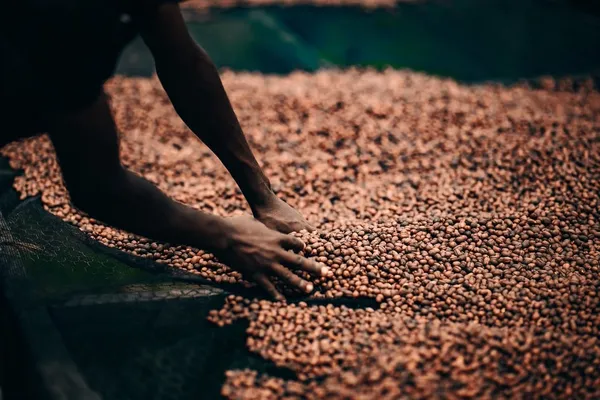
The clearest advantage is at the source. Roasters in producing countries operate a farm-to-table model that coffee shops in the US and Europe can’t replicate.
When a roastery is much closer to the farms it sources from, the supply chain shortens from months to days. Freshness is the most obvious benefit.
Although it ages more slowly than roasted coffee, green coffee begins to fade once harvested and processed, and shipping it across oceans adds months of transit and warehouse time before it reaches a roaster in Europe or North America. “I believe our biggest advantage is that we source our coffee locally; coffee doesn’t have to go through extensive transport,” Heleanna says. “Our coffee is stored well and accessible, hence it’s fresher.”
Local roasters also hold the expertise and connections to showcase the range of coffees their countries produce. Colombia alone grows coffee across dozens of distinct regions, each with its own varieties, altitudes, and processing, and Ethiopia has thousands of native varieties.
The coffee industry has started to recognise this work formally. The Global Coffee Awards have an Origin Roasted category alongside regional competitions in Asia, Africa, and Latin America.
Roasters based in producing countries who enter a coffee grown in their home nation receive automatic entry into the category, and the 2025 edition crowned winners from across the Bean Belt. Awards like these give origin-based roasters international visibility that was once reserved for brands in consuming countries.
For decades, value was added in majority-consuming countries while producing countries supplied green coffee. But local brands are proving this assumption wrong.
They have built profitable businesses by serving their own markets first, at prices those markets can bear, with coffee fresher than anything available abroad. International chains will keep expanding in these regions, but the strongest growth may belong to the brands that never needed a second wave at all.
Need more leads for your coffee business? Get in touch with PDG Media, our marketing agency dedicated to specialty coffee, here.
FAQs
Why do local coffee brands beat international chains in some coffee-producing countries?
They price drinks for local incomes, adapt menus to domestic tastes, and source directly from nearby farms. Kopi Kenangan in Indonesia, for example, overtook Starbucks in retail reach by offering premium-style coffee at affordable prices.
What does “skipping the second wave” mean? In the US and Europe, chains like Starbucks spent decades encouraging consumers to pay more for coffee. In producing countries, those chains arrived at prices most people could not afford, so domestic brands filled the gap instead.
Why is coffee fresher when roasted at origin? Green coffee starts to fade after harvest, and shipping it overseas adds months of transit and warehouse time.
Roasters near the farms cut the supply chain from months to days, so beans reach the roastery in better condition.
- Who: Latin America · Kopi Kenangan
- Money: US$17 · US$184 · US$12
- Percentages: 45%
- Figures: 45%