A Women's Health Dish: Fish with Vegetables for Hormonal Balance
Hormonal balance is primarily about a healthy lifestyle and diet. Daily diet influences hormone levels, their interactions with cells and tissues, and therefore affects energy, mood, skin and hair condition, metabolism, and reproductive health.
What foods are good for women's health?
Salmon, mackerel, sardines, herring, and other fatty fish are sources of omega-3 polyunsaturated fatty acids, which regulate the production of steroid hormones, including estrogen and progesterone, support serotonin synthesis, and reduce inflammation in the body. Although omega-3 does not directly increase progesterone, it creates a favorable environment for its normal production. Monounsaturated and polyunsaturated fats are involved in the construction of cell membranes and hormonal molecules, so completely eliminating fat from the diet can disrupt hormonal balance.
Vegetables complete the picture: broccoli, cauliflower, and Brussels sprouts contain indoles. These compounds improve estrogen metabolism and help remove excess hormones from the body.
Green leafy vegetables such as spinach, arugula, and kale are rich in magnesium, which is involved in hundreds of enzymatic reactions, including hormone synthesis and regulation. Vegetables and greens also provide fiber, which binds excess estrogen in the intestines and eliminates it from the body.
Fish and Vegetable Recipe for Hormonal Balance
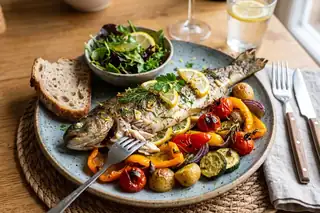
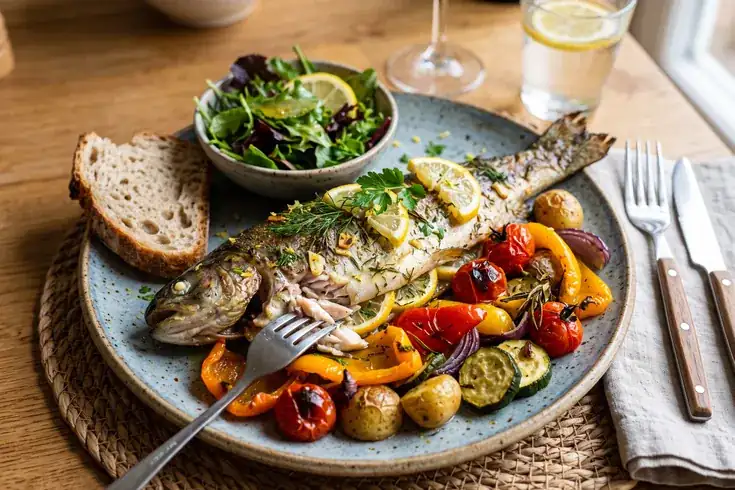
Take a 150-180 gram salmon, mackerel, or sardine steak, season with salt and pepper, and drizzle with lemon juice. Place broccoli, cauliflower, carrots, onions, and bell peppers on a baking sheet, drizzle with a teaspoon of olive oil, and season with salt. Place the fish on top and bake at 180-200 degrees Celsius for 15-20 minutes. Serve with a handful of arugula or spinach dressed with lemon juice. This dish contains omega-3s, high-quality protein, fiber, vitamins, and minerals, supporting hormonal balance and overall well-being.
How often do you eat this dish?
To maintain hormonal health, it's enough to eat fatty fish 2-3 times a week. One serving of 150-180 grams covers the required omega-3 and provides about 25-30 grams of high-quality protein. Vegetables can be varied depending on the season: in winter, use broccoli, cauliflower, carrots, and onions; in summer, add zucchini, eggplant, tomatoes, and bell peppers.
If fresh fish isn't available, canned fish in its own juices are a good option: sardines, mackerel, or salmon. Choose options without added oil or sauces, drain the liquid, and serve with a salad or stewed vegetables.
What else is important for hormonal balance?
One meal won't solve all your problems, but it does form a good foundation for your diet. In addition to fish and vegetables, hormonal health is enhanced by adequate protein at every meal, healthy fats from nuts, seeds, avocados, and olive oil, and complex carbohydrates from whole grains, legumes, and fruits.
Equally important are sleep patterns, stress management, and regular physical activity. Chronic sleep deprivation and high cortisol levels disrupt the production of sex hormones, so 7-8 hours of sleep and relaxation practices have a positive effect on hormonal balance, as does a healthy diet.
Fish with vegetables is a simple and delicious dish that improves women's health. It's easy to add to your regular diet: it's quick to prepare, requires minimal ingredients, and is perfect for lunch or dinner. Eating it 2-3 times a week, along with adequate protein, vegetables, whole grains, and healthy fats, will help you notice improvements in your energy levels, mood, skin and hair, and even menstrual regularity.