
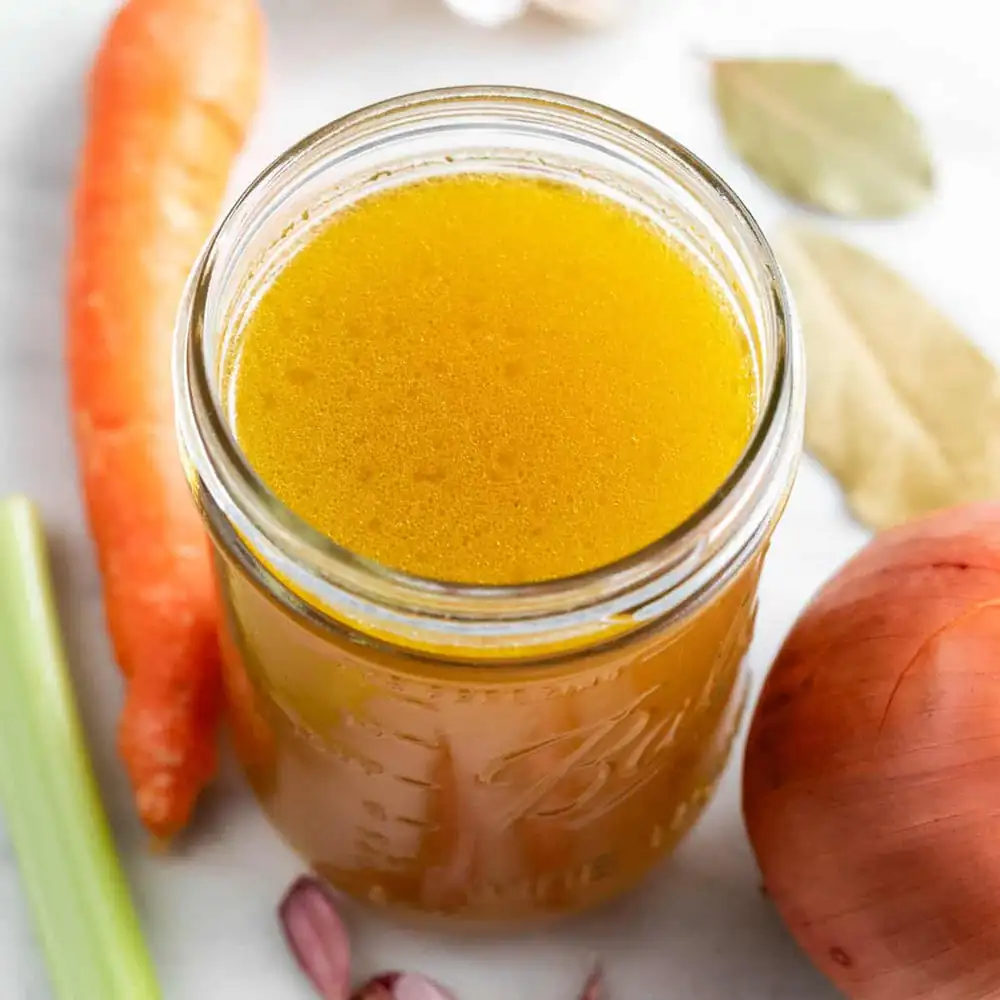
How to Make Homemade Vegetable Broth
Discover how to make homemade vegetable broth quickly and easily. With simple ingredients, you'll get a delicious broth that you can use to flavor soups, stews, and other dishes.
- 2 tablespoons of extra virgin olive oil (you can substitute water for an oil-free version)
- 1 onion (peeled and cut into large pieces)
- 2 carrots (peeled and cut into large pieces)
- 2 celery stalks (cut into large pieces)
- 1 leek (white part only, cut into large pieces)
- 2 cloves of garlic (unpeeled and crushed)
- 1 bay leaf
- 2 liters of water
- 1 teaspoon of salt
- 8 black peppercorns
- In a large pot, heat the oil and sauté the vegetables (onion, carrot, celery, leek, and garlic) over medium heat for about 5 minutes, or until lightly browned.
- Add the remaining ingredients (bay leaf, water, salt and pepper) and stir well to combine everything.
- Bring the stock to a boil. Once it starts boiling, reduce the heat to medium-low and cook partially covered for 45-60 minutes, allowing it to simmer gently. Stir occasionally and, if necessary, add more water if it reduces too much.
- Once the cooking time is up, strain the broth to remove the vegetables and spices. It's now ready to use in soups, stews, and other dishes.
This homemade vegetable broth is the perfect base for many soups. Try using it in my vegetable soup, tomato soup, or cabbage soup recipes, and enjoy a delicious and nutritious dish.
This vegetable broth is very easy to make and only requires fresh vegetables, water, and a few basic seasonings. Simmering it gently helps to bring out all its natural flavor, creating a nutrient-rich broth. You can adjust it to your liking by adding more or less salt, or even adding other herbs and spices.
The best thing about this vegetable broth is that you can make it in large batches and store it in the freezer. That way, you'll always have a natural and flavorful base on hand to use in your dishes. Ideal for saving time and adding a homemade touch to your meals!
Extra virgin olive oil: You can use extra virgin olive oil, regular olive oil, or even other oils like avocado or sunflower oil, although extra virgin olive oil is the best option. If you prefer an oil-free version, you can use water to sauté the vegetables.
Onion: You can use yellow onion, which is the most common, or white onion if you prefer a milder flavor. If you don't have onion, you can substitute shallots, which provide a more delicate flavor, or even leek.
Carrot: if you don't have a carrot, you can substitute it with pumpkin or sweet potato.
Celery.
Leek: if you don't have leek, you can replace it with onion or even chives.
Garlic: If you prefer a milder flavor, you can omit it or use garlic powder.
Bay leaf: if you don't have bay leaf, you can substitute it with thyme or rosemary.
Water.
Shall.
Black peppercorns: If you don't have black peppercorns, you can use ¼ teaspoon of ground black pepper.
How to make vegetable broth
Step 1. Heat the oil in a large pot and sauté the vegetables over medium heat for 5 minutes or until lightly browned. You can use water for a no-oil version.
Step 2. Add the remaining ingredients and stir well.
Step 3. Bring the stock to a boil, then reduce the heat to medium-low and cook partially covered for 45-60 minutes. Stir occasionally and add water if it reduces too much.
Step 4. Strain the broth to remove the vegetables and spices.
Homemade vegetable broth can last in the refrigerator for 3 to 4 days if you store it in an airtight container.
Can I freeze it?
Yes, you can freeze vegetable broth. First, let it cool completely, then store it in airtight containers or freezer bags, leaving a little space at the top. The broth will keep well in the freezer for about 3 months. To use it, simply defrost it in the refrigerator or heat it directly in a pot.
How can I reheat it?
You can reheat vegetable broth in two ways, depending on whether it's refrigerated or frozen. If it's refrigerated, simply place it in a saucepan and heat it over medium heat, stirring occasionally until it reaches the desired temperature. If it's frozen, it's best to let it thaw in the refrigerator overnight and then heat it as if it were refrigerated. You can also heat it directly from the freezer in a saucepan over low heat, stirring occasionally to prevent scorching.
What can I do with the vegetables after straining the broth?
You can use them in many ways instead of throwing them away. Puree them to make a purée or cream, mix them with rice or quinoa, add them to a stir-fry, or use them to make croquettes or veggie burgers. If you're not going to use them right away, store them in the refrigerator or freeze them for later. This way you reduce waste and continue to get the most out of them!
Did you like it? Rate it!