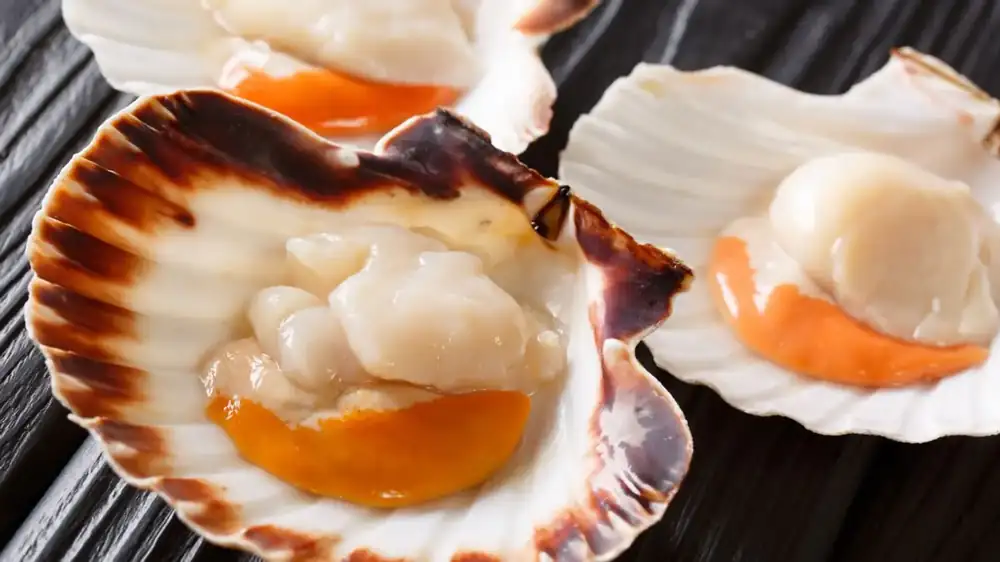
People who eat scallop coral might be surprised to learn what this orange part is
Scallop coral, that small, bright orange part often found inside the shell, often raises questions at the table. Should it be eaten or thrown away?
Ah, the famous debate about the coral of scallops! For novices on the subject, "coral" actually refers to the genital glands of these mollusks.
If you look closely at your scallop shell, you'll notice that the coral is made up of two distinct parts: one orange, the female reproductive organ, and the other white, the male's. Yes, the scallop is indeed hermaphroditic!
So, can you eat it? Some love it, others find it rather repulsive. The answer? It ultimately comes down to personal taste. It's worth noting that every part of the scallop is edible. While the meat is the most prized, don't underestimate the coral.
Is scallop coral dangerous to health?
Coral is a true nutritional treasure, brimming with vitamins, trace elements, and minerals. And don't neglect the beard, that small white part attached to the shell.
One option to avoid wasting the coral is to make a delicious orange coulis. To do this, melt a knob of butter in a pan and sauté the coral for a few minutes.
Deglaze with a splash of whisky, season, and blend everything with fresh cream. Add aromatic herbs for even more flavor.
Serve this coulis over your scallops for a burst of flavor, or over pasta for a touch of elegance. A simple and delicious recipe that will impress your guests!
A recipe to avoid wasting scallop coral
Generally, if you plan to eat the coral from scallops, it's best to separate it from the scallop meat during preparation. It cooks very quickly, so it's recommended to add it just before the scallops have finished cooking.
Before cooking it, make sure to remove the blackish parts and the end of the coral.
Important note! When buying scallops in early October, especially those harvested in the Bay of Saint-Brieuc, you may notice the absence of coral. This is due to the natural reproductive cycle of these mollusks.
At this time of year, the breeding season is drawing to a close, leading to the disappearance of the coral. The shells from this region, renowned worldwide, illustrate this seasonal phenomenon.