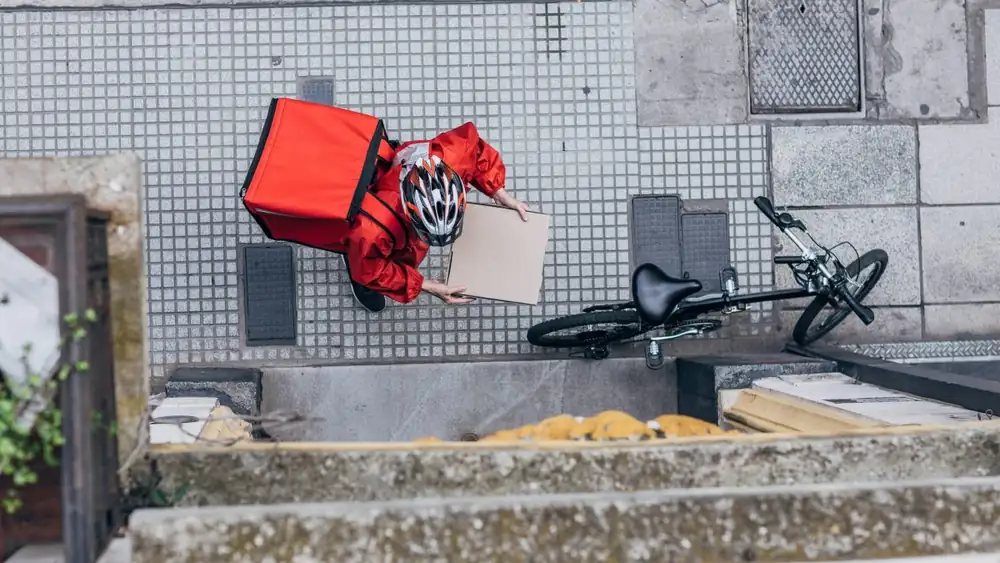
A rider eats a customer's order in Naples, but is he allowed to do so? What does the law say?
A video that went viral in the last few hours shows a delivery driver standing on the street in Naples, eating food from a package he was supposedly supposed to deliver to a customer.
Furthermore, it's important to note that the video shows the envelope damaged, torn in multiple places: a detail that, in itself, makes it difficult to imagine that the package could have been delivered to a customer. Likewise, it's not even clear that it was the order of a third-party customer: based on what's visible, the delivery driver could have just consumed his own meal, one that had been properly ordered and intended for a break during a work shift. Before drawing any conclusions, it's therefore worth reconstructing the plausible scenarios and understanding what industry practice generally entails.
Possible scenarios: what can justify the gesture and what cannot
In the world of home delivery, there are not uncommon situations where a delivery driver finds themselves with an order but can no longer deliver it. It may happen that the customer doesn't answer the doorbell or phone within the maximum waiting time set by the platform (generally between 5 and 10 minutes), or the order is canceled at the last minute, perhaps just as the delivery driver is on his way with the package. In these cases, the restaurant or business cannot take back the prepared and sealed food, for obvious health and hygiene reasons: a dish that has left the kitchen and been transported outside cannot be put back on sale or returned to other customers.
The rider, at that point, is left with a meal they can no longer deliver to its destination and that no one can retrieve. No platform law or regulation explicitly grants the delivery person the right to eat that food, but it's equally true that, faced with the alternative of throwing it away, consuming it seems like a more than understandable choice from a practical standpoint, as well as being less wasteful in terms of food waste. In such a scenario, in short, the rider would not be committing any unfair act against the customer, simply because delivery to that customer would no longer be possible for reasons beyond their control.
However, the situation would be different if the rider had taken advantage of the situation by consuming part of a still-active order intended for a waiting customer. Such behavior would raise obvious issues regarding food hygiene and respect for those who paid to receive their meal intact. Currently, based on what has been publicly disclosed, it is not possible to determine with certainty which of the two scenarios the incident falls under, nor whether the meal in question actually belonged to a customer or to the rider himself. In the absence of all these details, any judgment on the rider's behavior is premature.