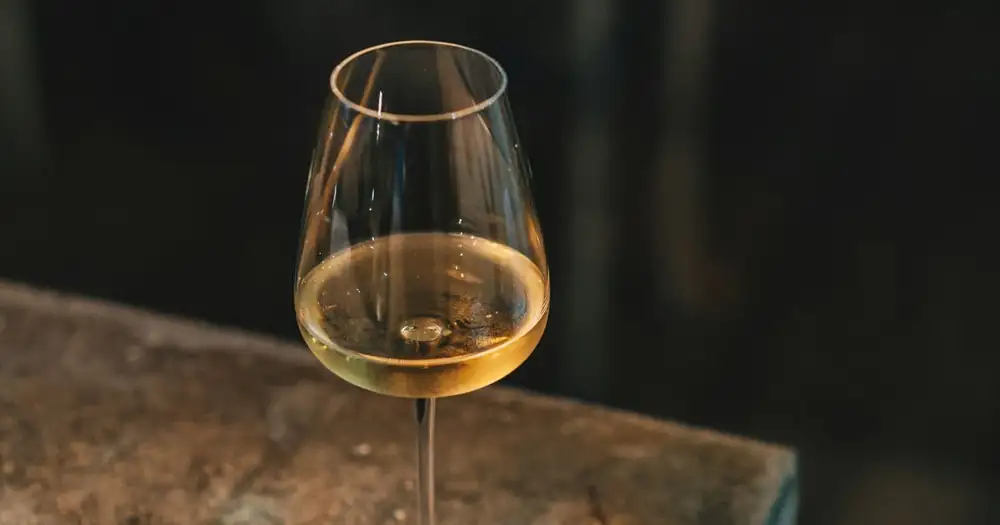
Blanc de blancs or blanc de noirs: what is the difference?
Good food calls for something delicious to drink. Drinks expert Marlies Beckers answers all questions about a wide variety of beverages with a down-to-earth attitude. This time, the question concerns wine and grapes, namely: what is the difference between a blanc de blancs and a blanc de noirs?
What is the difference between a blanc de blancs and a blanc de noirs? We asked our wine connoisseur and drinks expert Marlies Beckers.
You mainly encounter these terms on champagne and other sparkling wines. Some still wines also use them, although much less frequently.
In each case, it concerns a white wine made from either white or black grapes. This, in turn, reveals something about the flavor profile. Thanks to gentle pressing with minimal skin contact, a winemaker can also produce a white wine from black grapes, as their juice is also colorless.
In Champagne, three grape varieties may be used: the white Chardonnay and the red Pinot varieties (mostly Pinot Noir and Pinot Meunier).
- Most champagnes are a blend of the three types.
- If not, a specific designation is used.
- A Blanc de Blancs Champagne therefore always contains one hundred percent Chardonnay, which typically creates a floral aroma.
- A Blanc de Noirs can be a blend of Pinot varieties and is then fuller and more structured.