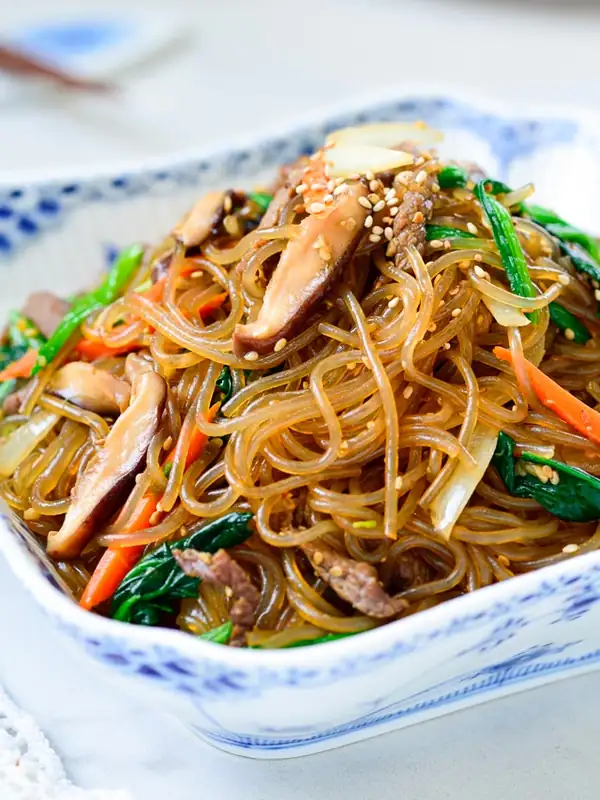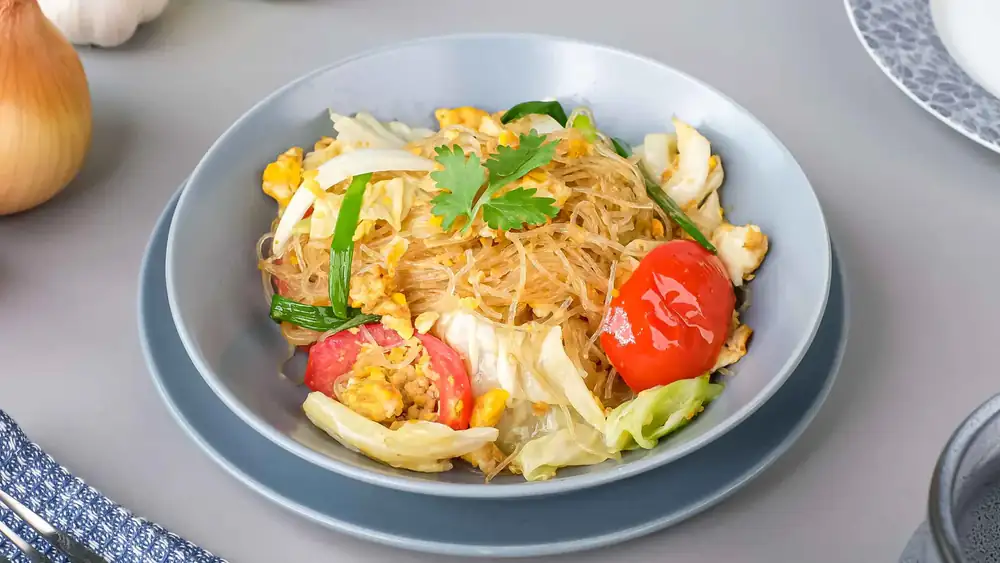
Stir-Fried Glass Noodles with Eggs ผัดวุ้นเส้น (Pad Woon Sen)
Pad Woon Sen is a classic stir fried glass noodle dish you’ll find in many streets of Thailand. If you’ve ever craved a dish that’s light yet packed with flavour, Pad Woon Sen might just be your next obsession. This is your guide to Thailand’s irresistible glass noodle stir-fry.
- 5 garlic clove(s)
- 2 tbsp cooking oil
- 2 egg(s)
- 40 g glass noodles
- 50 g white cabbage
- 1 tomato(es)
- 0.5 onion
- 2 tbsp fish sauce
- 2 tbsp sugar
- 0.25 tsp dark soy sauce
- 2 Chinese celery
- 2 Spring onions
- Heat up oil in a wok on medium-high heat. Then toss in chopped garlic and stir-fry till they turn golden brown.
- Crack in the eggs and gently stir them so that they are not completely combined. You can still see the yellow and the whites.
- Add in the softened glass noodles and stir-fry. If the noodles are not soft enough, you may add in some water or stock to help soften the noodles.
- Once the noodles has softened, add in the veggies. Starting with the harder textured ones, the cabbage and onions, followed by the softer ones, tomatoes. Stir till they're slightly soft.
- Stir in the seasoning. Mix till evenly combined.
- Right before turning off the heat, add in the spring onions and celery. Stir-fry for 10 secs and transfer to a serving plate. Enjoy!
What Is Pad Woon Sen, Exactly?
Pad (ผัด) means fried in Thai whilea woon sen (วุ้นเส้น) refers to the glass noodles. The star of the dish features these gluten-free noodles that are also called cellophane or mung bean noodles.
Unlike its more famous cousin, Pad Thai, which uses rice noodles, Pad Woon Sen brings a slightly chewy, slippery texture that soaks up flavors like a dream.
It’s typically stir-fried with a mix of veggies like cabbage, tomatos, and onions. Sometimes, your choice of protein is added too. Think chicken, shrimp, pork, or tofu! The magic happens with a simple yet bold sauce, often made with soy sauce, oyster sauce, and a hint of fish sauce for that umami kick. It’s quick and customizable.
The noodle dish is perfect for a weeknight dinner or when you want something satisfying without the food coma.
Is Pad Woon Sen the Same as Pad Thai?
No, they’re different! While both are Thai stir-fries, Pad Thai uses flat rice noodles and has a tangy, sweet-sour flavor from tamarind and peanuts.
Pad Woon Sen, on the other hand, leans on glass noodles and a simpler, savory sauce profile. If you’re a Pad Thai fan, give this a try for a refreshing twist!
What Are Glass Noodles Made Of?
Glass noodles are made from mung bean starch, which gives them that signature translucent look when cooked. They are naturally gluten-free, making Pad Woon Sen a great option if you’re avoiding wheat.
The noodles soak up whatever sauce you toss them in, which is why they shine in this stir-fry.
How to Avoid Mushy Glass Noodles?
Cooking glass noodles can feel tricky at first. I saw how people messed it up by overcooking them into a mushy mess. The key? Soak them in warm water for about 10 to 15 minutes until they’re soft but still have a bit of bite.
Don’t boil them unless the package says so, as they’ll cook more in the wok. Drain them well and you’re ready to stir-fry. Trust me, nailing this step makes all the difference in your Pad Woon Sen’s texture.
Is Pad Woon Sen Healthy?
Absolutely! Pad Woon Sen is lighter than many noodle dishes because glass noodles are low in calories and fat. Load it up with colorful veggies, and you’ve got a balanced meal.
Of course, the sauce can add some sodium, so if you’re watching that, go easy on the soy and fish sauce. Less the sugar too. If you need more protein, use more meat or tofu in your dish.
Can You Make Pad Woon Sen Vegetarian or Vegan?
Yes, and it’s so easy! Swap out the meat/egg for tofu or mushrooms, and ditch the fish and oyster sauce for a vegan alternative like soy sauce with a dash of mushroom seasoning.
While it’s not common in Thailand, vegan versions are equally flavourful. The trick is to amp up the garlic to keep that bold taste going strong. Vegan sauces make are really good too!
Can You Meal Prep Pad Woon Sen?
Yes, it’s a fantastic make-ahead dish! It reheats pretty well, though the noodles might soften a bit. I’d recommend storing it in an airtight container in the fridge for up to 3 days.
When reheating, a quick toss in a hot pan with a splash of water works better than the microwave. That way you get to keeps that stir-fry vibe alive.