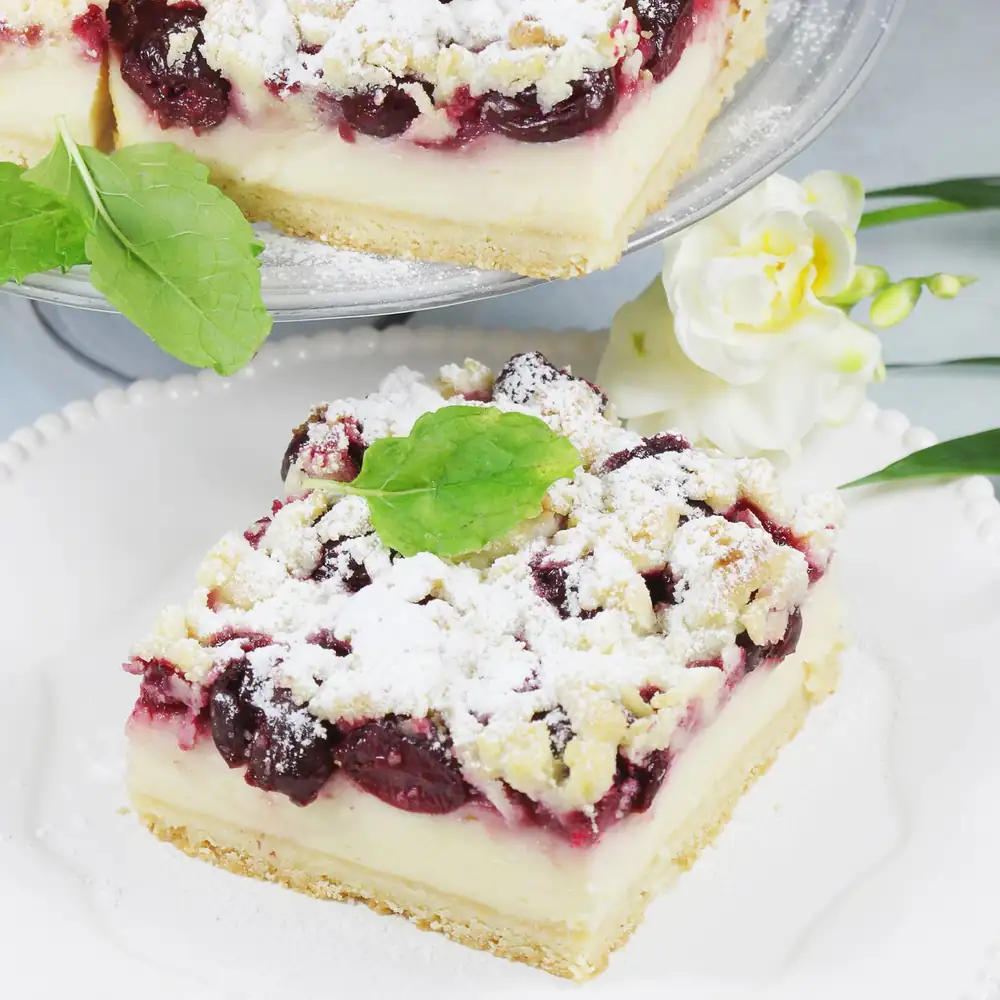
Shortcrust pastry
The basic and most proven shortcrust pastry for sweet baked goods. Check out my basic and best shortcrust pastry recipe for many delicious sweets. The proportions are perfect, and the flavor is perfectly balanced!
- only 4 ingredients - perfectly shortcrust pastry - no leavening agents
- Preparation time: 1 hour Cooling time for shortcrust pastry: 1 hour
- Baking time for the entire pastry: 50 minutes
- Number of servings: 20/30 cm baking tin
- Energy value 234 kcal
- Carbohydrates 32 g
- Including sugars 13 g
- Protein 4 g
- Fat 10 g
- Diet: vegetarian.
- 2 cups of wheat flour - 320 g (1 cup of regular + 1 cup of semolina)
- 1 stick of butter - 200 g
- about 3/4 cup of powdered sugar - 100 g
- 2 medium egg yolks
- 3 sachets of sugar-free vanilla pudding - 3 x 35 g
- 3.5 cups of milk - 875 ml
- 4 tablespoons of sugar
- 500-700 g of fruit - cherries, raspberries, apples, strawberries, plums..
Shortcrust pastry
My glass holds 250 ml. Baking pan for the given amount of dough: 20/30 cm baking pan, 24 x 24 cm baking pan, or 24-26 cm springform pan. Baking: 180 degrees Celsius, middle rack with top/bottom baking option. Base baking time: 10 minutes and 190 degrees Celsius. Baking time for the whole cake: up to 50 minutes and 180 degrees Celsius.
The given amount of ingredients will yield a dough weighing approximately 660 grams. The entire dough contains approximately 3100 kcal. 100 grams of dough contains approximately 470 kcal.
The calories were calculated based on the ingredients I used. This is an approximate calorie count, as even the flour or type of fat used may have a different calorie count than the ingredients I used. I only calculated the calorie content of the shortcrust pastry (not including the custard filling or fruit).
Below, I'll share a basic shortcrust pastry recipe that you can use to bake any sweet treat using molds similar in size to those mentioned above. I'll explain exactly how to make the dough, how to divide it to create the base and the crumble topping. Below, I'll also share a sample recipe for shortcrust pastry with custard and cherries. You can use this recipe, or bake a shortcrust pastry with custard and other fruit. You can also skip the pudding altogether and bake just the shortcrust pastry with your chosen fruit.
Shortcrust pastry recipe
Let's start with the flour. For shortcrust pastry, I recommend mixing type 550 wheat flour (luxury wheat flour. Type 500 flour, such as Poznań and Wrocław flour, or even cake flour, will also work) with all-purpose flour, in a 50/50 ratio. For this batch of dough, you'll need two cups, or 320 grams of flour. So, you'll need one cup of regular flour and one cup of all-purpose flour. If you only have cake flour or all-purpose flour, feel free to use just that. Add at least 100 grams of powdered sugar (about 3/4 cup) to the flour. With this amount of sugar, the cake isn't very sweet.
I usually use real butter for shortcrust pastry. I sometimes use lard when making savory shortcrust pastry. The butter can be taken straight from the refrigerator. I cut it into smaller pieces to make it easier to rub the butter into the flour. You need 200 grams, which is a standard stick of butter. Also add two small egg yolks to the bowl.
Tip: At this point you can also add: a tablespoon of cocoa to make a chocolate shortbread or a level teaspoon of cinnamon to make a cinnamon shortbread.
To combine all the ingredients, you can use a mixer with a dough hook for heavier doughs or knead the dough by hand. Do this quickly and efficiently to avoid unnecessarily warming the dough with your hands and melting the butter particles. At first, the dough may seem too sticky, but after a while, it will become more pliable and easy to shape into a neat ball. Wrap the dough in plastic wrap and chill in the refrigerator for a full hour.
While the cake is cooling, prepare the pudding. Pour three cups of milk (preferably full-fat) into a saucepan and add four tablespoons of sugar (or more if you prefer sweeter baked goods). Fill the glass halfway with milk and then add three packets of vanilla or cream-flavored pudding powder. This should make three sugar-free puddings, weighing 35 grams per packet.
Bring the milk and sugar to a boil. Reduce the heat to low and pour in the well-mixed custard powder and milk. Immediately begin stirring the pudding. You can increase the heat slightly. Stir the pudding briefly but vigorously. It should come back to a boil and thicken. Don't over-stir, just long enough to achieve the desired consistency. This will be a very thick pudding. Set the pudding aside to cool, covering it with plastic wrap (I use sandwich bags).
After an hour of chilling, you can divide the dough into two pieces, 1/3 and 2/3. Wrap the smaller piece in foil again and place it in the freezer.
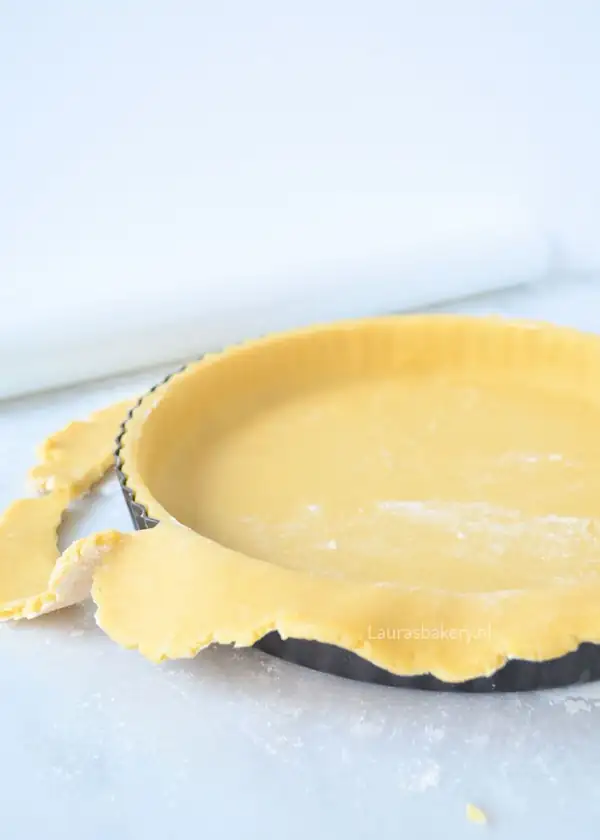
Line the bottom of the pan with baking paper/parchment paper and secure it with a rim (if your pan has one). Choose pans with the following dimensions: a 20x30 cm baking tray, a 24x24 cm baking tray, or a 24-26 cm springform pan. For this recipe, I don't use baking paper on the sides of the pan. However, for easier baking, you can use parchment paper on the sides as well. Then, cut the baking paper to line the sides of the pan as well. First, grease the inside of the sides with softened butter or sandwich margarine (these margarines are soft and ideal for greasing the inside of the pans). The paper strips stick perfectly to the greased sides.
I recommend cutting the larger piece of dough into slices no thicker than 1 cm with a knife. Arrange the slices on the bottom of the pan. Fill in any gaps with the remaining dough, then finally assemble the dough and smooth the surface. You can prick the slices with a fork.
Place the baking dish with the base in an oven preheated to 190 degrees Celsius. Select the middle rack with top/bottom heat. Bake the base this way for 10 minutes. You can remove the baked base from the oven immediately. Don't turn off the oven, just reduce the temperature to 180 degrees Celsius.
Pour the entire pudding mixture onto the pre-baked crust (both the pudding and crust may still be warm). Carefully fill in any gaps and smooth out the surface.
Spread the fruit over the pudding. I thawed 500 grams of pitted cherries. I also patted the cherries dry with a paper towel. Instead of cherries, you can also use raspberries, blueberries, apple slices, strawberries, plum halves, or sweet cherries, with a total weight of no more than 700 grams.
Remove a smaller piece of shortcrust pastry from the freezer and grate it coarsely. Spread the grated pastry evenly over the entire surface. Place the baking tin with the prepared pastry in an oven preheated to 180 degrees Celsius (350 degrees Fahrenheit). Use the top/bottom rack. Select the middle rack and bake the shortcrust pastry with custard and fruit for approximately 50 minutes.
The baked cake can be removed from the oven immediately. However, I don't recommend removing it from the pan and slicing it until it has completely cooled. The custard mixture needs to cool completely and then chill slightly to harden again. Chilled shortcrust pastry slices perfectly. I recommend dusting it generously with powdered sugar before serving, as it's not very sweet.
Above, I've included a sample recipe for using shortcrust pastry to make a sweet cake. You can also omit the pudding from the ingredients and use only fruit or even a very thick jam or preserves. This type of cake will likely bake a bit faster than a shortcrust pastry with pudding.
You can also use two egg whites from the shortcrust pastry ingredients and beat them until stiff peaks form with four heaping tablespoons of caster sugar. Then add two more level tablespoons of sugar-free lemon jelly (powder). Spread this raw meringue over the fruit, then grate a smaller piece of dough over it and place the pan in the oven.
Good luck and enjoy!