Prepare beetroot
The beet varieties
- Locally harvested beetroot is available from summer to late autumn.
- Beetroot can be used raw, cooked, steamed or fried in tasty dishes.
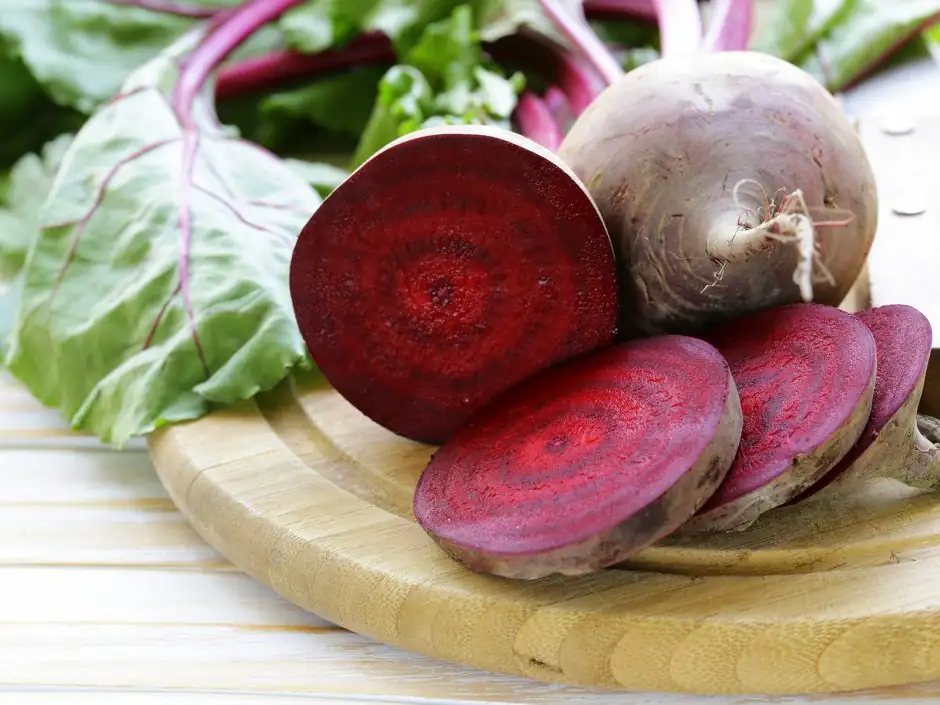
- The vegetable stands out due to its vibrant color; there are not only red varieties, but also intensely red colored, yellow, white and with rings, where white and pink rings appear in the flesh.
- Beets have a slightly earthy and sweet taste.
- The beet is available all year round: fresh during harvest time, as a stored vegetable or precooked.
- Beet varieties differ not only in color but also in shape. They can be round, flat, cylindrical, spindle-shaped, or conical. Round beets mature faster, while elongated ones are more productive.
- This variety of beets originates from the common beet, dating back to the 16th century, from which the well-known sugar beet also comes.
- More and more intensely colored varieties were bred, with the red beet becoming the most popular variety.
The correct steps for working with a healthy beet
Prepare the beets
- Since beetroot stains strongly, it is advisable to wear an apron and protect your hands with gloves when cooking.
- This means there are no nasty stains that can prove to be quite stubborn.
- Although, lemon is quite good for removing everything from the skin.
- Cutting boards can also be cleaned with lemon juice.
- However, it's better to put baking paper underneath.
- If the beets are not peeled before cooking, more of the valuable nutrients are retained.
- Thorough washing and cleaning is essential.
- The shell must not be damaged.
Eat beetroot raw
Those who like the earthy taste can also eat beetroot raw:
- Wash the beets thoroughly, remove the greens, peel carefully and cut into small cubes or finely grate or shred them with a vegetable slicer and use them in salads or juice them.
- Unfortunately, consuming raw beets is not suitable for some people who are prone to kidney stones.
- They contain a certain amount of oxalic acid, which inhibits the body's absorption of calcium.
Cook beets
Cooking the beetroot in a pot is recommended if you want to pickle it or make soup:
- Place the cleaned and unpeeled tubers in a pot, cover with water, bring to a boil first with the lid closed, then remove the lid and simmer over a low flame.
- Simmering takes approximately 20-40 minutes, depending on the size of the tuber.
- Really large beets can reach a diameter of 10 cm, which usually grow in one's own garden, hence the different cooking times.
- Add a pinch of salt about 20 minutes before the end of the cooking time.
- Use a fork to test if the food is cooked.
- The vegetable is ready as soon as it can be easily pierced and is firm to the bite.
- Remove the beets from the water and let them cool.
- Unused cooking water can be used as the basis for a salad dressing.
Steam beets
Gently steaming the beetroot is also possible and is well suited if the vegetable cubes are to be served as a vegetable side dish or processed into a puree:
- First, peel and chop the beet into small pieces.
- Gently steam the diced beets with a little water in a pot for about 20 minutes at a constant temperature until soft.
Fry beets
Those who prefer to use the oven also have advantages, although the cooking process in the oven takes significantly longer, the taste is excellent:
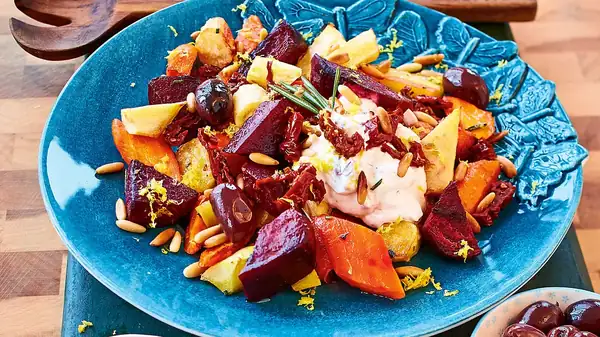
- Quarter the beets with the peel on and place them in a small ovenproof dish.
- Bake in a preheated oven at approximately 180°C (top and bottom heat) for approximately 1 1/2 - 2 hours, until soft.
- Turn the beet wedges over occasionally.
- Then peel the beets or simply eat them with the peel on.
Further uses in the kitchen
- This vegetable is great in soup or stew. Potatoes and carrots are a perfect match. Season with salt and pepper. Ginger adds a pleasant spiciness.
- Beetroot can also be used for purées. Combined with freshly grated horseradish, it makes a savory spread with a unique color.
- Thin slices of beetroot can also be used as a pizza topping. They are also ideal for a tart or quiche.
- For this stir-fry, diced beetroot is sautéed with onions, deglazed with balsamic vinegar and honey, reduced slightly, and seasoned with salt and pepper. This vegetable dish pairs well with baked feta cheese as a main course or as a side dish with meat.
- They are also fantastic as beetroot carpaccio. They are pre-cooked, sliced, and layered on a plate in an overlapping, shingle-like fashion with the addition of olive oil.
- You can make a supply of sweet and sour pickled beets. The pre-cooked and finely chopped vegetables are mixed with vinegar, sugar, and salt, then preserved in jars. Here's a simple step-by-step guide: Pickling Beets.
- Cooled and finely grated beetroot can be used to prepare a beetroot salad, which can be complemented with arugula and apples. A vinaigrette dressing with fresh herbs and/or yogurt can be used as a salad dressing. Whole-grain bread serves as a filling accompaniment.
- And of course, let's not forget the healthy beetroot chips, ingeniously simple and super delicious, perfect for snacking.