cooking fish
Traditionally, fish is on the menu no later than Friday.
From purchase to preparation, there are a few points to consider to ensure optimal quality and taste.
Recognizing Fresh Fish
When buying fish, attention should be paid to its presentation.
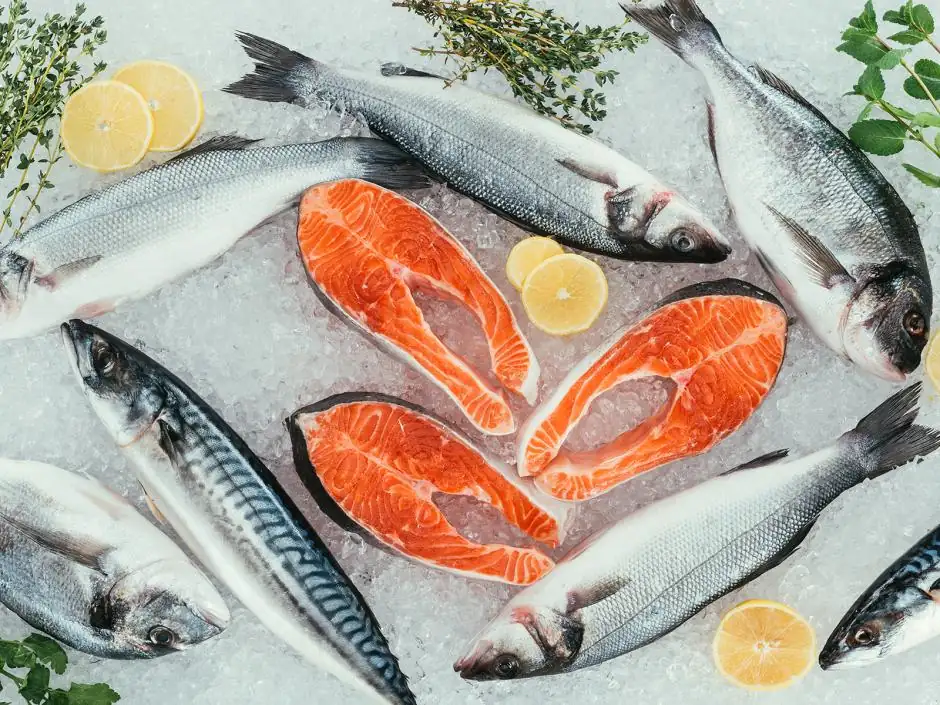
It must be well chilled on ice and exhibit the following quality characteristics:
- Fresh fish doesn't smell strongly of fish, but rather reminiscent of salt and seawater.
- The color provides clues about freshness: the paler the color, the older the animal.
- The gills should be red and the eyes clear and shiny.
Prepare the fish
Preparation is particularly easy if a filleted fish is chosen when purchasing it.
Fillets should also be checked for remaining bones before preparation.
Run your finger over the fillet and remove any remaining bones with kitchen tweezers.
Preparing a whole fish is a bit more involved.
The work can be made easier if the dealer has already scaled and gutted the fish.
The following steps should be observed when preparing the preparation yourself:
- Cut off the fins (chest, back, tail) with fish or household scissors.
- Scale the fish from tail to head, using the back of a knife, scissors or a fish scaler.
- Cut open the abdomen from the anus to the head, proceeding carefully to avoid damaging the intestines.
- Fold back the abdomen and remove the entrails with your fingers.
- Leave the head on or cut it off, depending on preference.
- Rinse the fish thoroughly with cold water.
Whole fish can also be removed through the gills, but this should be left to a professional.
Fillet round and flat fish
When filleting, a thin, sharp knife that is not too long is advantageous.
Round fish (e.g. salmon-pollock, trout-salmon trout, gilthead bream-dorade) are filleted as follows:
- Detach the head by making a vertical cut behind the front fin on both sides.
- Starting at the head, loosen the first fillet along the backbone.
- Separate the main bone from the second half of the fish to obtain the second fillet.
- Remove the light-colored belly flap and carefully peel the skin off the tail.
Flatfish (e.g., sole, plaice, turbot) are filleted as follows:
- They are cut in the middle from head to tail.
- First, carefully loosen the meat below the cut from the central bone.
- Next, work the fillet above the cut. Depending on the recipe, the skin can be removed at the end.
Preparing fish
Fish can be prepared in a variety of ways, and is also particularly nutritious:
1. Dampening
Most nutrients are retained when the fish is cooked in steam or steamed in a small amount of liquid.
These methods are also low in calories.
2. The Grill
Low-fat fish stays especially juicy if it is wrapped in aluminum foil beforehand.
Alternatively, cabbage leaves, chard, rhubarb or grape leaves, as well as banana leaves, can be used.
Lemon slices, garlic, or herbs can be added for extra flavor.
3. Roast
When frying, care should be taken to ensure that the fish does not brown too much to avoid drying out.
After frying, it can be braised further in a pot with selected sauces.
4. Deep frying
Fried fish is a special treat, but it contains more calories.
Fish should only be breaded and fried at a maximum temperature of 180 °C to ensure the flesh remains tender.