cook pasta
Spilled the beans from the pasta pot - here you'll find the most important tips & tricks for foolproof pasta.
This is how easy it is to cook pasta.
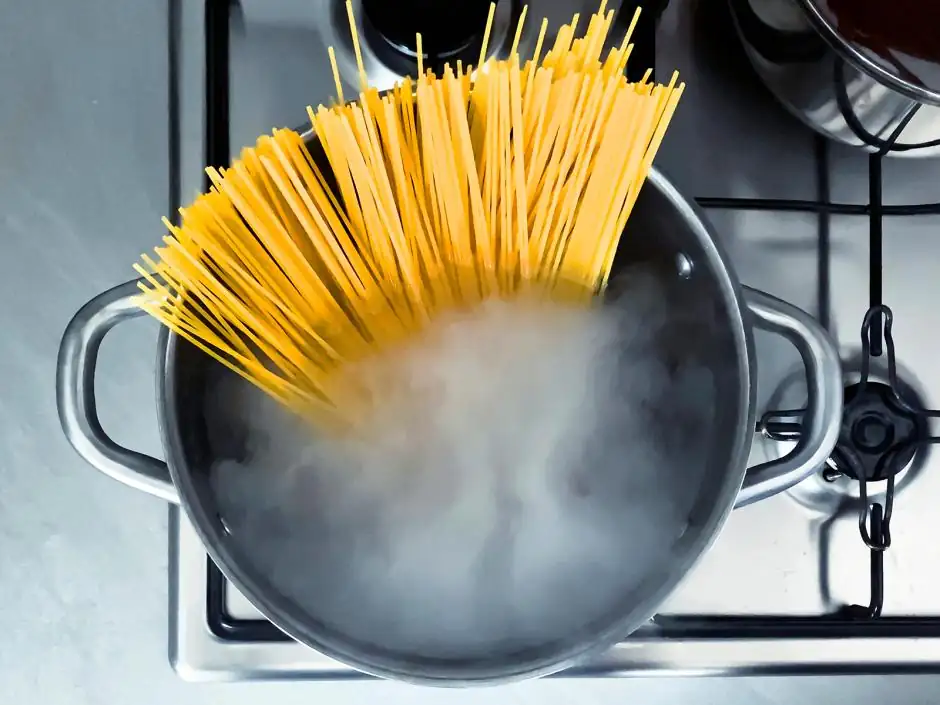
The first step is always to choose the right cooking pot.
It should definitely not be too small, because the noodles need to be able to float freely in it so that they don't stick together later.
Then the pasta water is heated and, once it finally boils, heavily salted.
Rule of thumb: For every 100g of dry pasta, you need 1 liter of water and 1 teaspoon of salt.
Cooking pasta correctly
Choosing the right type of pasta is often not so easy, as there are now more than 600 varieties.
Although personal taste naturally plays an important role, one should not necessarily opt for the cheapest product on the market and should rather invest a little more.
High-quality pasta from well-known brands usually stays al dente longer and doesn't overcook as quickly.
Tips for cooking pasta
Finding the right cooking point when cooking pasta can be quite a challenge.
If you leave the pasta in the water for too long, it becomes too soft or sticks together; if you take it out too early, it is too hard.
Ideally, the pasta should still be al dente (firm to the bite).
- You need about 1 liter of water for every 100 grams of pasta.
- As a side dish, you should allow about 70 grams of dry pasta per person, and as a main course, about 130 grams.
- A large pot so that the pasta doesn't boil over and has enough space.
- You need about 1 level teaspoon of salt per 100 grams of pasta.
- Then bring the water to a boil.
- Add the salt only when the water is boiling.
- Then add the pasta to the boiling water and let it simmer.
- Stir with a wooden spoon every 2-3 minutes.
- The cooking time depends on the type of pasta and should be indicated on the packaging.
- Homemade, fresh pasta takes an average of 2-5 minutes to cook, while dry pasta takes about 8-10 minutes.
- Then drain the pasta but do not rinse it with cold water, otherwise the starch will be washed away and the sauce will not adhere to it as well.
- Put the noodles back into the empty pot and mix with 3-4 tablespoons of the cooking water - this will prevent them from sticking together.
Additional tips
- Mix the sauce with the pasta just before serving.
- Although it is common practice to add oil to pasta water to prevent sticking, experts – and most Italians – advise against it.
- Generally, you can rely on the information provided by the manufacturer on the packaging.
- If the pasta is not to be eaten immediately, but is to be cooled down in order to be used in a salad, it is better to rinse it with cold water.
- Otherwise, it will continue to cook and will be too soft later.
- Pasta that is too salty can simply be rinsed under some water.
Toothless noodle
If you like your pasta “al dente”, i.e. with a bite, leave the pasta in the water for exactly the time stated on the package.
To determine whether the pasta is still al dente, there is a simple and fun trick:
Fish a noodle out of the water and throw it against a smooth, clean surface, such as kitchen tiles - if it sticks to it, then the noodles are al dente.
Alternatively, you can of course try the pasta yourself ;)
Delicious leftover pasta
Leftover pasta can be fried in a pan or transformed into a delicious casserole with a few ingredients, such as cooked ham, cheese, bacon cubes and tomatoes!