Dry-aged beef has become a trend, but many people who talk about it don't really know what it is…
So, we're going to talk about 30, 60, 90, and even 120 days for the most daring. These figures correspond to the number of days that pass between the slaughterhouse and your plate. In the meantime, the cut of meat will have passed through the hands of a butcher and will have entered a maturation chamber.
So yes, the new delicacy for red meat lovers is dry-aged beef. More expensive and more flavorful, these cuts of beef are making their way onto restaurant menus. Have you ever tried dry-aged beef? – It's the new delicacy that meat lovers are raving about.
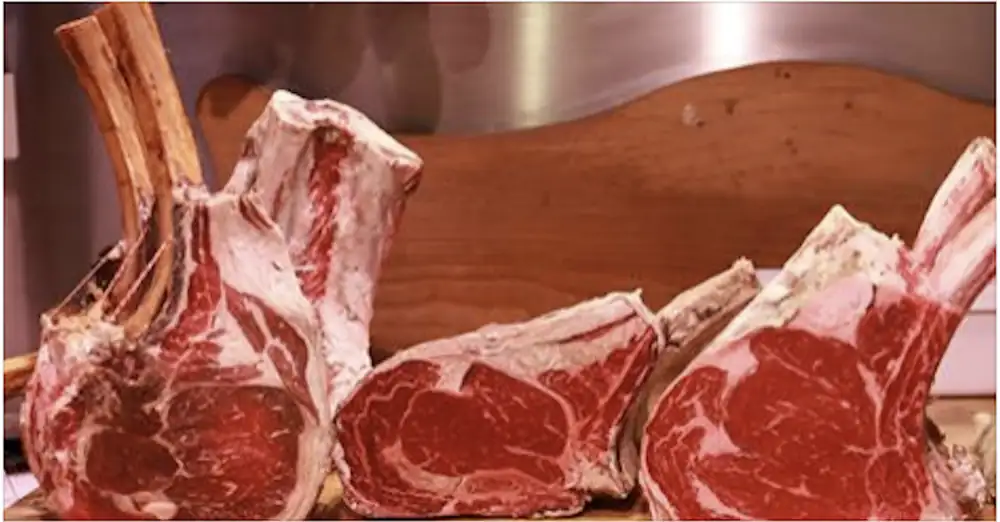
To age the meat, butchers select the finest cuts with sufficient fat (rib steak, entrecote, sirloin, sirloin), from noble breeds (Charolais, Wagyu, Angus). They leave them to mature in a cellar or aging room, well beyond the conventional 15 days of classic maturation: for a minimum of 4 weeks up to several months.
The meat takes on a darker color, develops new aromas, becomes tastier and extremely tender.
According to butchers, aging gives the meat inimitable qualities: "The fat in the meat becomes meltingly tender, like foie gras. The fattier the animal, the better the meat." A product for connoisseurs – This meat is a high-quality product, prepared from selected animals, raised outdoors on grass in good conditions. Aging requires meat with sufficient fat on the surface and high marbling (intramuscular fat content).
120-day aged meat
Storage conditions are also closely monitored, including temperature (+2°C), humidity, and air circulation. A long maturation process leads to evaporation of up to 60% of the meat's initial weight.
Meat lovers are not mistaken, as they are willing to pay between €65 and €200 per kilo for certain cuts of beef, while some chefs have even gone so far as to invest in their own aging chambers.