Yogurt cake: "Halfway through baking, I make this simple adjustment to the thermostat
Everyone thinks they've mastered the yogurt cake, until the modern oven makes it dry around the edges. Yet, a simple forgotten thermostat setting is all it takes to restore its incredible moistness.
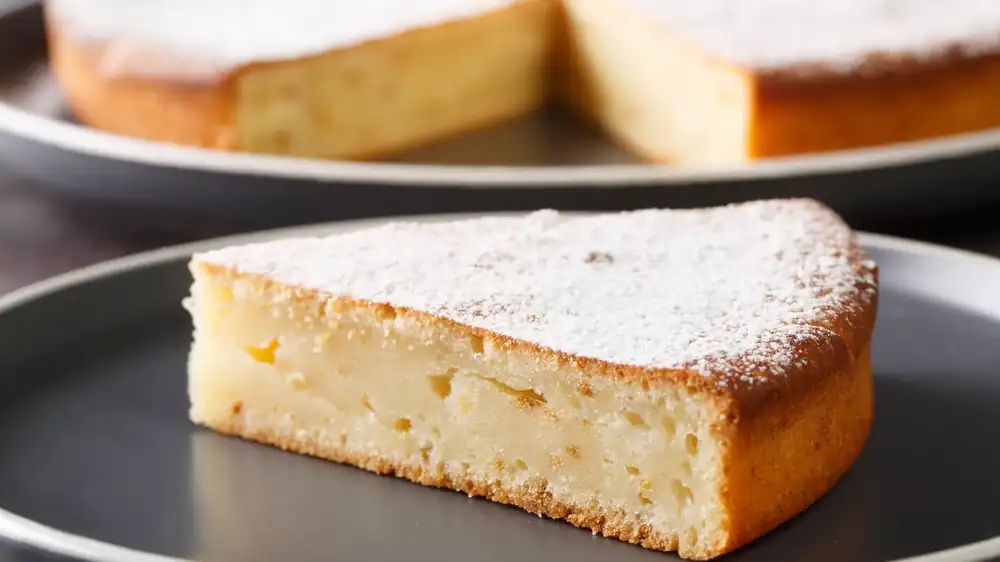
The yogurt cake that fills the kitchen with its aroma, rises in the oven, then barely deflates while retaining a moist crumb—everyone remembers it. Yet, with modern ovens, this classic often comes out dry around the edges and overcooked in the center, even though the recipe hasn't changed. What's missing isn't an ingredient, but a subtle touch during baking.
At the heart of this yogurt cake baking tip lies a simple method: a two-stage baking process, using the thermostat to mimic the expert eye of our grandmothers. Start at 180°C (350°F) to allow the cake to rise and brown, then lower the temperature to 160-165°C (325-325°F) to let the center cook gently. All this without changing any of the ingredients or complicating the preparation.
The basics of a really moist yogurt cake
Grandma's recipe remains the same: a yogurt pot as a measuring cup, simple ingredients, and a barely worked dough. The ingredients benefit from being at room temperature for a more even texture. The mixing should be quick; if the dough is overmixed, the gluten in the flour will develop and the crumb will become tough, even with proper baking.
For a standard mold, you only need to gather the following ingredients:
- 1 pot of plain yogurt
- 2 pots of powdered sugar
- 3 pots of flour
- 1 sachet of baking powder
- 1/2 jar of neutral oil
- 2 to 3 eggs
- Optional: lemon zest or a little vanilla.
Two-stage cooking: the technique that changes everything
Once the pan is buttered and floured, and the batter smoothed, the oven should be preheated to 180°C (350°F). The cake then bakes for 15 to 20 minutes without opening the door: the baking powder activates, the batter rises, and a thin golden crust forms, sealing in the moisture. This "sealing" is what gives the yogurt cake its characteristic tall, fluffy appearance.
Next comes the key step with the thermostat: lower the oven temperature to 160-165°C (325-325°F), still without removing the pan, and continue baking for 15 to 20 minutes. This two-stage baking method involves starting at a high temperature and then finishing at a lower temperature to allow the center to cook through without the edges drying out. Test this by inserting a knife into the center: a few slightly moist crumbs should cling to it, never completely dry.
The steps that prolong the softness for several days
Once the cake is baked, let it rest in the pan for about ten minutes before turning it out onto a wire rack. While it's still warm, a simple clean tea towel placed on top will prevent a crust from forming. Avoid the refrigerator, as it dries out the crumb; at room temperature, in an airtight container, it will stay moist for three to four days.
As for variations, stirred yogurt gives a slightly denser crumb, while Greek yogurt makes it even more melt-in-your-mouth, without changing the proportions. A little lemon zest, chocolate chips, or pieces of fruit can easily be incorporated into the batter. Whatever flavor you choose, it's this interplay between 180°C and then 160-165°C that gives the yogurt cake the moist texture of childhood treats.