The restaurant as a “third place”
Why do some places become neighborhood landmarks, while others remain mere places to eat? There's a question that's more important than any menu engineering strategy, any social media campaign, or any Tuesday discount: do people feel a need for your place? They don't "like eating there." They miss it when it's closed.
What is a “third place” (and why does it concern you)
The concept comes from sociology. Sociologist Ray Oldenburg defined it this way: the first place is home, the second is work, and the third place is that informal space where people gather for the pleasure of being together, without obligations: the local bar, the town square, the pub, the corner restaurant. Historically, these have been the places that hold communities together. The strategic point is this: we live in an era where third places are disappearing. People work from home, order everything online, socialize via a screen. Loneliness has become a mass issue. And in this void, the restaurant has its greatest opportunity in decades: to become the missing human space. Not a dispenser of food, but a place of belonging. Those who understand this are playing a completely different game than those who compete solely on price and food quality. Because on food and price, you can always be outdone. On belonging, not on belonging.
The competitive advantage that cannot be seen in food costs
Let's try to translate it into business language, because "community" risks sounding like an empty word. A venue that has become a third-party location has structurally better numbers, and for specific reasons.
Frequency changes everything. The customer who perceives you as "their place" doesn't return once a month: they return every week, sometimes every day. In a restaurant's profit and loss statement, the frequency of return counts more than the average bill. A low-spending regular customer, multiplied by fifty visits a year, is worth much more than a tourist who spends a lot once and is never seen again.
The cost of acquisition plummets. You didn't win over those who call you home with advertising: they bring others to you for free. Word of mouth from a community is the cheapest and most effective marketing channel there is, and you can't buy it, you can only deserve it.
Crisis resistance. When the slow season arrives, the rain comes, new competition arrives with aggressive offers, those who have a community hold firm. Regulars won't abandon you for a discount. They're the buffer that gets you through the difficult months.
Price becomes secondary. No one negotiates on price with a place they love. Being part of the community dissolves price sensitivity better than any menu technique.
None of these items appear in your food cost. But they decide whether you'll still be around in five years.
How Belonging Is Born: Four Pillars
Belonging isn't decreed with a sign saying "You're part of the family here." It's built, slowly, on a few pillars. They're strategic precisely because they can't be bought: they're cultivated.
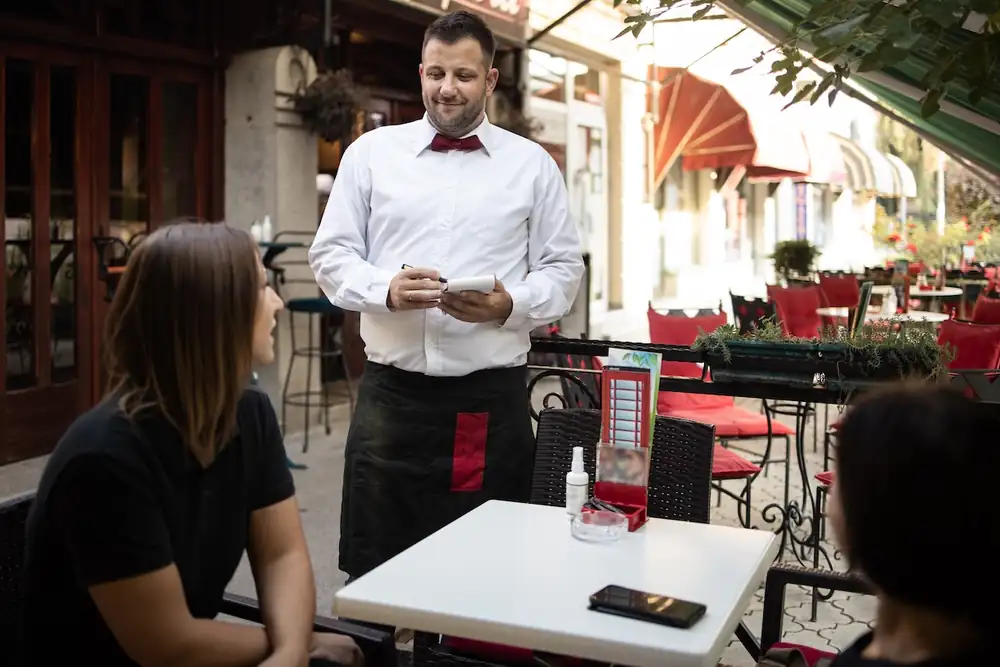
• Recognition The moment a customer stops being a customer and becomes "one of us" is when they are recognized. The waiter who remembers their name, their table, their "usual." It's the simplest and most powerful human experience there is: being seen. An algorithm doesn't do it, delivery doesn't do it, the big chain doesn't do it. You do. It's your structural advantage against anyone bigger than you. The strategic question isn't "how do I speed up service," it's "how do I make my customers feel recognized?"
• Rituals Third places thrive on rituals. The Saturday table of regulars, the Friday aperitif that's always the same, the team that meets there after the game, the group of friends who have "their" table. Rituals create recurring events, and recurring events create frequency. Your strategic task is to create opportunities for a ritual to arise—not to force it, but to create the conditions for people to embrace it.
• Identity A third place has character. It's not neutral, it doesn't appeal to everyone, and that's precisely the point. It has a recognizable personality: an aesthetic, a way of doing things, values, a history. People become attached to places with a soul, not to interchangeable ones. A place that tries to please everyone doesn't become anyone's go-to. The question is: if your place were a person, who would it be? If you can't answer, neither can your customers.
• Neighborhood roots: The neighborhood's point of reference is, literally, of the neighborhood. It knows its neighbors, collaborates with other businesses instead of fearing them, hosts the local soccer team, hangs the association's posters, and knows the local families. It doesn't extract value from the area: it's part of it. This rootedness is the difference between "a restaurant on a street" and "the restaurant on that street."
Beyond the Meal: True Loyalty Isn't a Points Card
A clear strategic distinction must be made here, because it's where almost everyone goes wrong. Tactical loyalty is the points card, the "one free for the tenth pizza," the coupon. It works as a short-term lever, but it's fragile: it builds loyalty in the wallet, not the person. The day someone else offers more, the points-based customer leaves. Strategic loyalty connects the person, not the transaction. And it comes into play beyond the meal:
Relationships between customers, not just between you and them. A third place is where people get to know each other. When your customers become friends within your restaurant, they never leave: leaving would mean leaving their own people.
Presence in the life of the community, not just at its dinners. The restaurant that's there when there's a celebration to be had, but also when something needs to be organized for the neighborhood, enters a different mental category.
Shared history. The years, the birthdays celebrated there, the "do you remember that evening?" Time, for a third place, isn't a cost: it's the capital it accumulates. A new place can't compete with ten years of memories. It's your moat.
The perspective: think in years, not in places
And here lies the difference between those who read this article as a list of tricks and those who read it as a strategy. Becoming a third location isn't a campaign, it's a direction. It's not measured by tonight's cover charge, it's measured by the question: in five years, will this place be a part of these people's lives, or just a place they drop in on occasion? Decisions change accordingly. Those who think about tonight's cover charge squeeze time, squeeze tables, treat the customer like a transaction to be closed quickly. Those who think about a third location let people linger, invest in staff who build relationships, and accept not maximizing every single evening to maximize the ten years. The first logic optimizes the present. The second builds something the present can't take away. The final paradox is beautiful: the place that focuses entirely on selling more, in the long run sells less than the one that aims to be loved. Because affection is the only asset that competitors can't replicate, portals can't disintermediate, and crises can't erase. Food brings people in for the first time. It's everything else that keeps her coming back for years. And "everything else" isn't a detail: it's the real strategy. Your best dish might not be on the menu. It might be the feeling someone gets when they walk through your door: that of having finally arrived somewhere they belong.