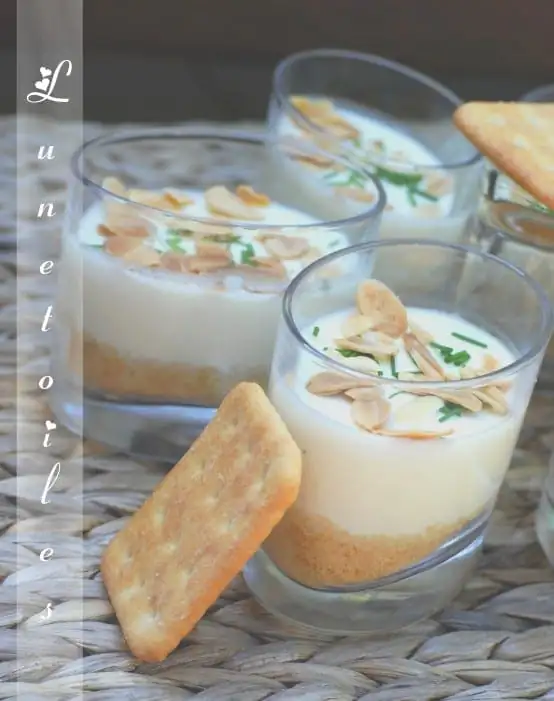
Panna cotta au parmesan / panna cotta salee
How about a savory panna cotta? It's a new discovery for some, but I promise you it's delicious.
- 100g of salted crackers, or sesame breadsticks
- 25g of grated Parmesan cheese
- 25g of butter
- 25 cl of milk
- 25 cl of liquid cream
- 60g of finely grated Parmesan cheese
- 2 sheets of gelatin, or approximately 4g in total
- Pepper
- Fresh herbs
- Toasted pine nuts or slivered almonds
- Melt the butter over low heat, then let it cool for a few moments.
- Crush the crackers into fine crumbs, either in a blender or in a bag by crushing them with a rolling pin.
- Mix the crumbs with the 25g of parmesan and the melted butter.
- Divide the mixture into six small glasses. Press lightly with the back of a small spoon to form an even layer, then place the glasses in the refrigerator.
- Place the gelatin sheets in a large bowl of cold water. Let them soften according to the time indicated on the packaging.
- Pour the milk and cream into a saucepan. Add the 60g of grated Parmesan cheese and heat over medium heat, stirring constantly.
- As soon as it starts to simmer, reduce the heat and continue cooking for 2 to 3 minutes. The mixture should remain hot without boiling vigorously.
- Remove the pan from the heat. Squeeze the gelatin sheets between your hands to remove excess water, then add them to the warm cream.
- Whisk thoroughly to dissolve them. Add pepper and taste before adding salt: the parmesan and crackers already provide some.
- Let the mixture cool for a few minutes, stirring it occasionally.
- Then slowly pour it into the glasses, on top of the layer of crackers, to avoid moving the crumbs.
- Cover the verrines and refrigerate for at least 2 hours, until the cream has set. If your verrines are tall or if you are preparing the appetizer for guests, allow it to set for longer.
- Toast the pine nuts or slivered almonds in a dry pan, then let them cool.
- Just before serving, add them to the verrines along with the fresh herbs.
- Serve the panna cotta cold, with a small spoon.
Serve this parmesan panna cotta with bread, tomatoes and basil to start a good evening meal, present it on the Christmas table or offer it in a buffet with friends.
For me too, this panna cotta was a discovery when my friend Lunetoiles shared her recipe with me.
I loved the idea of a cold parmesan cream served on a base of crackers. It can be prepared in advance: all that's left to do is add the herbs and toasted dried fruit when serving.
Ingredients for 6 verrines of parmesan panna cotta
The quantities below correspond to the recipe for my six verrines. In 20 cl containers, they are not necessarily filled to the brim.
For the crispy base
- 100g of salted crackers: they provide a crispy contrast; sesame breadsticks are also suitable.
- 25g of parmesan: to be mixed with the crushed biscuits to flavor the base.
- 25g of butter: it binds the crumbs without making them soggy.
For the savory panna cotta
- 25 cl of milk: it lightens the texture of the cream; keep the measurement in centiliters, i.e. 250 ml.
- 25 cl of liquid cream: it gives the characteristic smoothness of panna cotta.
- 60g of parmesan: grate it finely to facilitate its dispersion in the hot mixture.
- 2 sheets of gelatin: check their weight on the package, as not all sheets have the same weight; the recipe is usually made with two sheets of about 2g each.
- Pepper: to be added after tasting, since the parmesan and crackers are already salty.
For the finishing
- Fresh herbs, pine nuts or toasted slivered almonds: add just before serving to preserve their freshness and crunch.
How to prepare this savory parmesan panna cotta?
The preparation is done in two stages: a cracker base, then a parmesan cream that needs to set in the refrigerator. You can also find the quantities and a printable version in the recipe card at the bottom of the page.
Prepare the cracker base
- Melt the butter over low heat and let it cool slightly.
- Crush the crackers, or breadsticks, into fine crumbs. Mix them with the 25g of parmesan and the melted butter: the mixture should clump together without becoming greasy.
- Distribute the mixture into the bottom of the six verrines, press down lightly with the back of a spoon and place in the refrigerator while you prepare the cream.
Set the panna cotta
- Rehydrate the gelatin sheets in a large bowl of cold water, according to the instructions on their packaging.
- Heat the milk and cream with the 60g of grated Parmesan cheese. Stir until it just begins to simmer, then reduce the heat to low and cook for 2 to 3 minutes to allow the cheese to infuse the cream with its flavor. Avoid prolonged boiling.
- Remove from heat. Squeeze the excess water from the gelatin and whisk it into the hot mixture until completely dissolved. Season with pepper, taste before adding salt if necessary, then let it cool for a few minutes, stirring occasionally.
- Pour gently over the cracker base. Refrigerate for at least 2 hours, until the surface is set; allow more time if the glasses are deep.
- Just before serving, add the herbs and the toasted pine nuts or slivered almonds. Serve chilled.
My tips for creamy and beautifully presented verrines
- Is your panna cotta too firm? The weight of the gelatin sheets varies depending on the brand. Weigh the gelatin or check the packaging: approximately 4g for the 500ml of milk and cream in this recipe will give it a soft set in a glass. Do not add more gelatin to unmold it; this recipe is served directly in the glass.
- A grainy texture? Finely grate the Parmesan, heat gently, and stir. If grains remain, strain the liquid before pouring it over the crackers. Parmesan adds flavor, but doesn't always melt into a perfectly smooth cream.
- Is the base too soft? Let the cream cool slightly before pouring it in, and serve the verrines the same day if a crispy base is your priority. If preparing the day before, distribute the crackers in the verrines at the last minute and pour the set panna cotta into small, separate containers, or accept a softer base.
Gelatin or agar-agar for a savory panna cotta?
I prefer gelatin in this Parmesan version: it gives a soft, pleasant texture when spooned. Soak the gelatin sheets in cold water, squeeze out the excess water, then stir them into the warm cream off the heat.
For powdered gelatin, first hydrate it in cold water according to the manufacturer's instructions before adding it to the hot preparation.
Agar-agar is a suitable option if you wish to avoid animal gelatin, but it results in a more brittle texture. It must be dispersed in the liquid and brought to a boil according to the package instructions to activate.
Don't automatically substitute half a teaspoon for two sheets of gelatin: the weight, gelling strength, and results vary from one product to another. See the article: Gelatin or agar-agar: what are the differences and how to use them properly in cooking?
For this variation, try it first in a small quantity. Traditional Parmesan cheese itself may contain animal rennet: if you are looking for a vegetarian starter, also check the cheese label.
What should I serve with parmesan panna cotta as an appetizer?
In small glasses, she makes a savory panna cotta for an aperitif; in the six glasses planned, it becomes a cold starter.
Tomatoes and basil balance the Parmesan nicely. At Christmas, a few fresh herbs and toasted pine nuts are all you need for an elegant presentation.
Always add the garnish just before serving and keep a small spoonful for each guest.
Storage and preparation in advance
You can prepare the cream the day before and keep it covered in the refrigerator.
With the base already assembled, the crackers gradually lose their crispness: for entertaining, opt for preparing them on the same day or presenting them without a base, accompanied by crackers on the side.
Keep the verrines chilled, ideally for 24 to 48 hours for the quality of the texture, and do not leave them at room temperature for long on a buffet.
Freezing is not recommended: the cream may release water when defrosting.
Is parmesan panna cotta eaten hot or cold?
Cold: the cream sets while chilling in the refrigerator. Take the verrines out just before filling and serving.