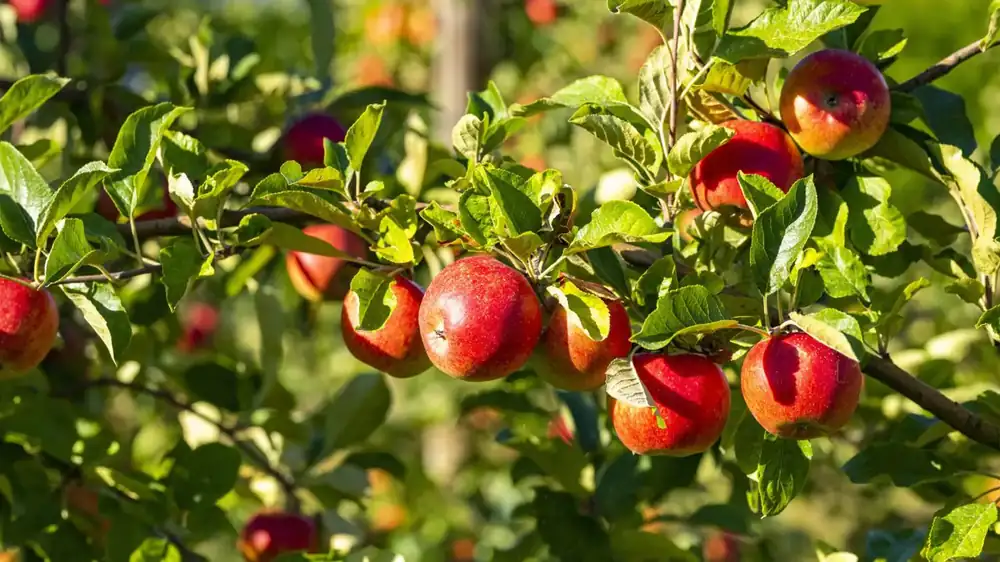
This expert asks everyone who has apple trees in their garden to do one thing in September
Your apple tree is laden with fruit. But are they ready to be picked? This expert has revealed the correct procedure to determine if your apples are ripe.
September typically marks the start of apple harvesting. In gardens, the fruit begins to develop beautiful colors, and some varieties are already ready to be eaten. But before filling your baskets, you need to know when to pick them. An apple that's too green won't necessarily be pleasant to eat, while a fruit left on the tree too long risks falling or spoiling.
To avoid any unpleasant surprises, the famous British gardener Monty Don recommends, in the columns of the Express UK, checking the condition of your apple tree at least once a week from now on.
How to pick your apples?
Think some apples are ready to pick? To be sure, there's no need to pull them. Monty Don advises gently holding the fruit in the palm of your hand, then lifting it slightly. If it comes away easily, it's ripe. However, if it remains firmly attached to the branch, it's best to wait a few more days.
The ideal storage solution to keep your apples fresh longer
Once harvested, apples will largely depend on where you choose to store them. To keep them fresh as long as possible and enjoy them throughout the winter, Monty Don recommends placing them in a cool, dark, and relatively humid location. They should also be handled carefully to avoid bumps that could accelerate spoilage.
To limit the risk of them rotting from contact with each other, another tip is to wrap each apple individually in newspaper or tissue paper. You should then regularly check the stored fruit. Any apple that begins to spoil should be removed quickly to prevent the rot from spreading to the others.
And if your apple tree gives you a particularly bountiful harvest, several solutions can help avoid waste. Fallen apples or those that can't be stored can be turned into juice. For large quantities, Monty Don even recommends renting an apple press: the resulting juice can then be bottled and stored. Finally, the apples can be dehydrated to prepare snacks that keep longer.



!["What ingredients do you always keep in stock?" <40,934 votes> [Tell us! Everyone's Clothing, Food, and Shelter "Everyone's Lifestyle Survey Team" Results Announcement, 667th Edition]](/static/img/a6a5b0a55d540fea_p.webp)