How to Make Caramel Without Butter?
Butter-free caramel is a practical alternative, especially for those who want to prepare a lighter sauce. Controlled melting of the sugar is the most important step in the recipe. Cream, milk, or just water can be added to the caramel depending on the desired consistency.
Spread 1 cup of granulated sugar evenly in a wide, preferably thick-bottomed saucepan. Add 2-3 tablespoons of water to the sugar to moisten it. Place the saucepan over medium heat and wait until the sugar is completely melted. Once the sugar starts melting, you can gently shake the saucepan instead of constantly stirring with a spoon. The sugar will first become translucent, then light yellow, and gradually darken. When the caramel reaches an amber color, it's ready to remove from the heat.
The flavor of caramel largely depends on how thoroughly the sugar is caramelized. Light golden caramel has a milder, sweeter aroma. Darker caramel has a more intense flavor with a slightly bitter taste. However, over-caramelizing the sugar can cause the caramel to burn and develop a noticeable bitterness. Therefore, it's important to constantly check the color without leaving the pan unattended. Once it reaches your desired color, immediately remove the pan from the heat and stop the cooking process.
If you want a sauce-like caramel consistency, you can add hot water or warm cream to the sugar after removing it from the heat. It's safer to add the liquid gradually rather than pouring it all at once, as hot caramel can suddenly foam and splatter. While adding the liquid, stir carefully using a long-handled spatula or spoon. Don't worry if the caramel hardens at first, as it will melt again with the heat. You can briefly reduce the heat and stir the mixture to achieve a smooth consistency. For a thicker sauce, you can reduce the amount of liquid; for a more fluid caramel, use a little more liquid.
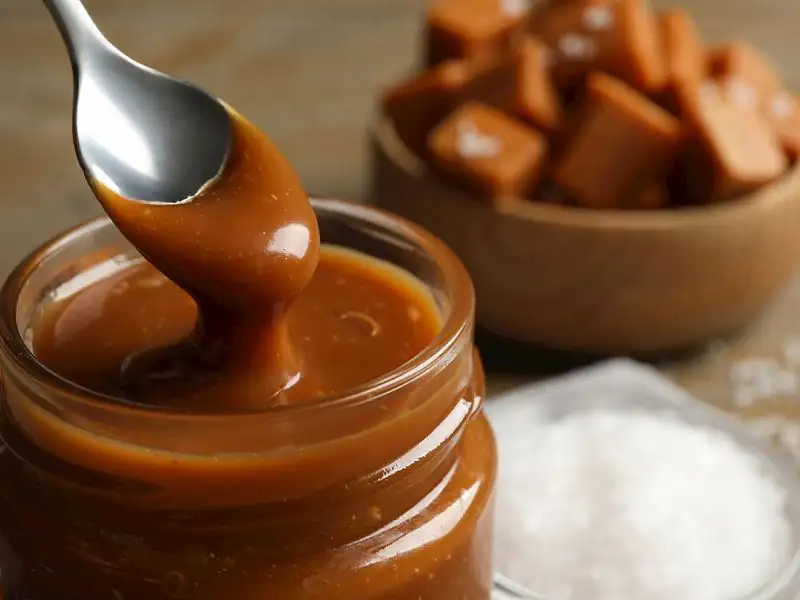
You can use the butter-free caramel you prepared while it's hot, or you can let it cool to room temperature. The caramel will thicken noticeably as it cools. It's best to leave it slightly runny when pouring over desserts. If you're using it on crepes, pancakes, or ice cream, make sure the sauce doesn't solidify completely. If the caramel thickens too much, you can thin it out again by adding a small amount of hot water or cream. Store the prepared caramel in a clean, dry glass jar and use it as needed.