
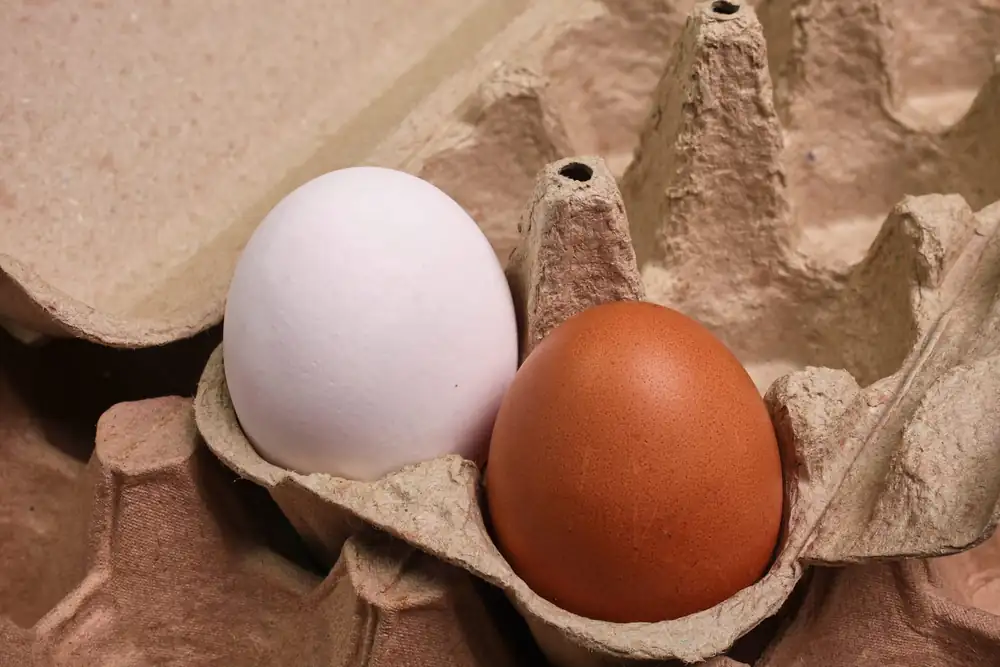
White or brown, the color of an egg has nothing to do with its taste or quality: the difference comes from elsewhere
Usually, in the egg aisle, you don't really have to think. You grab your box of six or twelve and head to the checkout. But lately, with the shelves sometimes sparsely stocked, you have to make do with what's left. And today, there's almost nothing left. Except for a few boxes filled with… white eggs.
It has to be said that in France, you much more often see eggs with beige or brown shells. So, faced with a carton of all-white eggs, questions quickly arise. Is it a different variety? Are they just as good? Do they have the same nutritional value? Perhaps it's best to wait until the shelf is restocked… It would be a shame to leave empty-handed for so little. Because between a white egg and a brown egg, the difference is ultimately very superficial. It comes neither from its freshness, nor its quality, nor even from what the hen ate. Everything happens much earlier: it's primarily a matter of… genetics.
Generally, hens with white plumage lay white eggs, while those with brown or red feathers tend to produce beige to brown eggs. But nature has a few surprises in store. The Marans, for example, is known for its very dark brown, almost chocolate-colored eggs, while the Araucana lays eggs with astonishing bluish hues. White, brown, blue… under the shell, it's still unmistakably an egg.
And once it's cracked? There's no reason to dismiss the white egg either. With comparable farming and feeding conditions, the color of the shell determines neither the taste nor the nutritional qualities of its contents. When choosing your carton, it's better to look at the farming method, the origin, or the date indicated, rather than focusing solely on the color.
Ultimately, white or brown isn't the deciding factor. The real key is to look at the small number printed on the shell: 0 for organic, 1 for free-range, 2 for barn-laid, and 3 for caged. Even white eggs can be added to your basket without hesitation.