“Above all, don't leave them in there”: this mistake we all make with potatoes causes them to sprout in 10 days
A bag of potatoes bought for the month often ends up in the bin within days. However, a simple action upon returning from shopping is enough to slow down sprouting and save your stock.
A large bag of potatoes is bought for the month, and after ten days half of them are mushy, green, or covered in sprouts. In France, only 43% of people store their potatoes correctly, and 1 in 10 households throws them away due to improper storage, according to a gardening magazine. A real waste of money and time spent in the kitchen.
In most cases, the problem isn't the potatoes themselves, but the infamous mesh bag they came in, often left in a corner of the kitchen. Immediately removing the potatoes from this bag, placing them in an opaque, breathable container, and refrigerating them will keep them firm for several weeks instead of just a few days. This simple step upon returning from shopping makes a world of difference when faced with potatoes that sprout too quickly.
Why netting ruins potato preservation
A potato remains a living organism that constantly seeks to regrow. When exposed to light, it turns green and produces more solanine, a natural substance that can be problematic in large quantities. Solanine is a toxic compound that concentrates mainly in the green parts and sprouts. When the temperature rises and the air is humid, all the conditions are right to trigger rapid sprouting.
In this context, the plastic netting acts as an accelerator: it lets in light, retains moisture, and prevents air from circulating properly between the tightly packed tubers. The first sprouts appear, thinning the flesh, altering the taste, and contaminating the rest of the bag through contact. As long as the potatoes remain in this container, it becomes almost impossible to store them properly.
The simple 3-step process for firm potatoes for weeks
The right approach starts as soon as you get home from shopping. First, simply sort through your potatoes, removing any that are damaged, have sprouted excessively, or are very green, and above all, don't wash them: a simple dry brushing is all that's needed. Next, transfer them to a paper or canvas bag, a wooden crate, or a wicker basket, ideally lined with a cloth or newspaper; a small piece of charcoal and a few bay leaves will help absorb moisture.
The final step is to find the ideal spot: a cool, dry, and dark place, around 6 to 10°C. A cellar, pantry, or unheated garage is perfect; in an apartment, a low cupboard against an exterior wall or a lightly heated entryway will do. Just keep the container away from fruits that produce ethylene, such as apples, bananas, avocados, or tomatoes, as this gas accelerates germination.
Mistakes to avoid and what to do if they have already sprouted
The refrigerator remains a very short-term solution. Below 4°C, starch turns into sugar, giving potatoes a sweet taste and causing them to brown when cooked. Another common pitfall is sharing a fruit bowl with apples or bananas: the combination of ethylene, light, and heat causes germs to multiply rapidly.
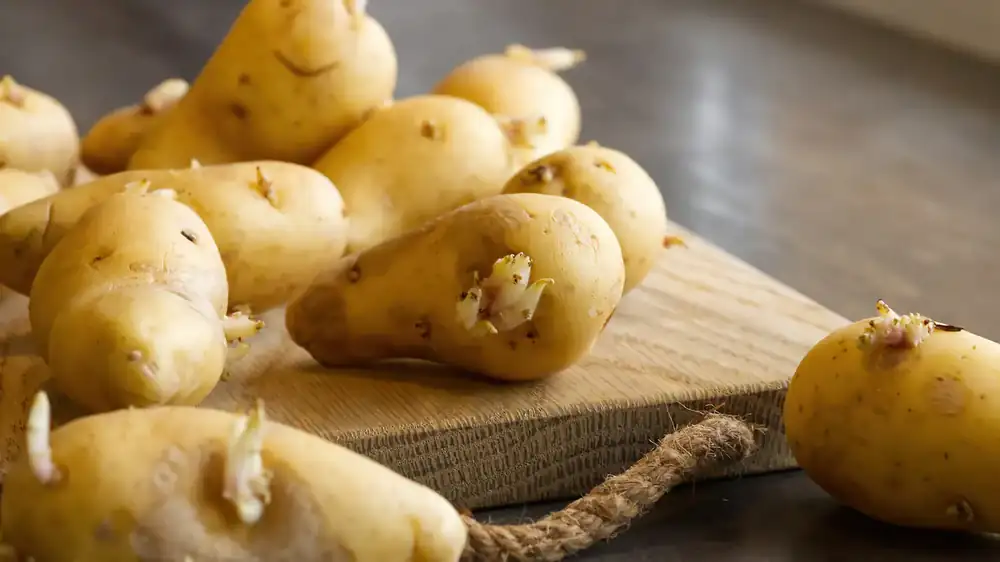
Once the tubers have started to sprout, all is not lost. As long as they remain firm and the sprouts don't exceed 2 cm, they can still be cooked after removing most of the sprouts and green areas rich in solanine. On the other hand, a very shriveled, soft potato, covered in long sprouts or almost entirely green, deserves its place in the compost rather than on the plate—a good way to maintain a zero-waste approach.